
The first vaccine for schistosomiasis has just passed phase 1 clinical trials, showing it to be safe and capable of inducing immunity to the disease, which affects 200 million people worldwide.
Based on the Sm14 antigen, developed and patented by the Instituto Oswaldo Cruz (IOC/Fiocruz), the vaccine puts the name of Brazil on the frontier of world science, as the first vaccine for helminths (worms). With an extra gain: as it has multivalent potential, the vaccine has already shown to be effective for fascioliasis (worm disease that affects cattle) and could potentially be used as a basis for the development of immunizers for other human diseases caused by helminths.
The announcement was made on the morning of this Tuesday (12/06), on the campus of Fiocruz, in Manguinhos (RJ), through a press conference with the participation of the director of the IOC, Tania Araújo-Jorge; of the president of theiocruz, Paulo Gadelha; the researcher in charge, Miriam Tendler and the superintendent of Biological Products at Ourofino Agronegócios, Carlos Henrique Henrique.
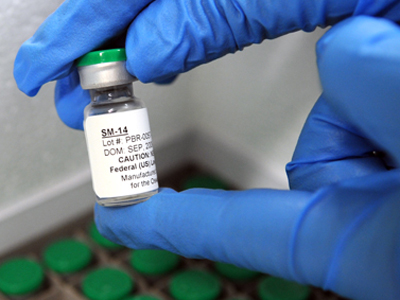 Sm14 is the world's first anthelmintic vaccine
The initiative is also a milestone for research at the national level, as this is the first time that phase 1 clinical trials are carried out in Brazil for a vaccine, since tests with patients, by international rules, must be carried out in the country of origin of the technology. Sm14 also innovates from the point of view of the research model, being the focus of the first public-private partnership developed by Fiocruz, established with the company Ourofino Agronegócios, with the support of funding agencies such as FINEP and Faperj.
There are more than 30 years of commitment, led by the researcher from IOC Miriam Tendler. “This innovation is originally Brazilian, which puts the country on the frontier of knowledge in an area of high technological complexity, the health sector. The project is supported by a national and international network of collaborating institutions, with funding mechanisms coming from both the government and the private sector”, she summarizes.
The director of the Institute, Tania Araújo-Jorge, emphasizes the relevance of the initiative in the scientific scenario. “This is an emblematic advance for Brazilian science because we are carrying out cutting-edge scientific development: it is the first vaccine for a parasitic disease in the world. This portrays the historic commitment and ability of the IOC to work, from basic research, with eyes focused on changing a high-impact health reality in the country”, he evaluates.
The president of Fiocruz, Paulo Gadelha, states that the achievement reflects changes in the country, in the sense of strengthening national research, such as the promotion mechanisms and the way in which partnerships are carried out. “AFiocruz is proud of, once again, making history in science”, he emphasizes.
 There were more than 30 years of research in the IOC, led by Miriam Tendler
As with other vaccines, the national vaccine was produced from an antigen - a substance that stimulates the production of antibodies - to prepare the human immune system for infection by the parasite, preventing it from settling in the body or causing damage. . In this case, the Sm14 protein is used, obtained from the schistosoma mansoni, the worm that causes the disease in Latin America and Africa.
The base protein of the vaccine, isolated and characterized in the Experimental Schistosomiasis Laboratory of the IOC, in the 90s, was chosen by the World Health Organization (WHO) as one of the six most promising antigens in combating the disease. Of these six antigens, only two (one of them is Sm14) make the difficult path from the lab bench to the product.
The protein was constructed as a recombinant and staggered protein (its production capacity in industrial volume was proven), leading to the production of the so-called vaccine seed lot for clinical trials, approved by the National Health Surveillance Agency (ANVISA).
The project, which has just completed the phase 1 clinical trial stage in human volunteers, obtained results that guarantee that the vaccine is safe for human use and that it is immunogenic, being able to produce protection against the disease.
The Phase 1 Clinical Trial in humans began in May 2011, shortly after approval of the clinical research protocol by Anvisa and was conducted by the Evandro Chagas Research Institute (Ipec/Fiocruz).
From the beginning, the research was financially supported by the IOC and by scientific research funding mechanisms such as CNPq and FINEP, among others. Its first phase of technological development was supported by the Technological Development Program for Health Supplies (PDTIS/Fiocruz). In 2005, the company Alvos licensed the veterinary vaccine and the human vaccine through the establishment of a public-private partnership.
The company was acquired by Ourofino Agronegócios Ltda, which took over the entire industrial part of the process. “Making this project viable is a commitment from Ourofino Agronegócios. Vaccines used in Brazil tend to be produced by multinational companies. This is our country's opportunity to show the world the scientific and technological potential we have”, comments the company's Biological superintendent, Carlos Henrique Henrique.
Now, with the human vaccine proven to be safe, the main objective of both Instituto Oswaldo Cruz and Ourofino is to transform the human vaccine into a humanitarian vaccine, guaranteeing its access to populations in endemic areas around the world, mostly poor.
Sm14 Molecule Patent Families
The Sm14 molecule is protected by patent families BRPI110551-3, BRPI0308978-9, BRPI0303266-3, BRPI0900896-9, BRPI005855-9 and corresponding patents in Europe, United States, Australia, Japan, New Zealand, South Africa, Canada, Cuba , Egypt, India, ARIPO and OAPI.
The first vaccine for schistosomiasis has just passed phase 1 clinical trials, showing it to be safe and capable of inducing immunity to the disease, which affects 200 million people worldwide.
Based on the Sm14 antigen, developed and patented by the Instituto Oswaldo Cruz (IOC/Fiocruz), the vaccine puts the name of Brazil on the frontier of world science, as the first vaccine for helminths (worms). With an extra gain: as it has multivalent potential, the vaccine has already shown to be effective for fascioliasis (worm disease that affects cattle) and could potentially be used as a basis for the development of immunizers for other human diseases caused by helminths.
The announcement was made on the morning of this Tuesday (12/06), on the campus of Fiocruz, in Manguinhos (RJ), through a press conference with the participation of the director of the IOC, Tania Araújo-Jorge; of the president of theiocruz, Paulo Gadelha; the researcher in charge, Miriam Tendler and the superintendent of Biological Products at Ourofino Agronegócios, Carlos Henrique Henrique.
Sm14 is the world's first anthelmintic vaccine
The initiative is also a milestone for research at the national level, as this is the first time that phase 1 clinical trials are carried out in Brazil for a vaccine, since tests with patients, by international rules, must be carried out in the country of origin of the technology. Sm14 also innovates from the point of view of the research model, being the focus of the first public-private partnership developed by Fiocruz, established with the company Ourofino Agronegócios, with the support of funding agencies such as FINEP and Faperj.
There are more than 30 years of commitment, led by the researcher from IOC Miriam Tendler. “This innovation is originally Brazilian, which puts the country on the frontier of knowledge in an area of high technological complexity, the health sector. The project is supported by a national and international network of collaborating institutions, with funding mechanisms coming from both the government and the private sector”, she summarizes.
The director of the Institute, Tania Araújo-Jorge, emphasizes the relevance of the initiative in the scientific scenario. “This is an emblematic advance for Brazilian science because we are carrying out cutting-edge scientific development: it is the first vaccine for a parasitic disease in the world. This portrays the historic commitment and ability of the IOC to work, from basic research, with eyes focused on changing a high-impact health reality in the country”, he evaluates.
The president of Fiocruz, Paulo Gadelha, states that the achievement reflects changes in the country, in the sense of strengthening national research, such as the promotion mechanisms and the way in which partnerships are carried out. “AFiocruz is proud of, once again, making history in science”, he emphasizes.
There were more than 30 years of research in the IOC, led by Miriam Tendler
As with other vaccines, the national vaccine was produced from an antigen - a substance that stimulates the production of antibodies - to prepare the human immune system for infection by the parasite, preventing it from settling in the body or causing damage. . In this case, the Sm14 protein is used, obtained from the schistosoma mansoni, the worm that causes the disease in Latin America and Africa.
The base protein of the vaccine, isolated and characterized in the Experimental Schistosomiasis Laboratory of the IOC, in the 90s, was chosen by the World Health Organization (WHO) as one of the six most promising antigens in combating the disease. Of these six antigens, only two (one of them is Sm14) make the difficult path from the lab bench to the product.
The protein was constructed as a recombinant and staggered protein (its production capacity in industrial volume was proven), leading to the production of the so-called vaccine seed lot for clinical trials, approved by the National Health Surveillance Agency (ANVISA).
The project, which has just completed the phase 1 clinical trial stage in human volunteers, obtained results that guarantee that the vaccine is safe for human use and that it is immunogenic, being able to produce protection against the disease.
The Phase 1 Clinical Trial in humans began in May 2011, shortly after approval of the clinical research protocol by Anvisa and was conducted by the Evandro Chagas Research Institute (Ipec/Fiocruz).
From the beginning, the research was financially supported by the IOC and by scientific research funding mechanisms such as CNPq and FINEP, among others. Its first phase of technological development was supported by the Technological Development Program for Health Supplies (PDTIS/Fiocruz). In 2005, the company Alvos licensed the veterinary vaccine and the human vaccine through the establishment of a public-private partnership.
The company was acquired by Ourofino Agronegócios Ltda, which took over the entire industrial part of the process. “Making this project viable is a commitment from Ourofino Agronegócios. Vaccines used in Brazil tend to be produced by multinational companies. This is our country's opportunity to show the world the scientific and technological potential we have”, comments the company's Biological superintendent, Carlos Henrique Henrique.
Now, with the human vaccine proven to be safe, the main objective of both Instituto Oswaldo Cruz and Ourofino is to transform the human vaccine into a humanitarian vaccine, guaranteeing its access to populations in endemic areas around the world, mostly poor.
Sm14 Molecule Patent Families
The Sm14 molecule is protected by patent families BRPI110551-3, BRPI0308978-9, BRPI0303266-3, BRPI0900896-9, BRPI005855-9 and corresponding patents in Europe, United States, Australia, Japan, New Zealand, South Africa, Canada, Cuba , Egypt, India, ARIPO and OAPI.
The non-profit reproduction of the text is allowed as long as the source is cited (Comunicação / Instituto Oswaldo Cruz)
 |
 |
