
A study led by the Oswaldo Cruz Institute (IOC/Fiocruz) points out that a natural compound present in the peel of citrus fruits is a potential candidate for the development of a new treatment against cutaneous leishmaniasis. In laboratory tests, the substance 2-hydroxyflavanone was able to inhibit the proliferation of parasites Leishmania amazonensis, which cause the infection, with similar effectiveness on microorganisms that are sensitive and resistant to the main drug currently used in the treatment of the disease. The compound was also able to control the infection caused by sensitive and resistant strains in mice, considered experimental models for studying the disease. Administered orally, the substance also stood out for not showing toxic effects in the analyzes carried out. The findings were published in the scientific journal Plos Neglected Tropical Diseases.
Study coordinator, researcher Elmo Eduardo de Almeida Amaral, from the Trypanosomatid Biochemistry Laboratory of the IOC, emphasized that the natural compound performed better than the reference drug even in tests with sensitive parasites, promoting faster wound healing. Treatment with 2-hydroxyflavanone, administered orally, reduced the size of the skin lesion and decreased the parasite load by about 99% in both infections caused by sensitive and resistant parasites. This points to the potential for the development of a therapy that could become the first treatment option or an alternative in cases of resistance, says Elmo.
In tests, the natural molecule reduced the rate of cell infection by more than 99%, without causing damage to host cells
The absence of signs of toxicity was another factor highlighted by the first author of the article, Luiza Gervazoni. "At the doses used, no toxic effect was observed in the experiments in cell culture and in the tests in an experimental model. The in silico [computer] analyzes also indicate that 2-hydroxyflavanone presents favorable characteristics for the development of a medicine, good absorption and high probability of not presenting toxicity", says the student, who started the research during her master's degree in the Cellular and Molecular Biology do IOC and continues with research in the doctorate at the Postgraduate course in Parasitic Biology of the Institute.
The authors point out, however, that the analyzes carried out are only the first step towards the development of a new treatment. "To be approved, a new drug needs to undergo pre-clinical studies in murine models, such as mice, and non-murine models, such as primates. Subsequently, three phases of clinical studies are carried out, involving patients. It is a long and expensive process, but necessary to guarantee the safety and effectiveness of the treatments", clarifies Elmo.
emerging problem
According to the researchers, the development of new treatments for cutaneous leishmaniasis can have a high impact on the quality of life of patients. For over 70 years, pentavalent antimonials have been the first option for therapy. With high toxicity, these drugs can cause adverse reactions ranging from joint and muscle pain and nausea to heart, pancreatic and kidney disorders. In cases of resistance, the available alternatives are amphotericin B and pentadimine, which also have important side effects. "The treatment of leishmaniasis is long, and all these drugs need to be administered intramuscularly or intravenously, which means that the patient has to be hospitalized or go to the health unit daily for months of therapy", points out Luiza.
Initially identified in India and on the African continent, resistance to antimonials has also been reported in other African countries and is identified as one of the main causes of therapeutic failure in the treatment of cutaneous leishmaniasis. "Until today, there have been no cases of resistance reported in Brazil, but this is an emerging problem in the world. Demonstrating the capacity of a natural molecule, administered orally, to treat sensitive and resistant strains is especially important in this context", evaluates Elmo .

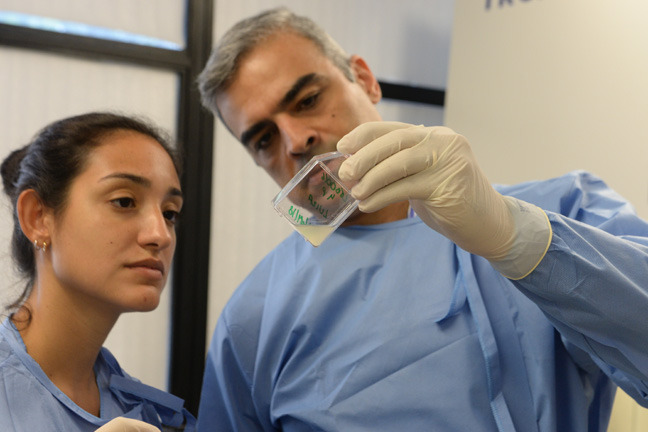
According to Elmo de Almeida Amaral, the natural compound performed better than the reference drug
Efficacy in tests
In the experiments, 2-hydroxyflavanone showed action against both forms of the Leishmania parasite: the promastigote, found in insects that transmit the disease, and the amastigote, identified in vertebrate hosts, including man. In both cases, the researchers found similar effects on sensitive and resistant parasites. Considering the amastigote form, which is present in patients and, therefore, the target of treatments for the aggravation, the highest dose of the compound applied was able to reduce the rate of cell infection by more than 99%, without showing signs of toxicity.
Based on the good results observed in tests in cell culture and in computer analyses, the scientists carried out tests on mice, considered models for the study of cutaneous leishmaniasis. In infections caused by sensitive parasites, 2-hydroxyflavanone, administered orally, reduced the parasitic load by approximately 99% and promoted a faster reduction of the skin lesion than the reference drug. The natural compound showed the same action in cases of resistance, in which the reference treatment had no effect. Analyzes of blood samples from the animals did not identify any sign of the molecule's toxic effects.
From nature to the lab
Produced by plant metabolism, 2-hydroxyflavanone is part of a group of substances called flavonoids. Found in fruits, vegetables, wine and coffee, these molecules have been increasingly studied for their therapeutic potential, with works pointing to antiviral, anti-inflammatory, anticancer action and against parasites such as Trypanosoma and Leishmania. "Our group has been investigating the antileishmanial action of flavonoid molecules for some years, analyzing compounds from different classes, with encouraging results. The result of the new work is important because it demonstrates, for the first time, the action of a compound from this group on resistant parasites" , says Elmo.
The researchers point out that, despite its natural origin, the 2-hydroxyflavanone analyzed in the work is an industrially synthesized compound, which guarantees the purity of the molecule and can facilitate its production in large quantities for the manufacture of medicines. "Nature is an ancient source of therapies, and the advancement of science has allowed the isolation of active components for the development of drugs. A great example of the success of this combination is the discovery of artemisinin, a substance isolated from the plant Artemisia annua, which became the basis of malaria treatment and was recognized with the Nobel Prize in 2015 for the Chinese YouYou Tu", mentions Luiza.
Already in progress, the next stage of the research includes pre-clinical studies on the safety range for the use of 2-hydroxyflavanone and the pharmacokinetics of the compound, which evaluates how it is absorbed and metabolized in the body. The analyzes are carried out as part of Luiza's doctoral project, developed in the Graduate Program in Parasite Biology at IOC, with guidance from Elmo
About leishmaniasis
According to the World Health Organization (WHO), leishmaniasis is endemic in 98 countries, affecting approximately 12 million people globally. In Brazil, the country that is among the seven most affected by the disease in the world, 19 new cases of cutaneous leishmaniasis and 2015 of visceral leishmaniasis were registered in 20, according to the Ministry of Health. The infection is transmitted by phlebotomine insects, popularly known as straw mosquitoes, which become infected by sucking the blood of animals considered reservoirs of the Leishmania parasites. Altogether, more than XNUMX species of the microorganism can cause the disease, and some cause the cutaneous form of the disease - with lesions on the skin and, in the most severe cases, on the mucous membranes of the mouth and nose - while others lead to visceral infection - that affects organs such as the liver and spleen. Classified by the WHO as neglected tropical diseases, leishmaniasis affects mainly poor populations who live in rural areas and in precarious housing conditions.
A study led by the Oswaldo Cruz Institute (IOC/Fiocruz) points out that a natural compound present in the peel of citrus fruits is a potential candidate for the development of a new treatment against cutaneous leishmaniasis. In laboratory tests, the substance 2-hydroxyflavanone was able to inhibit the proliferation of parasites Leishmania amazonensis, which cause the infection, with similar effectiveness on microorganisms that are sensitive and resistant to the main drug currently used in the treatment of the disease. The compound was also able to control the infection caused by sensitive and resistant strains in mice, considered experimental models for studying the disease. Administered orally, the substance also stood out for not showing toxic effects in the analyzes carried out. The findings were published in the scientific journal Plos Neglected Tropical Diseases.
Study coordinator, researcher Elmo Eduardo de Almeida Amaral, from the Trypanosomatid Biochemistry Laboratory of the IOC, emphasized that the natural compound performed better than the reference drug even in tests with sensitive parasites, promoting faster wound healing. Treatment with 2-hydroxyflavanone, administered orally, reduced the size of the skin lesion and decreased the parasite load by about 99% in both infections caused by sensitive and resistant parasites. This points to the potential for the development of a therapy that could become the first treatment option or an alternative in cases of resistance, says Elmo.
In tests, the natural molecule reduced the rate of cell infection by more than 99%, without causing damage to host cells
The absence of signs of toxicity was another factor highlighted by the first author of the article, Luiza Gervazoni. "At the doses used, no toxic effect was observed in the experiments in cell culture and in the tests in an experimental model. The in silico [computer] analyzes also indicate that 2-hydroxyflavanone presents favorable characteristics for the development of a medicine, good absorption and high probability of not presenting toxicity", says the student, who started the research during her master's degree in the Cellular and Molecular Biology do IOC and continues with research in the doctorate at the Postgraduate course in Parasitic Biology of the Institute.
The authors point out, however, that the analyzes carried out are only the first step towards the development of a new treatment. "To be approved, a new drug needs to undergo pre-clinical studies in murine models, such as mice, and non-murine models, such as primates. Subsequently, three phases of clinical studies are carried out, involving patients. It is a long and expensive process, but necessary to guarantee the safety and effectiveness of the treatments", clarifies Elmo.
emerging problem
According to the researchers, the development of new treatments for cutaneous leishmaniasis can have a high impact on the quality of life of patients. For over 70 years, pentavalent antimonials have been the first option for therapy. With high toxicity, these drugs can cause adverse reactions ranging from joint and muscle pain and nausea to heart, pancreatic and kidney disorders. In cases of resistance, the available alternatives are amphotericin B and pentadimine, which also have important side effects. "The treatment of leishmaniasis is long, and all these drugs need to be administered intramuscularly or intravenously, which means that the patient has to be hospitalized or go to the health unit daily for months of therapy", points out Luiza.
Initially identified in India and on the African continent, resistance to antimonials has also been reported in other African countries and is identified as one of the main causes of therapeutic failure in the treatment of cutaneous leishmaniasis. "Until today, there have been no cases of resistance reported in Brazil, but this is an emerging problem in the world. Demonstrating the capacity of a natural molecule, administered orally, to treat sensitive and resistant strains is especially important in this context", evaluates Elmo .
According to Elmo de Almeida Amaral, the natural compound performed better than the reference drug
Efficacy in tests
In the experiments, 2-hydroxyflavanone showed action against both forms of the Leishmania parasite: the promastigote, found in insects that transmit the disease, and the amastigote, identified in vertebrate hosts, including man. In both cases, the researchers found similar effects on sensitive and resistant parasites. Considering the amastigote form, which is present in patients and, therefore, the target of treatments for the aggravation, the highest dose of the compound applied was able to reduce the rate of cell infection by more than 99%, without showing signs of toxicity.
Based on the good results observed in tests in cell culture and in computer analyses, the scientists carried out tests on mice, considered models for the study of cutaneous leishmaniasis. In infections caused by sensitive parasites, 2-hydroxyflavanone, administered orally, reduced the parasitic load by approximately 99% and promoted a faster reduction of the skin lesion than the reference drug. The natural compound showed the same action in cases of resistance, in which the reference treatment had no effect. Analyzes of blood samples from the animals did not identify any sign of the molecule's toxic effects.
From nature to the lab
Produced by plant metabolism, 2-hydroxyflavanone is part of a group of substances called flavonoids. Found in fruits, vegetables, wine and coffee, these molecules have been increasingly studied for their therapeutic potential, with works pointing to antiviral, anti-inflammatory, anticancer action and against parasites such as Trypanosoma and Leishmania. "Our group has been investigating the antileishmanial action of flavonoid molecules for some years, analyzing compounds from different classes, with encouraging results. The result of the new work is important because it demonstrates, for the first time, the action of a compound from this group on resistant parasites" , says Elmo.
The researchers point out that, despite its natural origin, the 2-hydroxyflavanone analyzed in the work is an industrially synthesized compound, which guarantees the purity of the molecule and can facilitate its production in large quantities for the manufacture of medicines. "Nature is an ancient source of therapies, and the advancement of science has allowed the isolation of active components for the development of drugs. A great example of the success of this combination is the discovery of artemisinin, a substance isolated from the plant Artemisia annua, which became the basis of malaria treatment and was recognized with the Nobel Prize in 2015 for the Chinese YouYou Tu", mentions Luiza.
Already in progress, the next stage of the research includes pre-clinical studies on the safety range for the use of 2-hydroxyflavanone and the pharmacokinetics of the compound, which evaluates how it is absorbed and metabolized in the body. The analyzes are carried out as part of Luiza's doctoral project, developed in the Graduate Program in Parasite Biology at IOC, with guidance from Elmo
About leishmaniasis
According to the World Health Organization (WHO), leishmaniasis is endemic in 98 countries, affecting approximately 12 million people globally. In Brazil, the country that is among the seven most affected by the disease in the world, 19 new cases of cutaneous leishmaniasis and 2015 of visceral leishmaniasis were registered in 20, according to the Ministry of Health. The infection is transmitted by phlebotomine insects, popularly known as straw mosquitoes, which become infected by sucking the blood of animals considered reservoirs of the Leishmania parasites. Altogether, more than XNUMX species of the microorganism can cause the disease, and some cause the cutaneous form of the disease - with lesions on the skin and, in the most severe cases, on the mucous membranes of the mouth and nose - while others lead to visceral infection - that affects organs such as the liver and spleen. Classified by the WHO as neglected tropical diseases, leishmaniasis affects mainly poor populations who live in rural areas and in precarious housing conditions.
The non-profit reproduction of the text is allowed as long as the source is cited (Comunicação / Instituto Oswaldo Cruz)
 |
 |
