
The Pan American Health Organization (PAHO/WHO) brought around 25 specialists from the Americas, including Bolivia, Costa Rica, Guatemala, Haiti and the Dominican Republic, to the country for an international course on molecular diagnosis of the influenza virus. The training carried out in partnership with the Oswaldo Cruz Institute (IOC/Fiocruz) and with the United States Centers for Disease Control and Prevention (CDC), took place between November 06th and 10th. The Laboratory of Respiratory Virus and Measles of the IOC hosted the initiative.
Through laboratory diagnosis, the professionals who make up the Global Influenza Surveillance and Response System of the World Health Organization (WHO) identify types and subtypes of circulating influenza viruses and establish relationships with regional and global standards. The action is part of the virus surveillance routine, which includes monitoring strains with pandemic potential and serves as a tool for the annual formulation of the vaccine that will be made available to the population. "The course promoted an update on the panorama of influenza in the world, highlighting the current situation in the different countries of the Americas. In addition to exchanging information, we discussed the molecular diagnostic methodology protocols and carried out, in practice, this entire process in laboratory", highlighted Fernando Motta, researcher at the Laboratory of Respiratory Virus and Measles, which is part of the WHO surveillance network and acts as a national reference with the Ministry of Health.
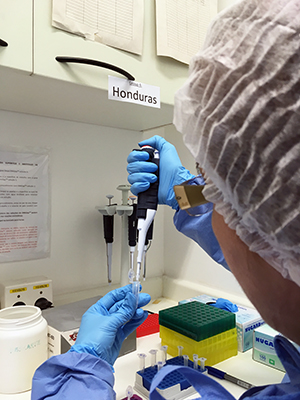
The practical activities were monitored by CDC specialists and coordinated by researchers from the IOC, Chile and Mexico. "The training allows these three countries to be able to help others in the technical support of influenza, both for carrying out virus detection and diagnosis tests, as well as in surveillance actions. What we did throughout the course was 'train the trainers' to based on CDC recommended protocols," explained Stephen Lindstrom, head of the Diagnostic Development team at the CDC's Department of Virology, Surveillance and Diagnostics. "Professionals from national influenza centers leave training with greater proficiency in carrying out routine diagnostic procedures. Monitoring of the influenza virus takes place through joint work, which underscores the importance of training that strengthens the network", added Juliana Leite, international consultant specializing in PAHO laboratories.
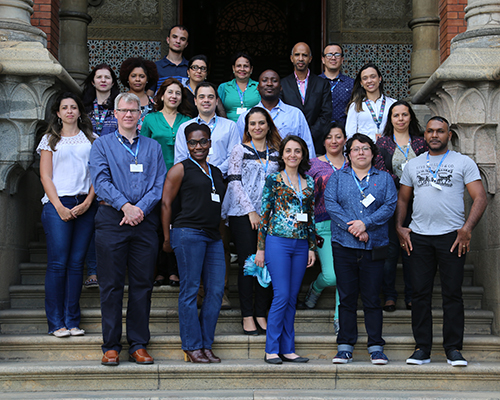
Microbiologist Hebleen Brenes Porras, from the Costa Rican Institute of Research and Education in Nutrition and Health (INCIENSA), works to carry out laboratory tests for the influenza virus in the country. "During a laboratory procedure, questions may arise that no one can answer. A course like this allows for clarifying numerous doubts, in addition to stimulating the exchange of experiences with other researchers and promoting contact with specialists from different regions", emphasized Hebleen. For researcher Ito Journel, from the National Public Health Laboratory of Haiti, the course allowed him to renew his knowledge on the subject. "It is the first time that I participate in a course like this. The knowledge acquired can help to implement new surveillance technologies in the laboratory where I work", he pointed out.
The Pan American Health Organization (PAHO/WHO) brought around 25 specialists from the Americas, including Bolivia, Costa Rica, Guatemala, Haiti and the Dominican Republic, to the country for an international course on molecular diagnosis of the influenza virus. The training carried out in partnership with the Oswaldo Cruz Institute (IOC/Fiocruz) and with the United States Centers for Disease Control and Prevention (CDC), took place between November 06th and 10th. The Laboratory of Respiratory Virus and Measles of the IOC hosted the initiative.
Through laboratory diagnosis, the professionals who make up the Global Influenza Surveillance and Response System of the World Health Organization (WHO) identify types and subtypes of circulating influenza viruses and establish relationships with regional and global standards. The action is part of the virus surveillance routine, which includes monitoring strains with pandemic potential and serves as a tool for the annual formulation of the vaccine that will be made available to the population. "The course promoted an update on the panorama of influenza in the world, highlighting the current situation in the different countries of the Americas. In addition to exchanging information, we discussed the molecular diagnostic methodology protocols and carried out, in practice, this entire process in laboratory", highlighted Fernando Motta, researcher at the Laboratory of Respiratory Virus and Measles, which is part of the WHO surveillance network and acts as a national reference with the Ministry of Health.
The practical activities were monitored by CDC specialists and coordinated by researchers from the IOC, Chile and Mexico. "The training allows these three countries to be able to help others in the technical support of influenza, both for carrying out virus detection and diagnosis tests, as well as in surveillance actions. What we did throughout the course was 'train the trainers' to based on CDC recommended protocols," explained Stephen Lindstrom, head of the Diagnostic Development team at the CDC's Department of Virology, Surveillance and Diagnostics. "Professionals from national influenza centers leave training with greater proficiency in carrying out routine diagnostic procedures. Monitoring of the influenza virus takes place through joint work, which underscores the importance of training that strengthens the network", added Juliana Leite, international consultant specializing in PAHO laboratories.
Microbiologist Hebleen Brenes Porras, from the Costa Rican Institute of Research and Education in Nutrition and Health (INCIENSA), works to carry out laboratory tests for the influenza virus in the country. "During a laboratory procedure, questions may arise that no one can answer. A course like this allows for clarifying numerous doubts, in addition to stimulating the exchange of experiences with other researchers and promoting contact with specialists from different regions", emphasized Hebleen. For researcher Ito Journel, from the National Public Health Laboratory of Haiti, the course allowed him to renew his knowledge on the subject. "It is the first time that I participate in a course like this. The knowledge acquired can help to implement new surveillance technologies in the laboratory where I work", he pointed out.
The non-profit reproduction of the text is allowed as long as the source is cited (Comunicação / Instituto Oswaldo Cruz)
 |
 |
