
Far from the popular fame it carries, August was a month of great pleasure for researchers and students at the Oswaldo Cruz Institute (IOC/Fiocruz).
With several scientific outreach activities carried out in Brasília, Rio de Janeiro and São Paulo, they impacted hundreds of young people and adults, bringing more health and information wherever they went, always in a fun and interactive way.
The topics, of great interest to public health, covered everything from the care and control of disease-transmitting vectors to the importance of hygiene habits to prevent the proliferation of fungi and bacteria, as well as demonstrating the application of genetic sequencing techniques in everyday life and the prevention of sexually transmitted infections.
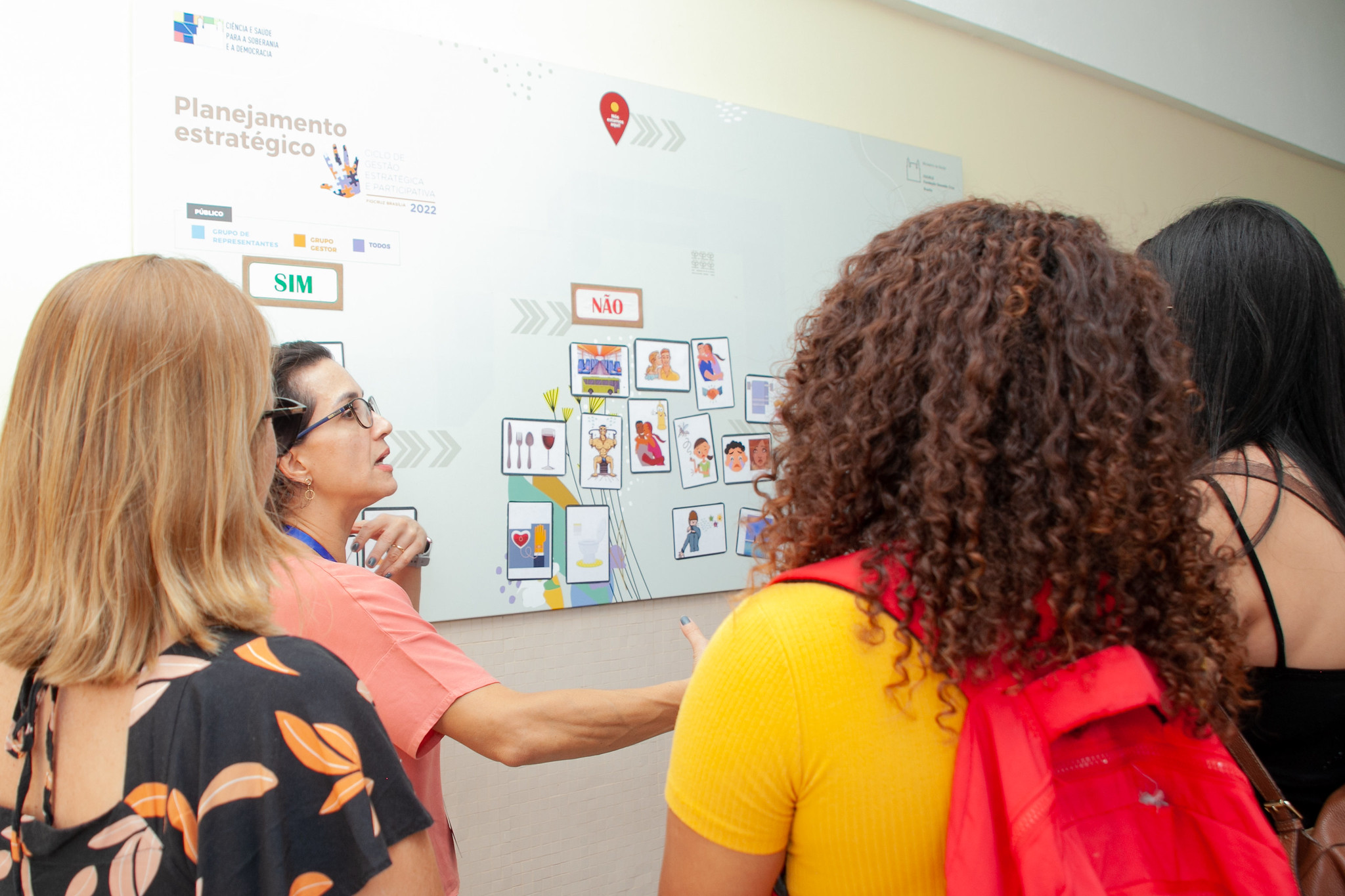
Between the 13th and 15th of August, the IOC+Escolas Program was selected to participate in the 2nd Scientific Dissemination Week of the Fiocruz Brasilia.
The event aimed to promote theoretical discussions and practical activities that strengthen the field of scientific dissemination, increasing the involvement of the academic community in projects and actions to popularize science that are increasingly dialogic and involve society.
Researchers, teachers, communication, health and basic education professionals, undergraduate and graduate students from various areas of knowledge, and others interested in the topic participated.
Two activities of the IOC+Schools were highlighted during the event's technical showcase, sharing results and reports on the implementation of workshops in public schools in Rio de Janeiro.
The exhibition presented the playful methodology for controlling the insect vector of dengue, Zika and chikungunya, offered by Cell Biology Laboratory; and another about the game 'PreventHIVo', developed by AIDS and Molecular Immunology Laboratory do IOC, which addresses different forms of transmission of the HIV virus.
In August, the routine offering of workshops IOC+Schools brought learning while having fun to two public schools in the state of RJ.
In Belford Roxo, in the metropolitan region, around 175 Elementary II students from the Amélia Ricci Baroni Municipal School participated in three interactive workshops on the 21st.
The activities were: 'Understanding the microscope and the fascinating microscopic world', 'Hygiene and microorganisms' and 'Fact or fake?', which address, respectively, the use of microscopes in laboratories, correct hand washing to avoid contamination, and the importance of vaccination.
On the 26th, it was the turn of students from the Francisco Manuel Municipal School, in Vila Isabel (North Zone of Rio), to interact with the game 'PreventHIVo'. Approximately 65 8th grade students participated, expanding their understanding of HIV prevention in a fun and informative way.
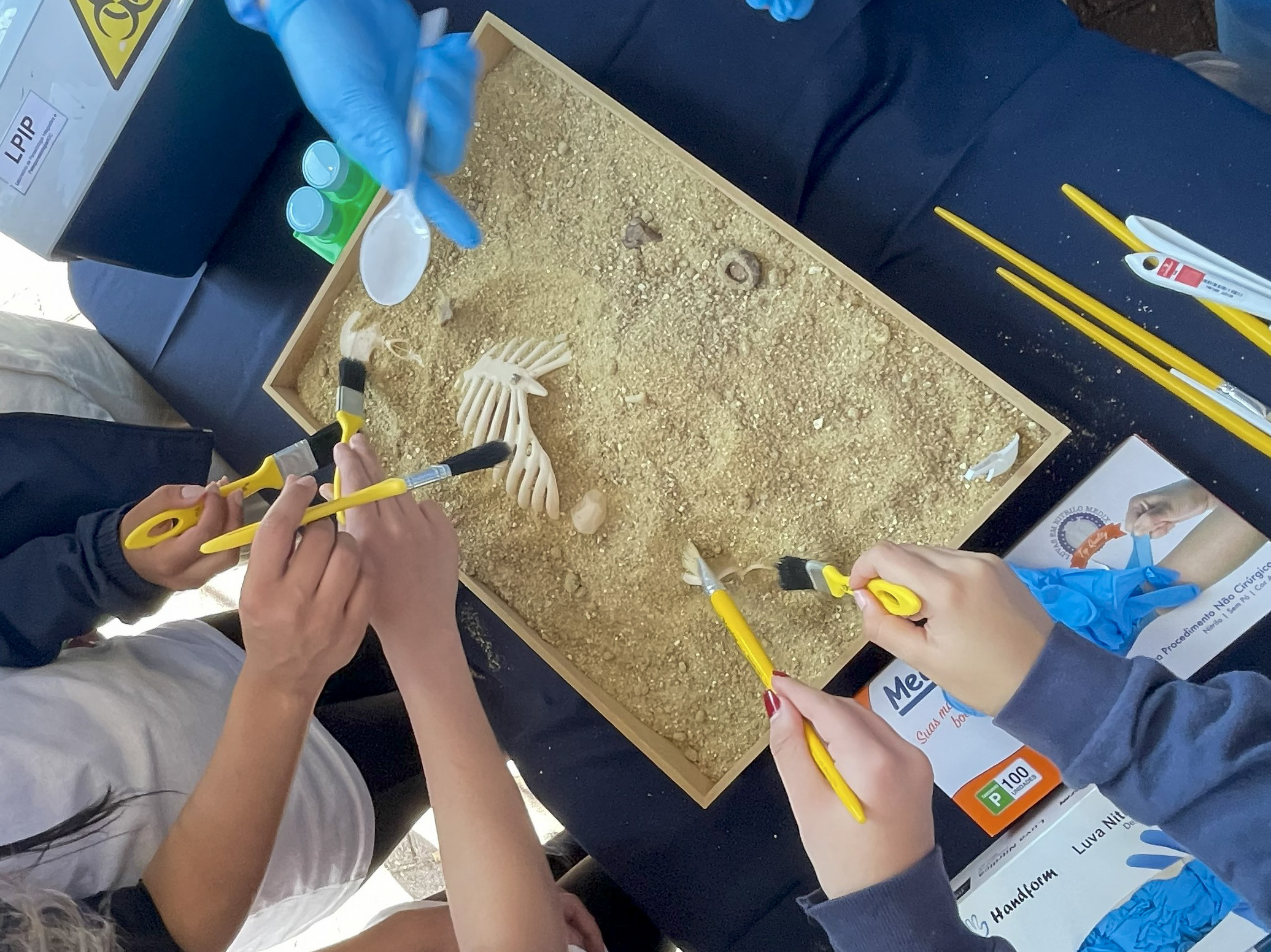
From Rio to the mountains of São Paulo, the team at Laboratory of Integrative Parasitology and Paleoparasitology of IOC took to one of the main squares in Campos de Jordão an activity on paleoparasitology, a branch of science that seeks to discover traces and detect the roots of different forms of infection that were part of the lives of ancestral peoples.
The workshop 'What is Paleoparasitology for?' featured a sandbox with artificial fossils and microscopic observations, with which more than a hundred people were able to learn more about the main parasites found in excavations. The public also had the opportunity to watch demonstrations of genetic sequencing and learn about bioinformatics.
The workshop was developed in the context of the 69th Brazilian Genetics Congress, held between August 20th and 23rd.
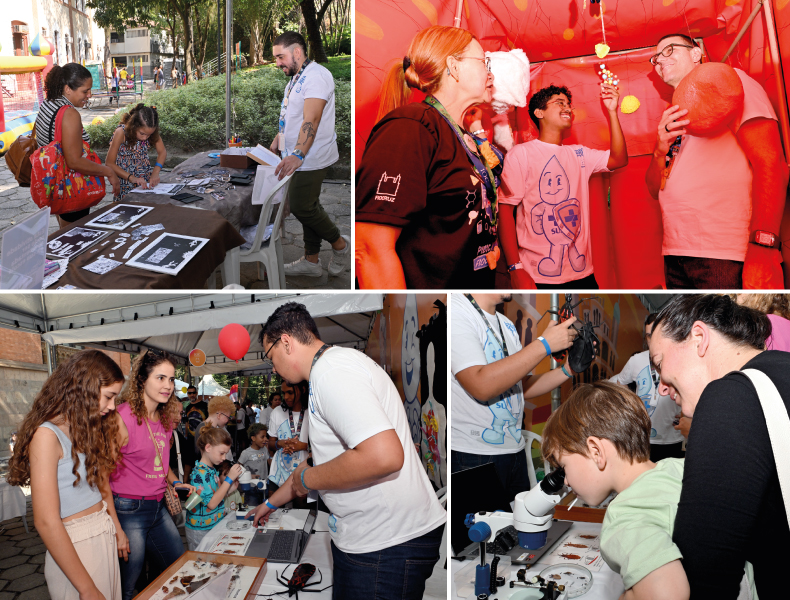
At the traditional 'F' eventiocruz pra Você', held at the Foundation's Manguinhos campus, in the North Zone of Rio de Janeiro, the IOC was present with almost 30 interactive actions.
The 2024 edition, held on September 17, attracted people of all ages, offering a day full of knowledge and fun.
Activities ranged from practical workshops to educational exhibitions, exploring the different themes worked on at the Institute. Check coverage.
Far from the popular fame it carries, August was a month of great pleasure for researchers and students at the Oswaldo Cruz Institute (IOC/Fiocruz).
With several scientific outreach activities carried out in Brasília, Rio de Janeiro and São Paulo, they impacted hundreds of young people and adults, bringing more health and information wherever they went, always in a fun and interactive way.
The topics, of great interest to public health, covered everything from the care and control of disease-transmitting vectors to the importance of hygiene habits to prevent the proliferation of fungi and bacteria, as well as demonstrating the application of genetic sequencing techniques in everyday life and the prevention of sexually transmitted infections.
Between the 13th and 15th of August, the IOC+Escolas Program was selected to participate in the 2nd Scientific Dissemination Week of the Fiocruz Brasilia.
The event aimed to promote theoretical discussions and practical activities that strengthen the field of scientific dissemination, increasing the involvement of the academic community in projects and actions to popularize science that are increasingly dialogic and involve society.
Researchers, teachers, communication, health and basic education professionals, undergraduate and graduate students from various areas of knowledge, and others interested in the topic participated.
Two activities of the IOC+Schools were highlighted during the event's technical showcase, sharing results and reports on the implementation of workshops in public schools in Rio de Janeiro.
The exhibition presented the playful methodology for controlling the insect vector of dengue, Zika and chikungunya, offered by Cell Biology Laboratory; and another about the game 'PreventHIVo', developed by AIDS and Molecular Immunology Laboratory do IOC, which addresses different forms of transmission of the HIV virus.
In August, the routine offering of workshops IOC+Schools brought learning while having fun to two public schools in the state of RJ.
In Belford Roxo, in the metropolitan region, around 175 Elementary II students from the Amélia Ricci Baroni Municipal School participated in three interactive workshops on the 21st.
The activities were: 'Understanding the microscope and the fascinating microscopic world', 'Hygiene and microorganisms' and 'Fact or fake?', which address, respectively, the use of microscopes in laboratories, correct hand washing to avoid contamination, and the importance of vaccination.
On the 26th, it was the turn of students from the Francisco Manuel Municipal School, in Vila Isabel (North Zone of Rio), to interact with the game 'PreventHIVo'. Approximately 65 8th grade students participated, expanding their understanding of HIV prevention in a fun and informative way.
From Rio to the mountains of São Paulo, the team at Laboratory of Integrative Parasitology and Paleoparasitology of IOC took to one of the main squares in Campos de Jordão an activity on paleoparasitology, a branch of science that seeks to discover traces and detect the roots of different forms of infection that were part of the lives of ancestral peoples.
The workshop 'What is Paleoparasitology for?' featured a sandbox with artificial fossils and microscopic observations, with which more than a hundred people were able to learn more about the main parasites found in excavations. The public also had the opportunity to watch demonstrations of genetic sequencing and learn about bioinformatics.
The workshop was developed in the context of the 69th Brazilian Genetics Congress, held between August 20th and 23rd.
At the traditional 'F' eventiocruz pra Você', held at the Foundation's Manguinhos campus, in the North Zone of Rio de Janeiro, the IOC was present with almost 30 interactive actions.
The 2024 edition, held on September 17, attracted people of all ages, offering a day full of knowledge and fun.
Activities ranged from practical workshops to educational exhibitions, exploring the different themes worked on at the Institute. Check coverage.
The non-profit reproduction of the text is allowed as long as the source is cited (Comunicação / Instituto Oswaldo Cruz)
 |
 |
