
The recent regulatory framework on ethics in research with human beings in Brazil, established by Law 14.874/2024, was highlighted on the second day (25/03) of activities of the Opening Week of the Academic Year from the Oswaldo Cruz Institute (IOC/Fiocruz). The meeting aimed to reflect on the consequences and challenges brought about by the legislation.
The coordinator of the Ethics Committee for Research with Human Beings of the F participated in the panel.iocruz (CEP Fiocruz/IOC), Ximena Illarramendi, and the full members Robson Leite de Souza Cruz and Vladimir Pedro Peralva Borges Martins; in addition to the student representative of IOC, Fernanda Ramos.
Check it out here the full schedule. Watch the full broadcast of the second day:
Ximena began the debate by contextualizing the importance of ethics in scientific research and described the CEP's activities at the Institute.
“Our main mission is to defend the interests, dignity and integrity of research participants,” said the coordinator.
The specialist also highlighted that ethical care for participants ranges from research planning to post-publication of articles.
“Projects need to be analyzed and assessed ethically even before they are started,” he commented.
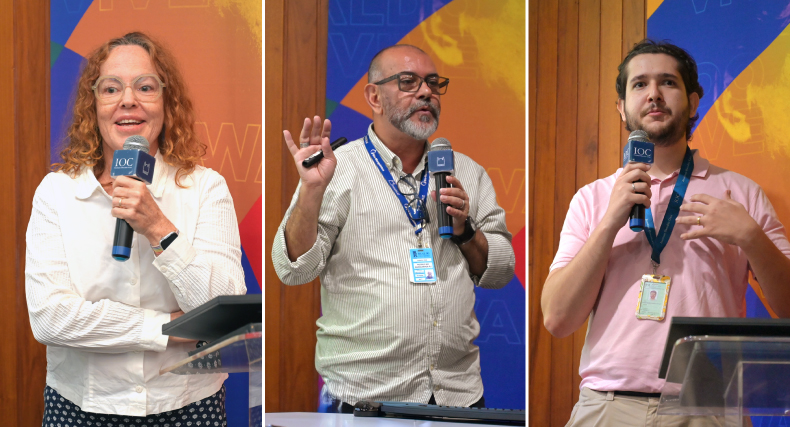
Ximena then explained the changes imposed by Law 14.874/2024. With the legislation, which will still be regulated by decree, the ethical evaluation of research involving people in Brazil is no longer the responsibility of the National Research Ethics Commission (CONEP), linked to the National Health Council (CNS), and is now carried out by the National Ethics Authority. The new legislation, however, raises some concerns.
“Currently, state councils, municipal councils and members of non-governmental organizations are invited to monitor the research, with the aim of ensuring social control — that is, the participation of the population in these actions. With this new law, unfortunately, we will lose this social control,” he said.
“The law is very important. External sponsors and the scientific community have always demanded a regulatory framework with great legal power over ethics in research. Now, we have a law that is not perfect, just as no law is, so we are waiting for the decree for standardization,” added Robson.
“The purpose of the CEP is to verify the integrity of the research participant,” Vladimir commented.
The recent regulatory framework on ethics in research with human beings in Brazil, established by Law 14.874/2024, was highlighted on the second day (25/03) of activities of the Opening Week of the Academic Year from the Oswaldo Cruz Institute (IOC/Fiocruz). The meeting aimed to reflect on the consequences and challenges brought about by the legislation.
The coordinator of the Ethics Committee for Research with Human Beings of the F participated in the panel.iocruz (CEP Fiocruz/IOC), Ximena Illarramendi, and the full members Robson Leite de Souza Cruz and Vladimir Pedro Peralva Borges Martins; in addition to the student representative of IOC, Fernanda Ramos.
Check it out here the full schedule. Watch the full broadcast of the second day:
Ximena began the debate by contextualizing the importance of ethics in scientific research and described the CEP's activities at the Institute.
“Our main mission is to defend the interests, dignity and integrity of research participants,” said the coordinator.
The specialist also highlighted that ethical care for participants ranges from research planning to post-publication of articles.
“Projects need to be analyzed and assessed ethically even before they are started,” he commented.
Ximena then explained the changes imposed by Law 14.874/2024. With the legislation, which will still be regulated by decree, the ethical evaluation of research involving people in Brazil is no longer the responsibility of the National Research Ethics Commission (CONEP), linked to the National Health Council (CNS), and is now carried out by the National Ethics Authority. The new legislation, however, raises some concerns.
“Currently, state councils, municipal councils and members of non-governmental organizations are invited to monitor the research, with the aim of ensuring social control — that is, the participation of the population in these actions. With this new law, unfortunately, we will lose this social control,” he said.
“The law is very important. External sponsors and the scientific community have always demanded a regulatory framework with great legal power over ethics in research. Now, we have a law that is not perfect, just as no law is, so we are waiting for the decree for standardization,” added Robson.
“The purpose of the CEP is to verify the integrity of the research participant,” Vladimir commented.
The non-profit reproduction of the text is allowed as long as the source is cited (Comunicação / Instituto Oswaldo Cruz)
 |
 |

