
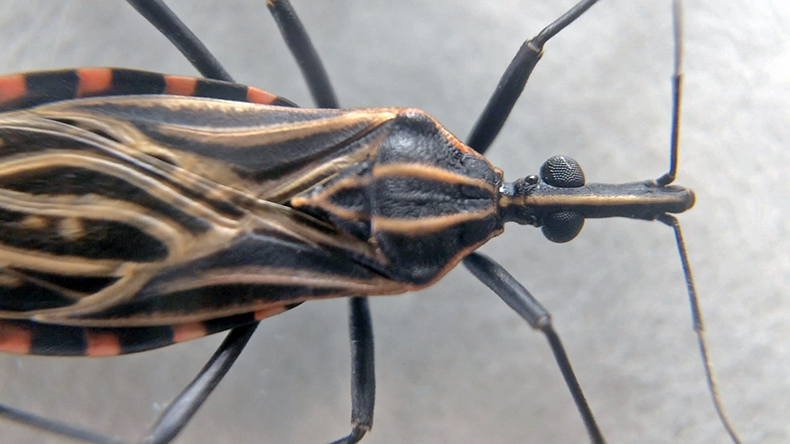
 Barbers, as they are known, feed on the blood of animals and humans.
Triatomine insects, popularly called kissing bugs, are the transmitters of trypanosoma cruzi, etiological agent of Chagas disease. Therefore, when you encounter a suspicious insect that looks like a kissing bug, you need to be careful.
To help the population recognize and correctly deal with these vectors, the Chagas Disease Portal, from the Vice-Presidency of Research and Biological Collections of the F.ioccross (VPPCB/Fiocruz), launched the section 'Did you find a barber?'.
The page brings together three tools to help the population identify vectors and locate the nearest Triatomine Information Station (PIT), where it is possible to deliver suspected insects for correct identification.
One of the experts leading the initiative, the head of the Trypanosomatid Biology Laboratory at the Oswaldo Cruz Institute (IOC/Fiocruz), Samanta Xavier, warns of the importance of recognizing barbers.
“If a kissing bug is found inside or around the house, it is important to take measures to avoid contact with the insect and food contamination,” says the researcher.
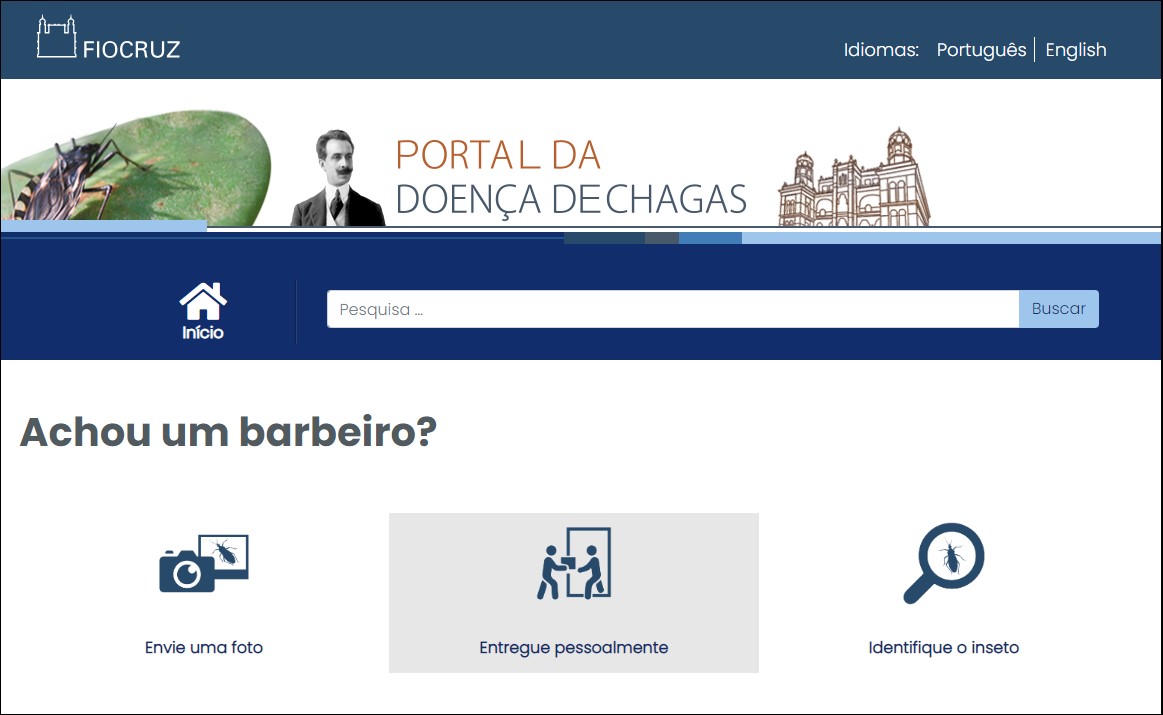 Tools help identify and deliver insects to the health service. Photo: Reproduction
“You should not try to kill or crush the insect, as this may increase the risk of infection. Instead, it is recommended to pick it up carefully, protecting your hands with a glove or plastic bag and place it in a closed container to deliver to the nearest PIT or to a local endemic disease or health agent. When it is not possible to deliver the insect, an alternative is to identify it by sending a photograph”, explains Samanta.
On the Chagas Disease Portal, the 'Deliver in person' section provides details on the correct way to capture the kissing bug and a map where you can locate a PIT to deliver the insect.
Called 'PITs Maps', the tool was developed by the Trypanosomatid Biology Laboratory of the IOC in partnership with the Institutional Platform Biodiversity and Wild Health of Fiocruz and the Military Engineering Institute (IME), with support from the Fio-Chagas Translational Research Program.
PITs are defined by city halls, including fixed and floating points. Example: endemic and health agents, health services, research institutions, schools, churches and community leaders can act as PITs.
Interactively, 'PITs Maps' can suggest the closest point based on the user's location. It is also possible to navigate the map and search by address.
The tool already shows the location of all PITs in Ceará and Rio Grande do Sul. The states participated in the pilot stage of the project. In total, 856 points were mapped in Ceará and 497 in Rio Grande do Sul.
For the other states, mapping is underway, with at least one point identified in the federation units: Acre, Bahia, Mato Grosso, Minas Gerais, Pernambuco, Piauí, Rio de Janeiro, Rondônia and Santa Catarina.
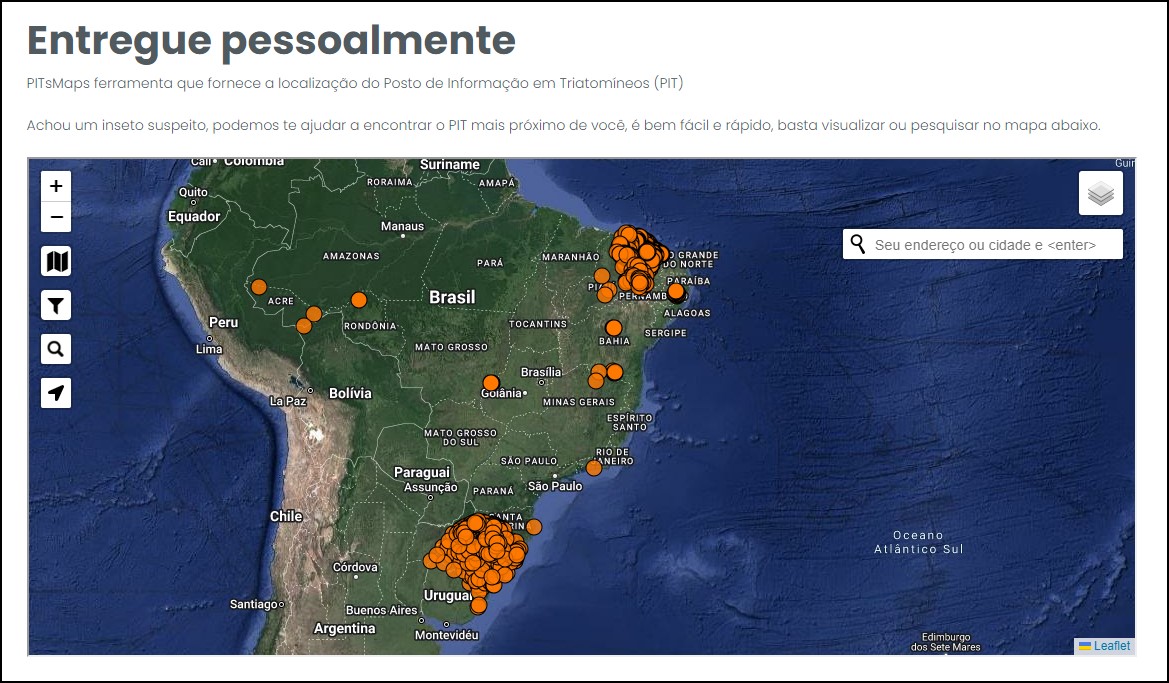 Tool indicates points for delivery of insects suspected of being kissing bugs. Photo: reproduction
“The objective of the project is to make it easier for the population to locate PITs. The delivery of insects suspected of being kissing bugs is important to confirm identification and investigate whether the vectors are infected, which raises the alarm to reinforce control actions”, emphasizes Samanta.
Insects received at PITs are sent to the region's reference laboratory, where they can be identified and examined to detect the presence of the parasite. trypanosoma cruzi, which causes Chagas disease.
The results of the analyzes are informed to the population by the region's health or endemic disease agent, who carries out the necessary control and guidance actions if the presence of kissing bugs is confirmed.
In addition to indicating the location of PITs, the Chagas Disease Portal offers two other tools to help the population identify vectors.
In the 'Send a photo' section, you can attach an image of the insect found, which will be analyzed by F specialistsiocruz. Currently, the service is carried out by the head of the National and International Reference Laboratory for Triatomine Taxonomy of the IOC, Cleber Galvão, with the support of Samanta Xavier.
The 'Identify the insect' section directs the user to the Triatokey application, developed by the René Rachou Institute (Fiocruz-Minas).
The online tool helps citizens identify the insect, differentiating the kissing bugs – which feed on blood and can transmit the virus. trypanosoma cruzi – from other bedbugs – which feed on plants or other insects and do not pose a risk of infection to humans.
Triatomine insects are a type of bed bug that feeds on the blood of vertebrate animals and can bite wild and domestic animals, as well as humans.
More active at night, triatomines usually bite parts of the body that are uncovered, such as the face. For this reason, they earned the nickname barbers.
Chagas disease is caused by the parasite trypanosoma cruzi.
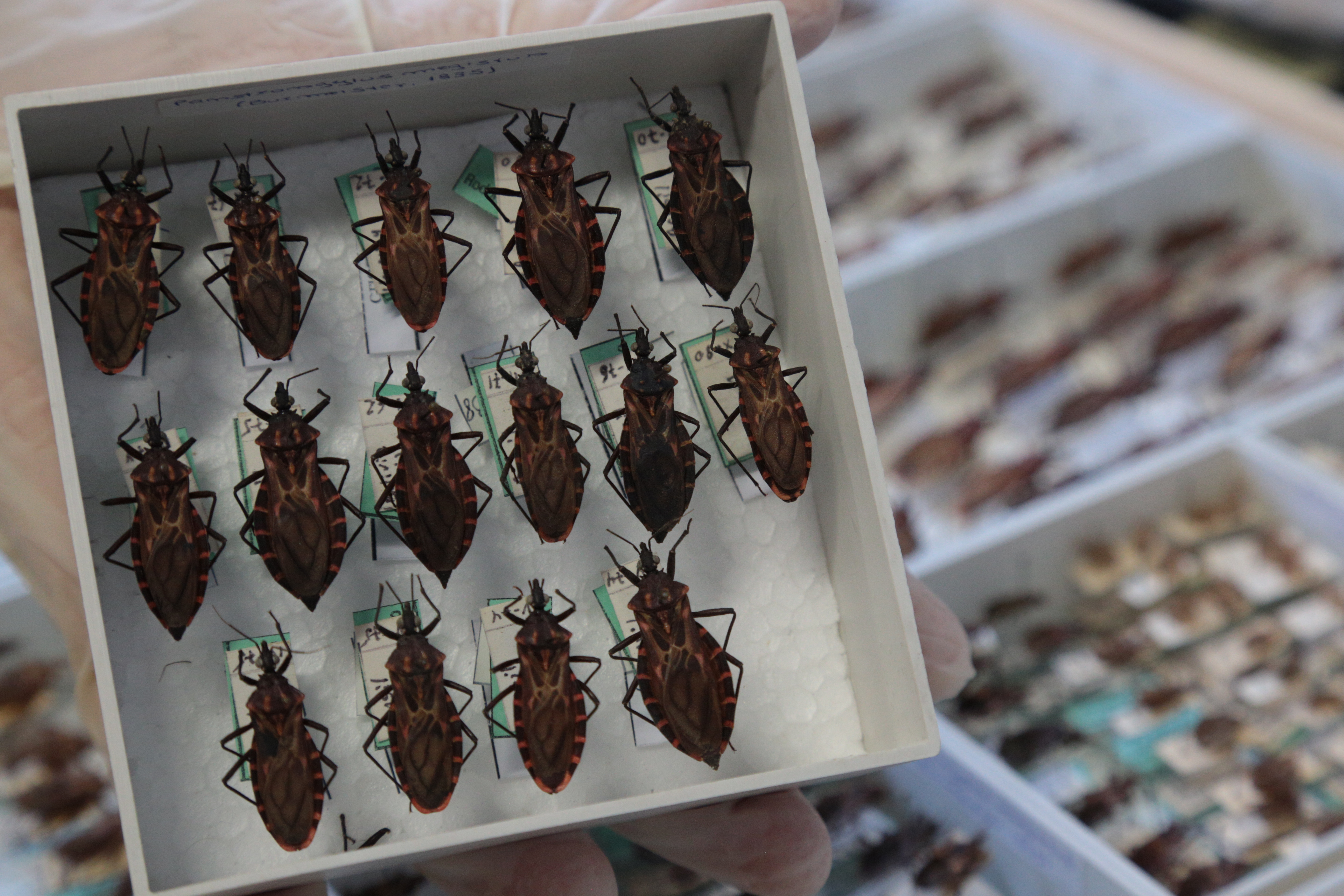 The Oswaldo Cruz Institute houses one of the largest collections of Chagas disease vectors in the world. Created in 1909, the Triatomine Collection brings together thousands of insect specimens from Brazil and different countries. Photo: Josué Damacena
Barbers are not born infected by this microorganism. They acquire T. cruzi when biting infected animals or people. They then become infectious and can transmit the parasite.
“Barbers are involved in the two most frequent forms of transmission in Brazil, either through insect bites or through ingestion of contaminated food. Therefore, it is important to have knowledge of the environments where these insects are present”, says Samanta.
The traditional form of transmission involves the kissing bug. During or after the bite to feed on blood, the insect may defecate on the skin. When scratching the bite site, the infectious forms of the parasite that were eliminated through the insect's feces and/or urine can come into contact with mucous membranes or injured areas and penetrate the body.
Currently, food contamination is the most common form of infection. This occurs when kissing bugs or their feces are accidentally crushed, for example in food preparation.
In the northern region of the country, the consumption of fresh açaí juice is the food most involved in oral vector transmission, but cases of acute Chagas disease (ACD) have been recorded with other fruits, such as sugarcane juice in an ACD outbreak in 2005, in Santa Catarina.
Learn more about Chagas disease.
Barbers, as they are known, feed on the blood of animals and humans.Triatomine insects, popularly called kissing bugs, are the transmitters of trypanosoma cruzi, etiological agent of Chagas disease. Therefore, when you encounter a suspicious insect that looks like a kissing bug, you need to be careful.
To help the population recognize and correctly deal with these vectors, the Chagas Disease Portal, from the Vice-Presidency of Research and Biological Collections of the F.ioccross (VPPCB/Fiocruz), launched the section 'Did you find a barber?'.
The page brings together three tools to help the population identify vectors and locate the nearest Triatomine Information Station (PIT), where it is possible to deliver suspected insects for correct identification.
One of the experts leading the initiative, the head of the Trypanosomatid Biology Laboratory at the Oswaldo Cruz Institute (IOC/Fiocruz), Samanta Xavier, warns of the importance of recognizing barbers.
“If a kissing bug is found inside or around the house, it is important to take measures to avoid contact with the insect and food contamination,” says the researcher.
Tools help identify and deliver insects to the health service. Photo: Reproduction
“You should not try to kill or crush the insect, as this may increase the risk of infection. Instead, it is recommended to pick it up carefully, protecting your hands with a glove or plastic bag and place it in a closed container to deliver to the nearest PIT or to a local endemic disease or health agent. When it is not possible to deliver the insect, an alternative is to identify it by sending a photograph”, explains Samanta.
On the Chagas Disease Portal, the 'Deliver in person' section provides details on the correct way to capture the kissing bug and a map where you can locate a PIT to deliver the insect.
Called 'PITs Maps', the tool was developed by the Trypanosomatid Biology Laboratory of the IOC in partnership with the Institutional Platform Biodiversity and Wild Health of Fiocruz and the Military Engineering Institute (IME), with support from the Fio-Chagas Translational Research Program.
PITs are defined by city halls, including fixed and floating points. Example: endemic and health agents, health services, research institutions, schools, churches and community leaders can act as PITs.
Interactively, 'PITs Maps' can suggest the closest point based on the user's location. It is also possible to navigate the map and search by address.
The tool already shows the location of all PITs in Ceará and Rio Grande do Sul. The states participated in the pilot stage of the project. In total, 856 points were mapped in Ceará and 497 in Rio Grande do Sul.
For the other states, mapping is underway, with at least one point identified in the federation units: Acre, Bahia, Mato Grosso, Minas Gerais, Pernambuco, Piauí, Rio de Janeiro, Rondônia and Santa Catarina.
Tool indicates points for delivery of insects suspected of being kissing bugs. Photo: reproduction
“The objective of the project is to make it easier for the population to locate PITs. The delivery of insects suspected of being kissing bugs is important to confirm identification and investigate whether the vectors are infected, which raises the alarm to reinforce control actions”, emphasizes Samanta.
Insects received at PITs are sent to the region's reference laboratory, where they can be identified and examined to detect the presence of the parasite. trypanosoma cruzi, which causes Chagas disease.
The results of the analyzes are informed to the population by the region's health or endemic disease agent, who carries out the necessary control and guidance actions if the presence of kissing bugs is confirmed.
In addition to indicating the location of PITs, the Chagas Disease Portal offers two other tools to help the population identify vectors.
In the 'Send a photo' section, you can attach an image of the insect found, which will be analyzed by F specialistsiocruz. Currently, the service is carried out by the head of the National and International Reference Laboratory for Triatomine Taxonomy of the IOC, Cleber Galvão, with the support of Samanta Xavier.
The 'Identify the insect' section directs the user to the Triatokey application, developed by the René Rachou Institute (Fiocruz-Minas).
The online tool helps citizens identify the insect, differentiating the kissing bugs – which feed on blood and can transmit the virus. trypanosoma cruzi – from other bedbugs – which feed on plants or other insects and do not pose a risk of infection to humans.
Triatomine insects are a type of bed bug that feeds on the blood of vertebrate animals and can bite wild and domestic animals, as well as humans.
More active at night, triatomines usually bite parts of the body that are uncovered, such as the face. For this reason, they earned the nickname barbers.
Chagas disease is caused by the parasite trypanosoma cruzi.
The Oswaldo Cruz Institute houses one of the largest collections of Chagas disease vectors in the world. Created in 1909, the Triatomine Collection brings together thousands of insect specimens from Brazil and different countries. Photo: Josué Damacena
Barbers are not born infected by this microorganism. They acquire T. cruzi when biting infected animals or people. They then become infectious and can transmit the parasite.
“Barbers are involved in the two most frequent forms of transmission in Brazil, either through insect bites or through ingestion of contaminated food. Therefore, it is important to have knowledge of the environments where these insects are present”, says Samanta.
The traditional form of transmission involves the kissing bug. During or after the bite to feed on blood, the insect may defecate on the skin. When scratching the bite site, the infectious forms of the parasite that were eliminated through the insect's feces and/or urine can come into contact with mucous membranes or injured areas and penetrate the body.
Currently, food contamination is the most common form of infection. This occurs when kissing bugs or their feces are accidentally crushed, for example in food preparation.
In the northern region of the country, the consumption of fresh açaí juice is the food most involved in oral vector transmission, but cases of acute Chagas disease (ACD) have been recorded with other fruits, such as sugarcane juice in an ACD outbreak in 2005, in Santa Catarina.
Learn more about Chagas disease.
The non-profit reproduction of the text is allowed as long as the source is cited (Comunicação / Instituto Oswaldo Cruz)
 |
 |
