
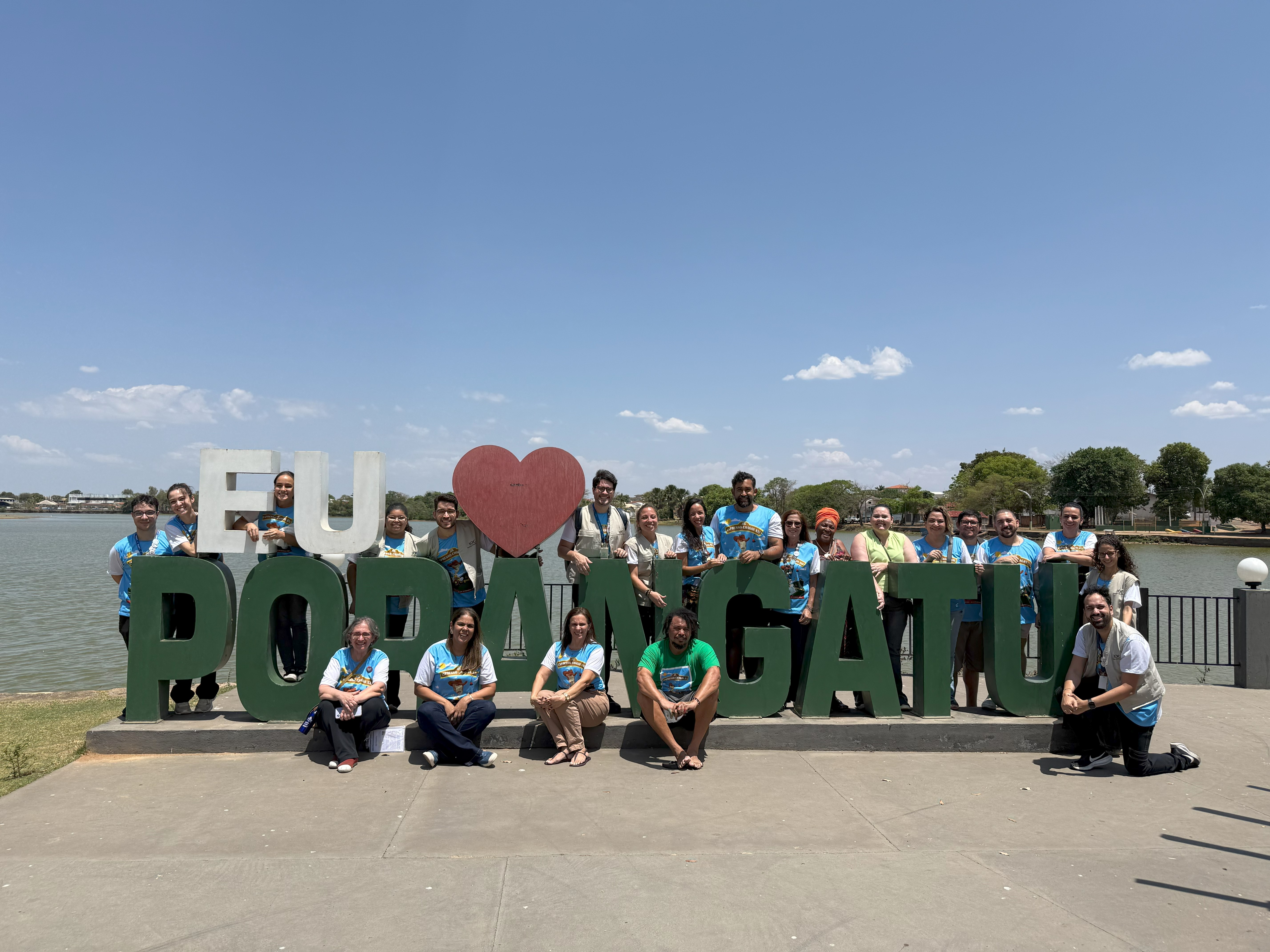
 Porangatu is a Tupi term meaning "beautiful and good." The city is located in northern Goiás. Photo: Andreza Silva
The municipality of Porangatu, in Goiás, received, between the 25th and 27th of September, the actions of 'Expresso Chagas XXI', a project of the Oswaldo Cruz Institute (IOC/Fiocruz) aimed at mobilization, training and implementation of actions to prevent and control Chagas disease.
The activities, held at the Porangatu Cultural Center, were free and open to the community, health professionals, administrators, and local leaders. The program included science and art activities, dialogue with associations of people affected by the disease, and diagnostic services, among other activities.
The initiative was in partnership with local health, education, culture and social assistance teams, who participated in workshops promoted by IOC in August, in addition to online training courses, between August and September.
On September 22nd and 24th, before the official start, preparatory meetings were held with doctors, nurses and endemic agents from the municipality to align actions.
“AFiocruz is here to help inform, mobilize, raise awareness, and alert our community to the consequences of Chagas disease. Many people may be infected and unaware because they don't yet have symptoms. Providing testing and treatment recommendations will improve these people's quality of life," emphasized Porangatu Mayor Vanuza Valadares during the opening of the workshops.
For Flávia Azevedo, municipal health secretary, the initiative's unique feature lies in the presentation of information to the public.
"Expresso Chagas is an innovative scientific technology, in the form of art and science, aimed at the entire population, from children and adolescents to young adults, adults, and the elderly," commented the doctor.
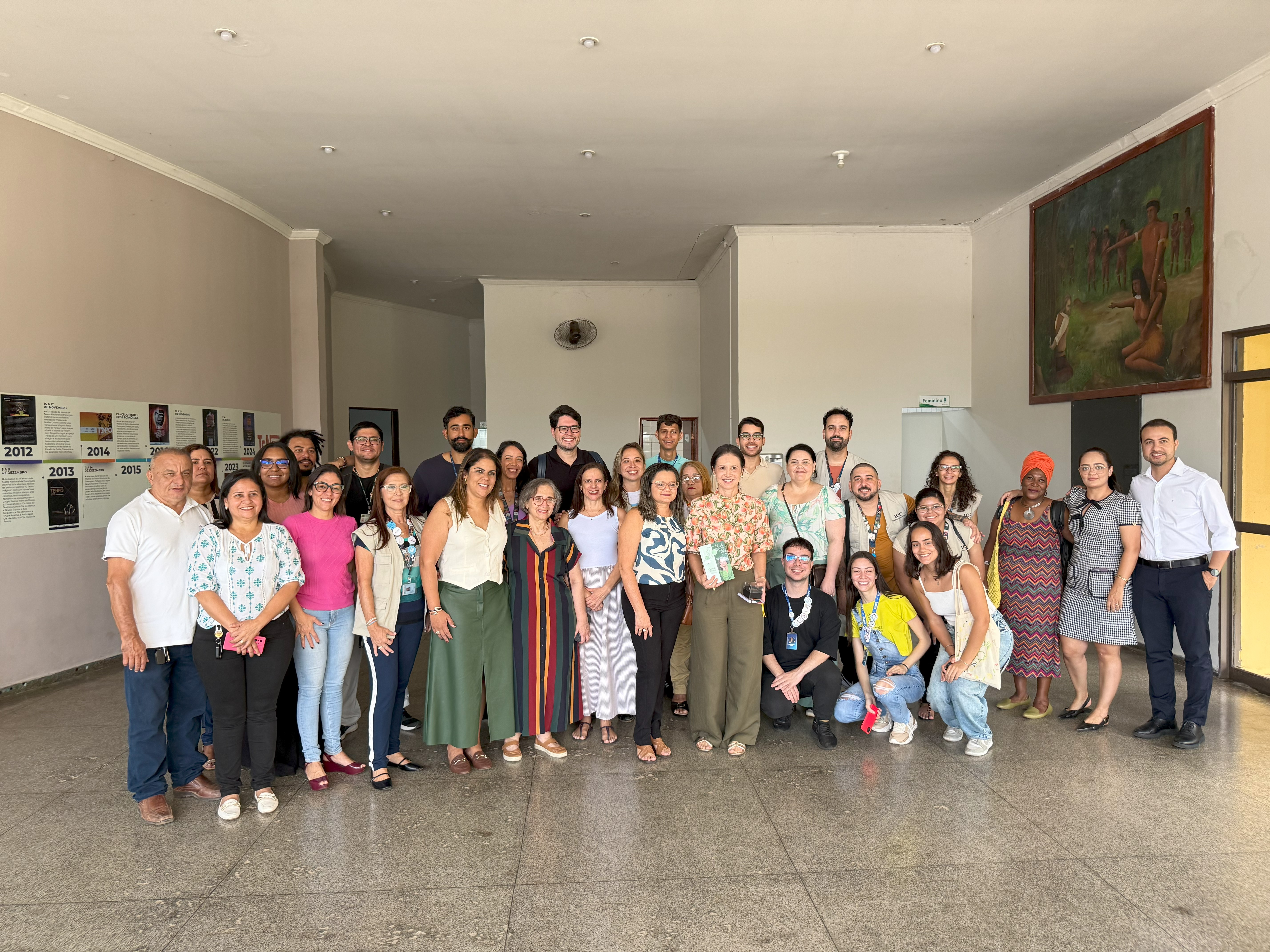 Expresso Chagas team and local authorities during the opening of the preparatory workshops. Photo: Andreza Silva
The director of IOC and coordinator of 'Expresso' highlighted how technology can contribute to reducing the public health impact of Chagas.
"In Goiás, 14 species of kissing bugs capable of transmitting the Chagas disease parasite have been identified. Therefore, understanding this insect and the ways to prevent and treat it are crucial, as it's impossible to eradicate the vector from nature. But we can eliminate Chagas disease as a public health problem by raising awareness, as there is still no vaccine for the disease," he emphasized.
The 'Expresso Chagas XXI' has a scenic train format in allusion to the workplace, between 1907 and 1909, of Carlos Chagas – scientist of IOC who discovered the parasite that causes the infection that bears his last name.
The initiative has a social technology character, which are adaptable techniques and processes created with the purpose of solving some type of social problem, taking into account factors such as simplicity, low cost, easy applicability and social impact.
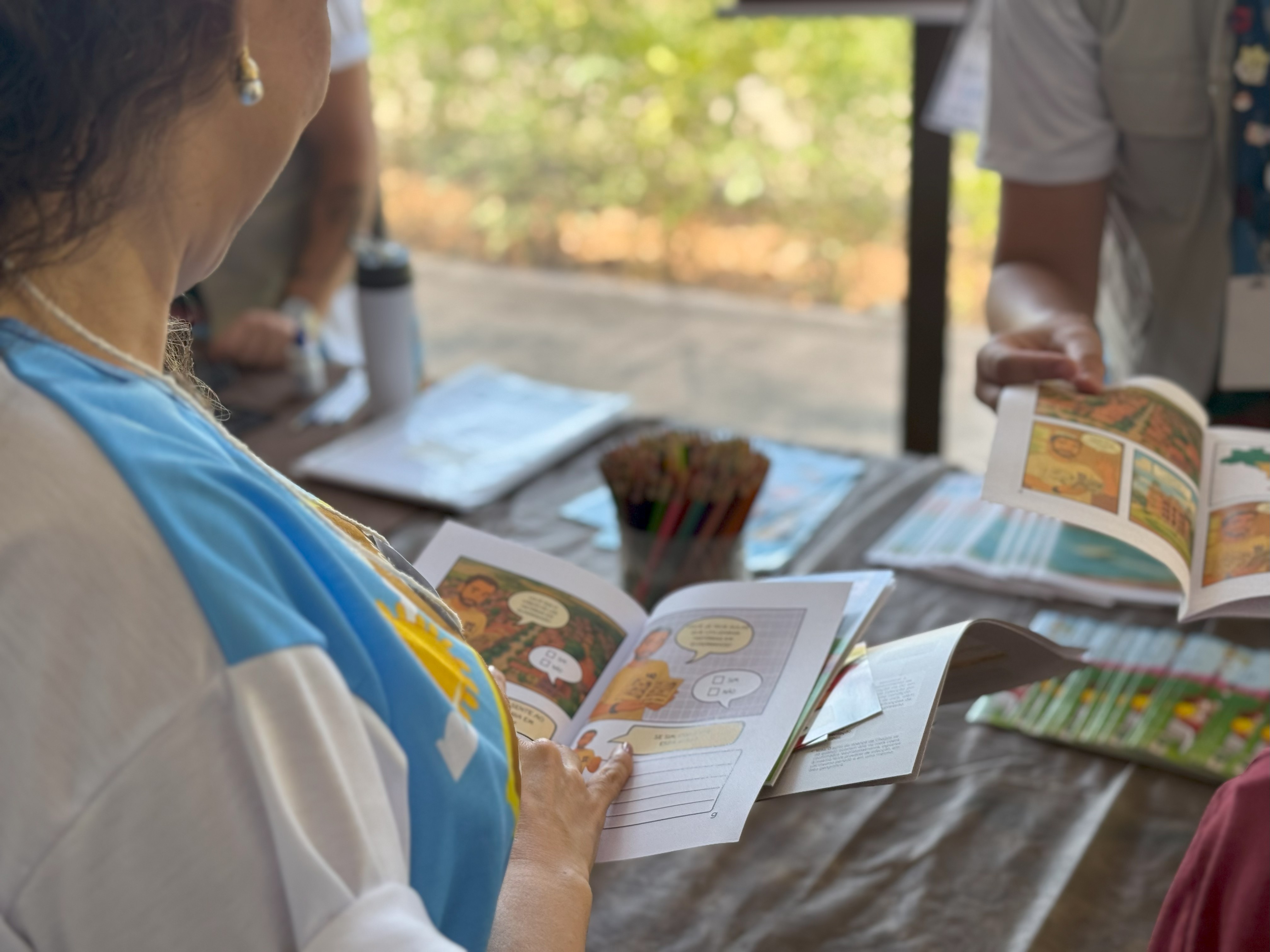 Expresso Chagas: science, art, and culture in one place. Photo: Andreza Silva
The activities offered are presented in six wagons:
In 'Car 1 – Associations and Community Leaders,' the audience learned about the work of leaders and associations linked to Chagas disease. The activity was led by two women with the disease: Maria Andrade, vice-president of the Goiás Association of Chagas Disease Carriers (AGPDC), who presented the role of associations in support and social mobilization; and Marilânia Rios, from Porangatu and a member of the AGPDC, diagnosed at age 18 and who underwent a heart transplant.
The importance of Chagas associations was highlighted by the vice president.
"The Goiana Association of Chagas Disease Carriers is fully available to provide guidance to everyone. If you have any questions, please contact us. Furthermore, we will do everything we can to help those in need. We will seek answers from the authorities and seek treatment. As a leader, we will always be pressing and supporting those affected. We do our best to arrange testing and treatment. Anyone interested can join our association," Maria Andrade emphasized.
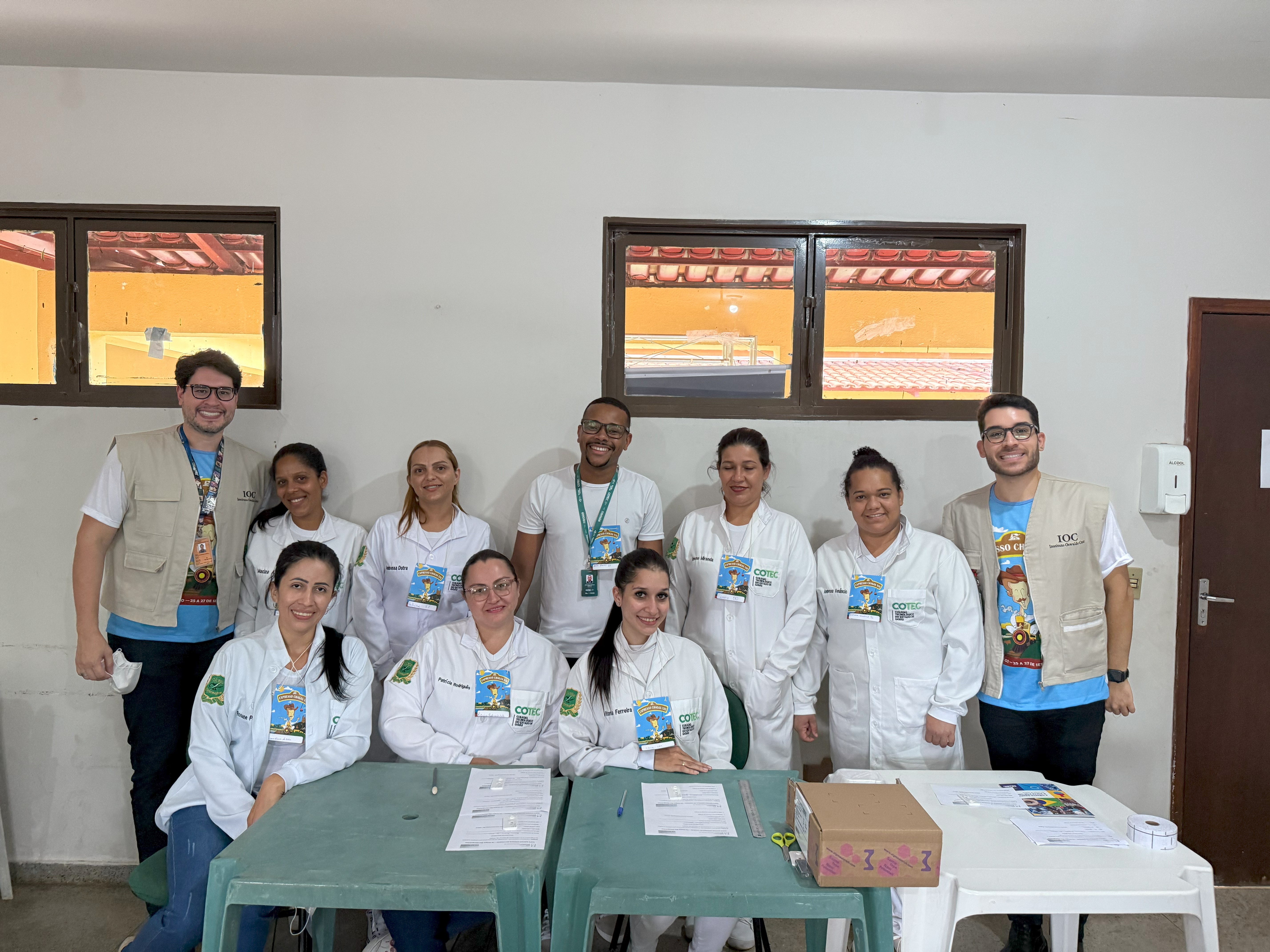 The testing team performed more than 400 rapid tests. . Photo: Andreza Silva
'Wagon 2 – Laboratories and Innovations' featured activities focused on research and diagnosis of Chagas disease. Free rapid tests were performed here, along with routine laboratory activities. Microscopes allowed participants to observe Trypanosoma cruzi. Participants also explored concepts of fluorescence using fluorescent dyes and black light. Third, they learned about vertical transmission, which is the possibility of the parasite passing from mother to baby during pregnancy or breastfeeding.
In 'Wagon 3 – Play and Discover,' the public enjoyed educational and artistic activities. A giant artery simulated the inside of a cell. The "Portinari and Health" space displayed reproductions of the artist's works that address Chagas disease, as well as reinterpretations by visitors, who could also record phrases inspired by the images. There was also an area dedicated to graphic narratives, with comic books and stamps for participants to create new stories.
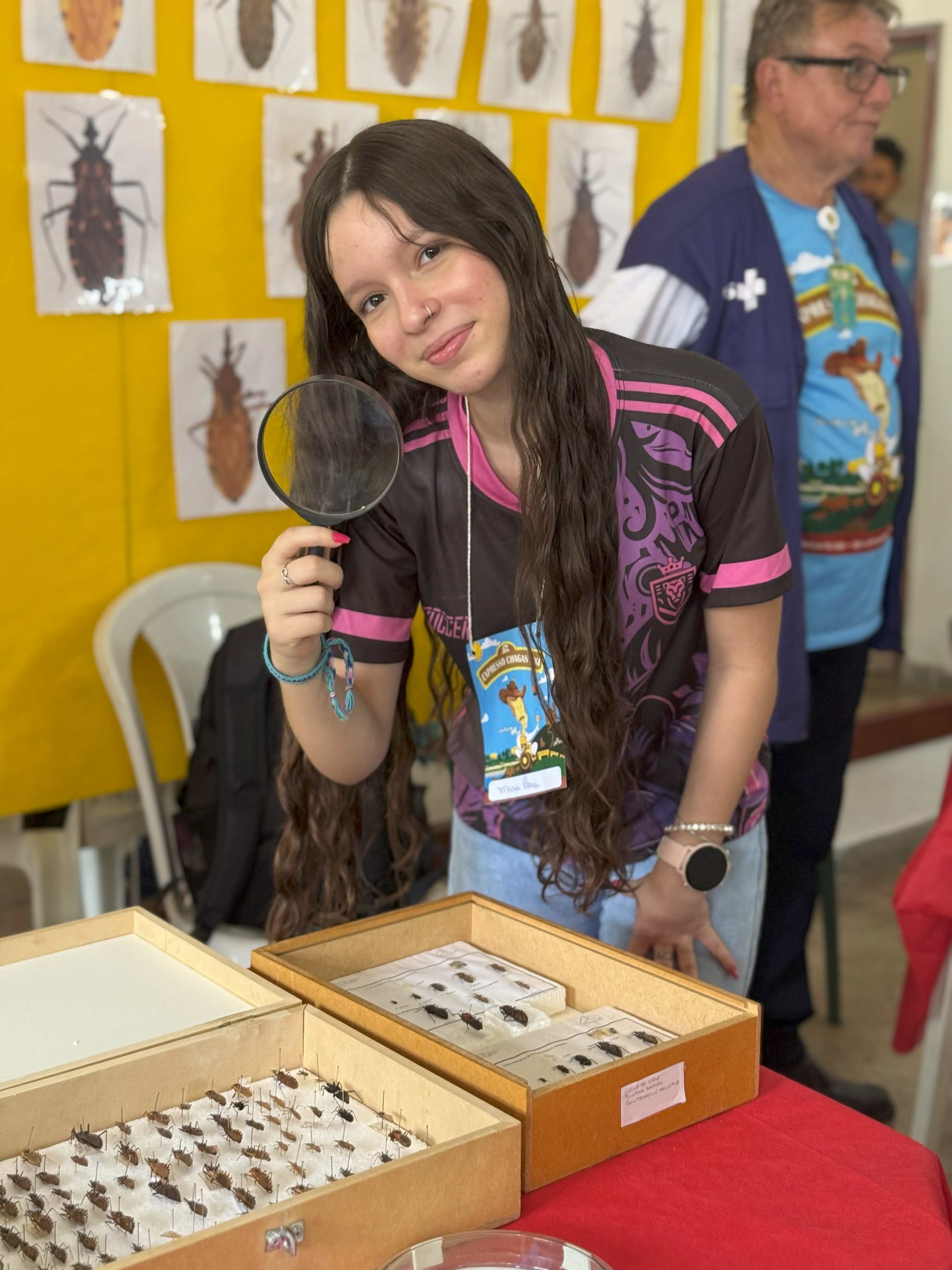 The sighting of kissing bug species caught the public's attention. Photo: Andreza Silva
With 'Wagon 4 – Vectors, One Health, and the Environment,' the public could explore the environments where the kissing bug typically thrives. Models helped understand the conditions that favor the insect's presence. Enlarged replicas of kissing bugs allowed for an appreciation of the vector's characteristics. The space also featured a wall with images of the 14 kissing bug species found in the state of Goiás, with instructions on what to do if you encounter the insect and who to contact.
'Wagon 5 – Well-being and Integrative Practices' focused on well-being and integrative health initiatives. The audience learned about aromatherapy and herbal medicine activities, with fragrance and tea demonstrations. Seedlings of native species from the region were also distributed, encouraging environmental stewardship and a connection with the region.
'Car 6 – Your Voice' offered a listening and evaluation activity. Visitors participated in a discussion group, shared their perceptions of the cars, and gave scores for each space they visited. The public received the newspaper "A Voz do Saruê," with information and interesting facts about the project, and a certificate of participation.
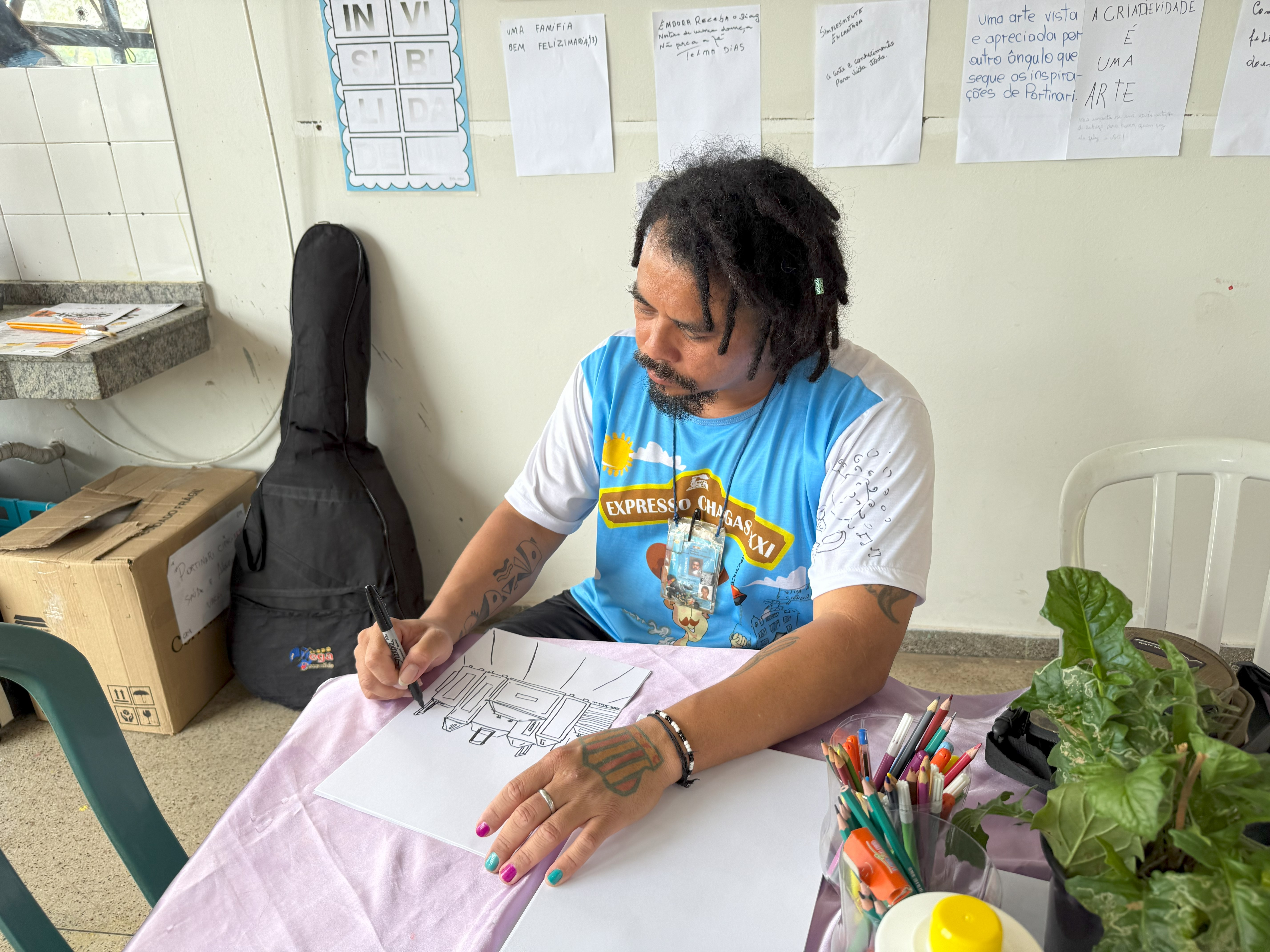 Artistic displays are part of the Expresso carriages. Photo: Andreza Silva
More than a thousand participants, including around 180 students from schools in the municipality, passed by on the 'Expresso' carriages.
"The project's goals include health education and the active search for chronic cases of the disease. In addition to the event in the city center, we also went to rural areas, as some residents couldn't leave," emphasized Roberto Ferreira, coordinator of the initiative.
"We've heard about it since we were kids, but we don't know much about it. Participating in the activities has taught me a lot," commented Sandra Rosa dos Santos, a local resident.
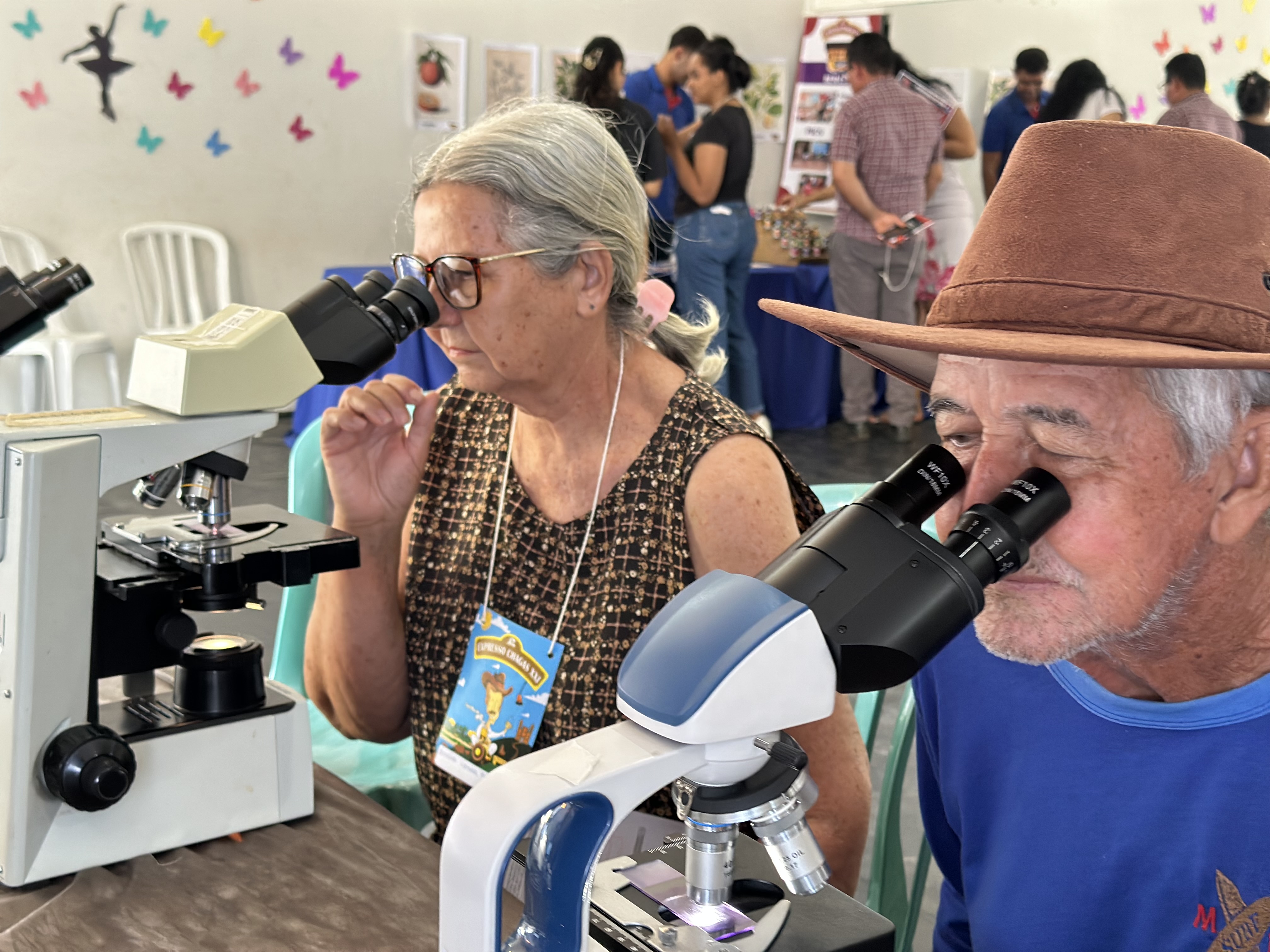 The people of Porangatu turned out in large numbers for the awareness-raising activities. Photo: Andreza Silva
In total, 404 free tests were conducted to detect the disease. Of these, 21 returned positive results, based on confirmatory tests led by the state's Central Public Health Laboratory (LACEN/GO).
"In partnership with LACEN, we were able to provide accurate diagnoses for people and then refer them for assistance in Primary Health Care at the Porangatu Municipal Health Department," explained Roberto.
"The Chagas Express in Porangatu was wonderful. We involved many health professionals, many education professionals. The population came in force. I'm very happy to have witnessed this work. This project could become public policy in the state. I believe Carlos Chagas would be proud of the people who worked and continue to work on this initiative. This is a new moment in the fight against Chagas disease in Goiás," Tania celebrated, emotionally.
Porangatu is a Tupi term meaning "beautiful and good." The city is located in northern Goiás. Photo: Andreza Silva
The municipality of Porangatu, in Goiás, received, between the 25th and 27th of September, the actions of 'Expresso Chagas XXI', a project of the Oswaldo Cruz Institute (IOC/Fiocruz) aimed at mobilization, training and implementation of actions to prevent and control Chagas disease.
The activities, held at the Porangatu Cultural Center, were free and open to the community, health professionals, administrators, and local leaders. The program included science and art activities, dialogue with associations of people affected by the disease, and diagnostic services, among other activities.
The initiative was in partnership with local health, education, culture and social assistance teams, who participated in workshops promoted by IOC in August, in addition to online training courses, between August and September.
On September 22nd and 24th, before the official start, preparatory meetings were held with doctors, nurses and endemic agents from the municipality to align actions.
“AFiocruz is here to help inform, mobilize, raise awareness, and alert our community to the consequences of Chagas disease. Many people may be infected and unaware because they don't yet have symptoms. Providing testing and treatment recommendations will improve these people's quality of life," emphasized Porangatu Mayor Vanuza Valadares during the opening of the workshops.
For Flávia Azevedo, municipal health secretary, the initiative's unique feature lies in the presentation of information to the public.
"Expresso Chagas is an innovative scientific technology, in the form of art and science, aimed at the entire population, from children and adolescents to young adults, adults, and the elderly," commented the doctor.
Expresso Chagas team and local authorities during the opening of the preparatory workshops. Photo: Andreza Silva
The director of IOC and coordinator of 'Expresso' highlighted how technology can contribute to reducing the public health impact of Chagas.
"In Goiás, 14 species of kissing bugs capable of transmitting the Chagas disease parasite have been identified. Therefore, understanding this insect and the ways to prevent and treat it are crucial, as it's impossible to eradicate the vector from nature. But we can eliminate Chagas disease as a public health problem by raising awareness, as there is still no vaccine for the disease," he emphasized.
The 'Expresso Chagas XXI' has a scenic train format in allusion to the workplace, between 1907 and 1909, of Carlos Chagas – scientist of IOC who discovered the parasite that causes the infection that bears his last name.
The initiative has a social technology character, which are adaptable techniques and processes created with the purpose of solving some type of social problem, taking into account factors such as simplicity, low cost, easy applicability and social impact.
Expresso Chagas: science, art, and culture in one place. Photo: Andreza Silva
The activities offered are presented in six wagons:
In 'Car 1 – Associations and Community Leaders,' the audience learned about the work of leaders and associations linked to Chagas disease. The activity was led by two women with the disease: Maria Andrade, vice-president of the Goiás Association of Chagas Disease Carriers (AGPDC), who presented the role of associations in support and social mobilization; and Marilânia Rios, from Porangatu and a member of the AGPDC, diagnosed at age 18 and who underwent a heart transplant.
The importance of Chagas associations was highlighted by the vice president.
"The Goiana Association of Chagas Disease Carriers is fully available to provide guidance to everyone. If you have any questions, please contact us. Furthermore, we will do everything we can to help those in need. We will seek answers from the authorities and seek treatment. As a leader, we will always be pressing and supporting those affected. We do our best to arrange testing and treatment. Anyone interested can join our association," Maria Andrade emphasized.
The testing team performed more than 400 rapid tests. . Photo: Andreza Silva
'Wagon 2 – Laboratories and Innovations' featured activities focused on research and diagnosis of Chagas disease. Free rapid tests were performed here, along with routine laboratory activities. Microscopes allowed participants to observe Trypanosoma cruzi. Participants also explored concepts of fluorescence using fluorescent dyes and black light. Third, they learned about vertical transmission, which is the possibility of the parasite passing from mother to baby during pregnancy or breastfeeding.
In 'Wagon 3 – Play and Discover,' the public enjoyed educational and artistic activities. A giant artery simulated the inside of a cell. The "Portinari and Health" space displayed reproductions of the artist's works that address Chagas disease, as well as reinterpretations by visitors, who could also record phrases inspired by the images. There was also an area dedicated to graphic narratives, with comic books and stamps for participants to create new stories.
The sighting of kissing bug species caught the public's attention. Photo: Andreza Silva
With 'Wagon 4 – Vectors, One Health, and the Environment,' the public could explore the environments where the kissing bug typically thrives. Models helped understand the conditions that favor the insect's presence. Enlarged replicas of kissing bugs allowed for an appreciation of the vector's characteristics. The space also featured a wall with images of the 14 kissing bug species found in the state of Goiás, with instructions on what to do if you encounter the insect and who to contact.
'Wagon 5 – Well-being and Integrative Practices' focused on well-being and integrative health initiatives. The audience learned about aromatherapy and herbal medicine activities, with fragrance and tea demonstrations. Seedlings of native species from the region were also distributed, encouraging environmental stewardship and a connection with the region.
'Car 6 – Your Voice' offered a listening and evaluation activity. Visitors participated in a discussion group, shared their perceptions of the cars, and gave scores for each space they visited. The public received the newspaper "A Voz do Saruê," with information and interesting facts about the project, and a certificate of participation.
Artistic displays are part of the Expresso carriages. Photo: Andreza Silva
More than a thousand participants, including around 180 students from schools in the municipality, passed by on the 'Expresso' carriages.
"The project's goals include health education and the active search for chronic cases of the disease. In addition to the event in the city center, we also went to rural areas, as some residents couldn't leave," emphasized Roberto Ferreira, coordinator of the initiative.
"We've heard about it since we were kids, but we don't know much about it. Participating in the activities has taught me a lot," commented Sandra Rosa dos Santos, a local resident.
The people of Porangatu turned out in large numbers for the awareness-raising activities. Photo: Andreza Silva
In total, 404 free tests were conducted to detect the disease. Of these, 21 returned positive results, based on confirmatory tests led by the state's Central Public Health Laboratory (LACEN/GO).
"In partnership with LACEN, we were able to provide accurate diagnoses for people and then refer them for assistance in Primary Health Care at the Porangatu Municipal Health Department," explained Roberto.
"The Chagas Express in Porangatu was wonderful. We involved many health professionals, many education professionals. The population came in force. I'm very happy to have witnessed this work. This project could become public policy in the state. I believe Carlos Chagas would be proud of the people who worked and continue to work on this initiative. This is a new moment in the fight against Chagas disease in Goiás," Tania celebrated, emotionally.
The non-profit reproduction of the text is allowed as long as the source is cited (Comunicação / Instituto Oswaldo Cruz)
 |
 |
