
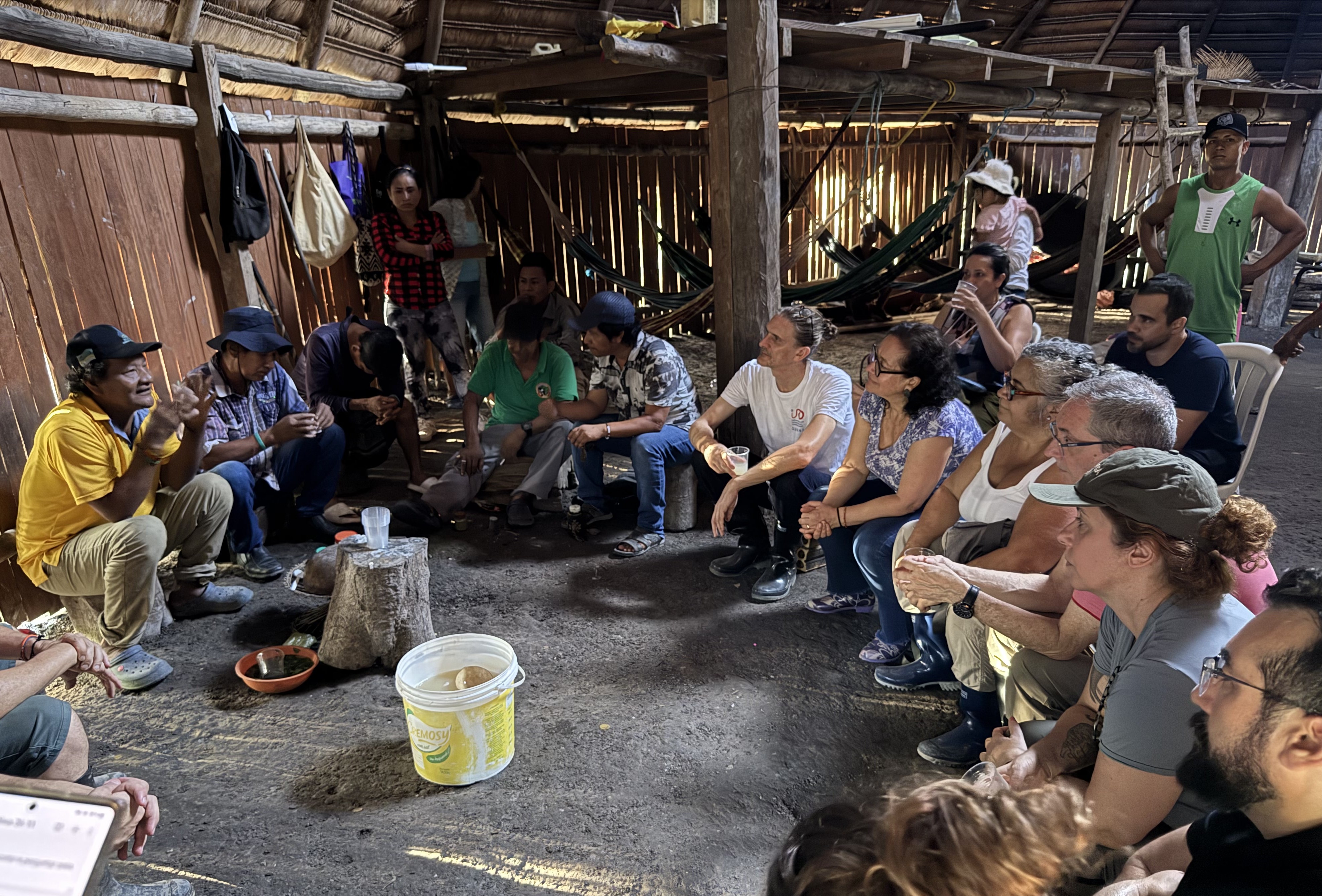
 Leaders of the multi-ethnic Tiwa community in Colombia talk with researchers from the Mosaic project about a partnership to build information systems. Photo: Josué Damacena
To develop information tools to support communities and institutions in border areas in addressing the impacts of climate and environmental change on health and well-being.
This is the objective of the international project. Mosaic, an acronym in English that refers to the title 'Multilocal application of open science in creating healthy environments involving local communities'.
In November, researchers from FiocResearch and scientific institutions from South America, Europe, and Africa that are part of the initiative have taken another step towards advancing research in Amazonian frontier regions.
Between the 17th and 21st, the scientists were in Oiapoque, Amapá, on the border between Brazil and French Guiana. From the 24th to the 28th, the team worked in Leticia, Colombia, on the triple border with Brazil and Peru.
Marking the second year of research development in these territories, the researchers promoted activities focused on open science, with the goal of developing solutions in partnership with local communities.
In both regions, events were held with the participation of indigenous leaders, managers and professionals in public health, indigenous health, environment and education, researchers and representatives of non-governmental organizations.
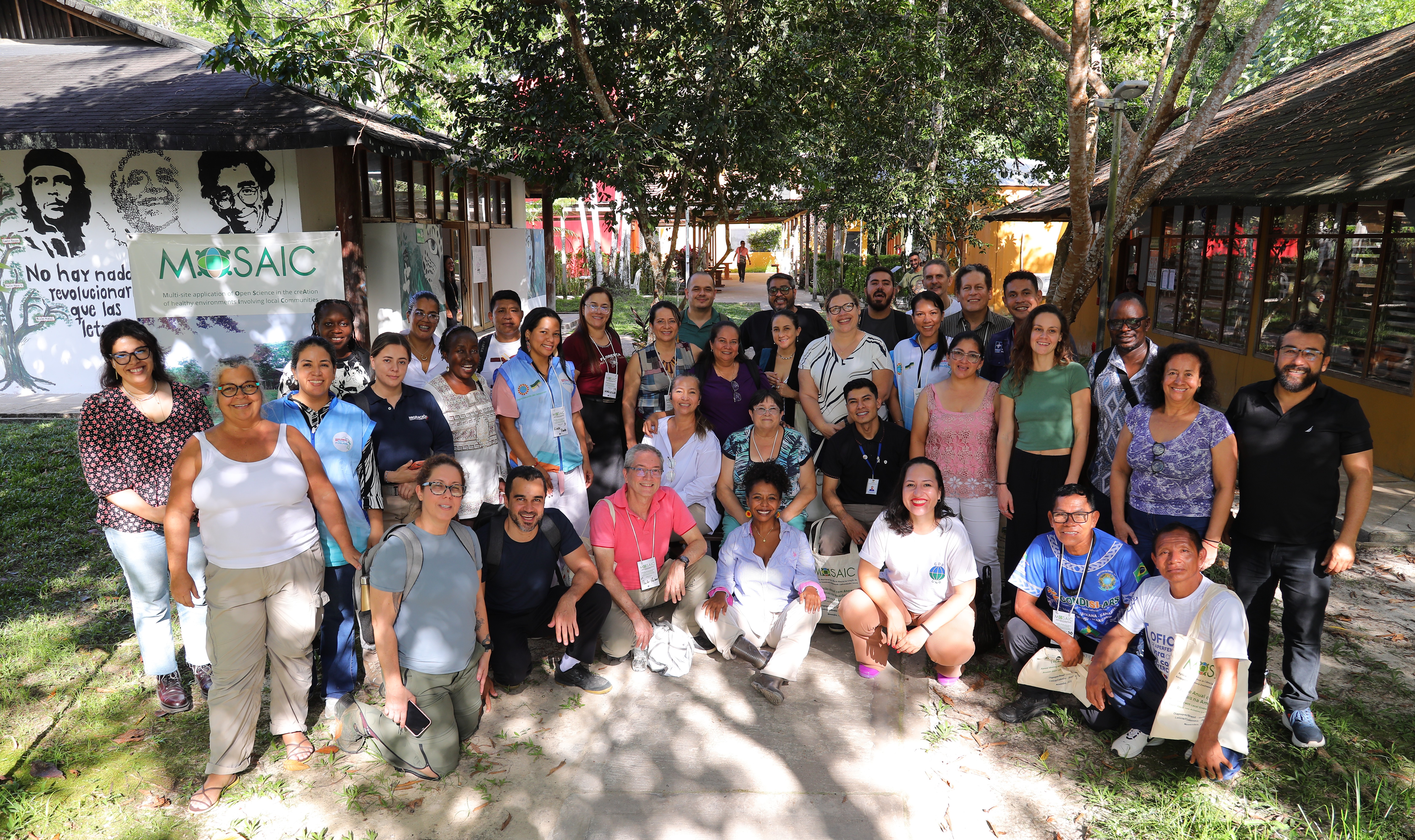 Scientists from the Mosaic project and representatives from Brazilian and Colombian institutions meet at the National University of Colombia (UNAL). Photo: Josué Damacena
Furthermore, in Oiapoque, the scientists visited indigenous associations, neighborhoods recently built from settlements in forested areas, and an organization that works in health cooperation on the border.
In Leticia, visits were made to indigenous communities and a national natural park, with which the Mosaic project aims to collaborate on strategic initiatives, contributing to a new model for the indigenous health system in Colombia and environmental conservation.
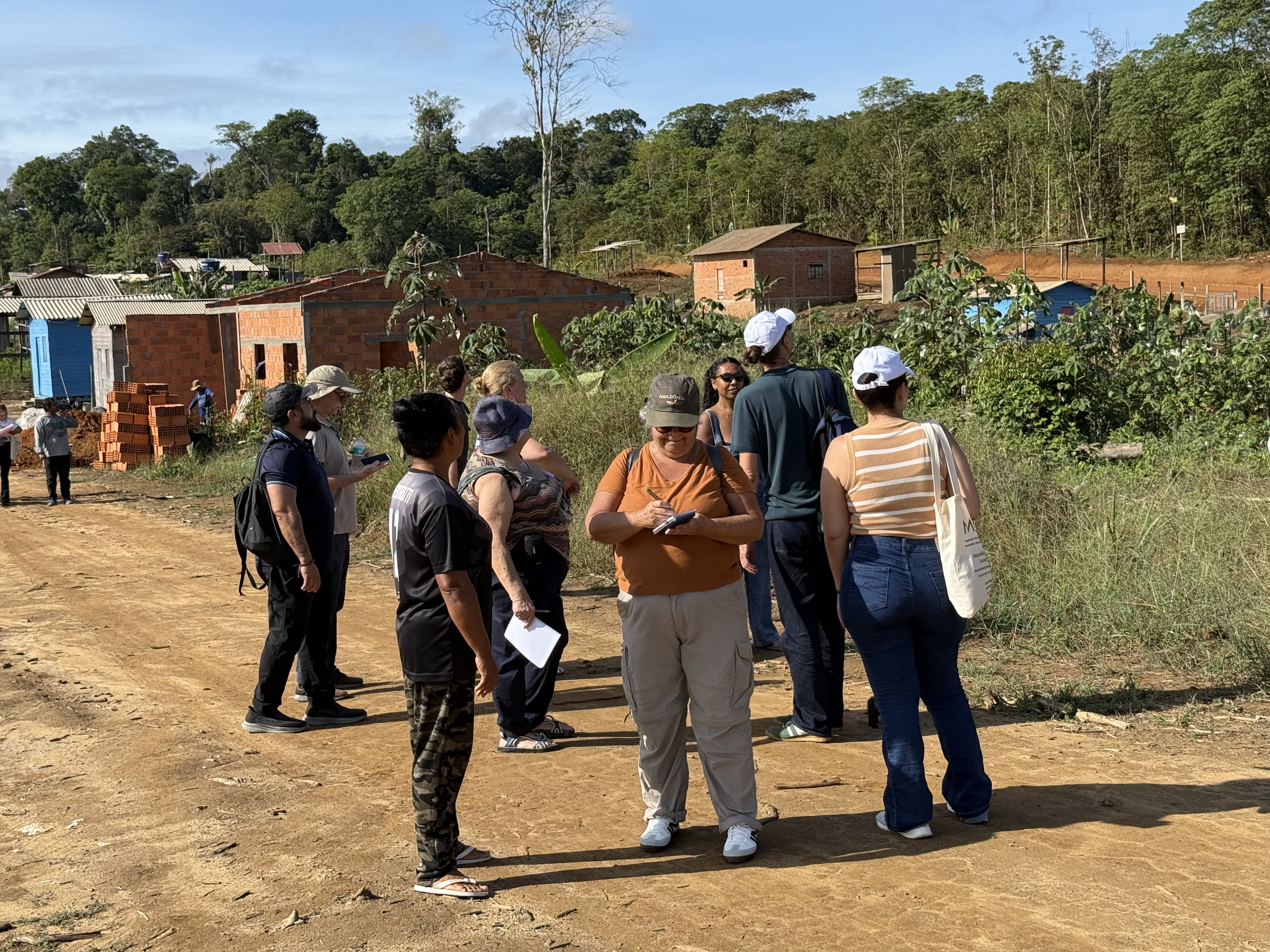 A visit to the Independência neighborhood in Oiapoque, which began construction two years ago on municipal land previously occupied by forest. Photo: Josué Damacena
The importance of the mission in building useful and accessible information systems for communities and institutions on the frontiers is highlighted by scientists.
“These activities aimed at listening, to understand people's concerns and the difficulties in dealing with climate change, including extreme events. This is necessary to create important data platforms for communities, so that they can act locally to prevent and adapt to these changes, which are accelerating more and more,” says Paulo Peiter, researcher at the Oswaldo Cruz Institute (Oswaldo Cruz Institute).IOC/Fiocruz) and the International Platform for Science, Technology and Innovation in Health (PICTIS/Fiocruz), one of the Mosaic leaders in the area of shared science with local stakeholders.
“Open science is not just about access to scientific data, but also about the co-production of knowledge. Communities locally know the environment, but this knowledge is not necessarily integrated with scientific knowledge. On the other hand, scientific data can be very useful locally, but not everyone has access to it. The Mosaic project aims to integrate this knowledge and truly share data among all interested parties,” emphasizes Emmanuel Roux, researcher at the Institute of Research for Development (IRD) in France, and general coordinator of Mosaic.
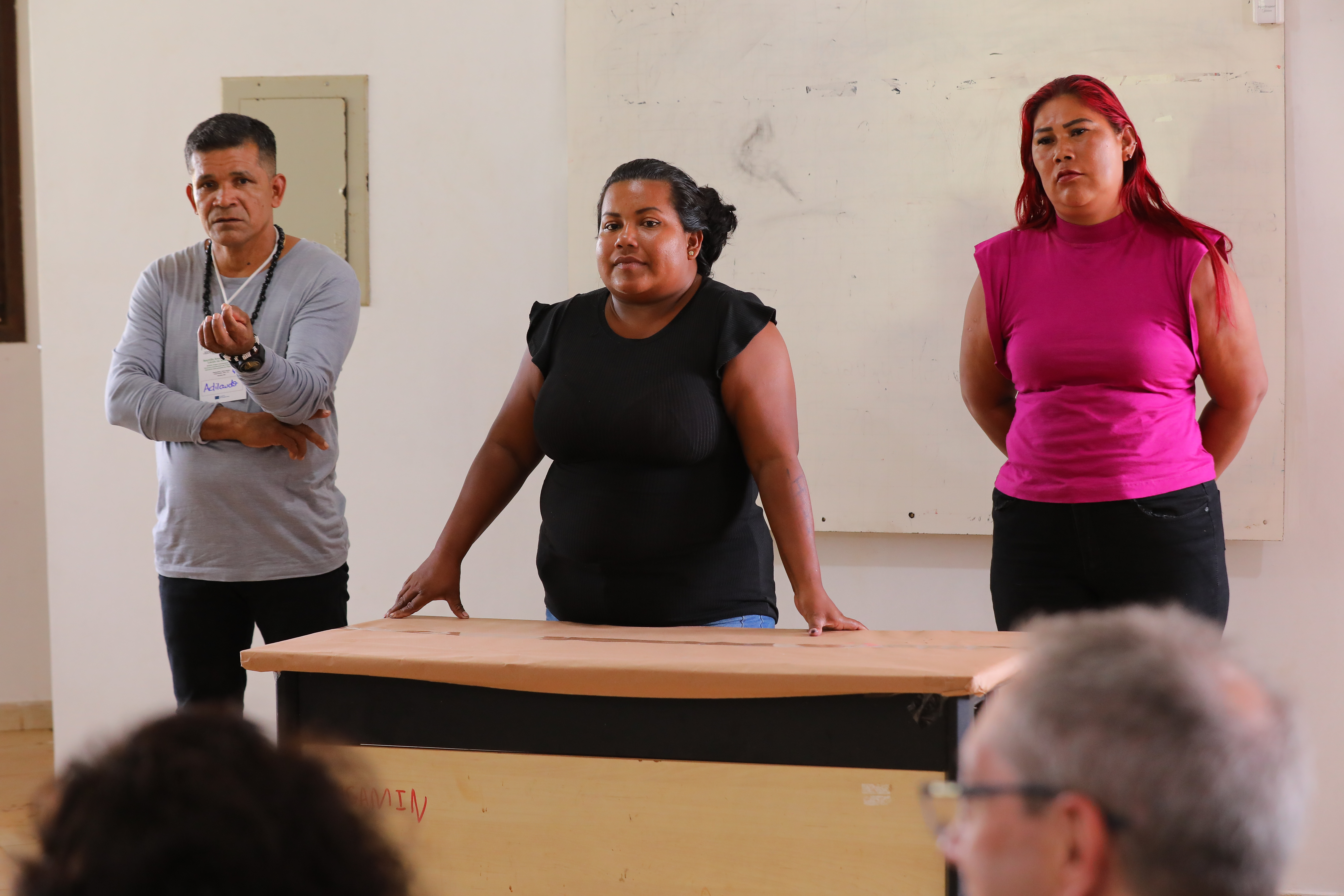 Adilaudo dos Santos, Maria Anika Valente, and Valdene Narciso Felicio presented conservation actions and research carried out as Indigenous environmental agents (Agamin) in Oiapoque. Photo: Josué Damacena
The researchers also emphasize the importance of these actions in developing robust data integration strategies across borders.
“Normally, research, health initiatives, and public data policies don't cross borders, but environmental problems, parasites, vectors, people, and animals do. So, the Mosaic project has the task of building information systems that cross borders, that local populations can use to fight climate change and environmental degradation,” points out Martha Mutis, a researcher at [institution name]. IOC/Fiocruz and PICTIS/FiocRuz, one of the leading researchers in the area of dissemination and application of results.
More than 20 researchers from Brazil, Colombia, France, and Kenya participated in the activities. Alongside researchers from IOC/Fiocruz, PICTIS/FiocRuz and IRD, integrated the group of professionals from the Leônidas and Maria Deane Institute (FiocAmazon River); University of Brasília (UNB); National University of Colombia (UNAL); University Hospital Center of French Guiana (CHU), University of Artois (UA), France; and African Conservation Center (ACC), Kenya.
 Calendar of climatic, environmental, and health events recorded in the tri-border region, produced by representatives of Brazilian and Colombian institutions in a participatory activity. Photo: Josué Damacena
Launched in 2024, the Mosaic project is scheduled to last until 2027. In addition to the two border areas in the Amazon, the research encompasses the border between Kenya and Tanzania in East Africa. The initiative unites 15 scientific institutions from seven countries.
Coordinated by the IRD, the project is funded by the European Union. This is the first project selected in a European call for research funding with the participation of PICTIS, a research center established in collaboration between Fiocruz, through the IOC, and the University of Aveiro, in Portugal.
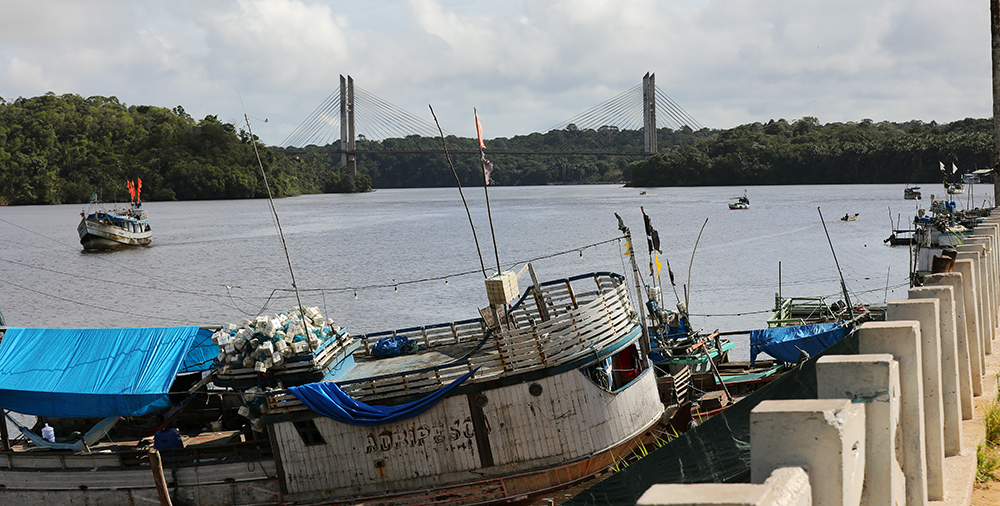
The Binational Bridge connects Oiapoque, in Amapá, and Saint George de l'Oyapck, in French Guiana. Photo: Josué Damacena
The international mission received financial support from the LMI Sentinela project, funded by IRD, and Inovec, with European funding. Activities in the tri-border area also took place within the framework of the Fefaccion research project, funded by the French Embassy in Brazil.
Check out the reports to see the progress of research in each of the border areas.
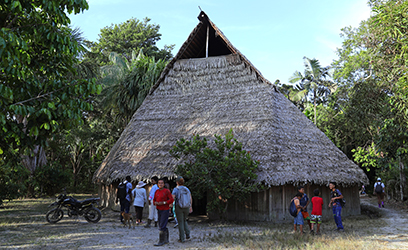 Leaders of the multi-ethnic Tiwa community in Colombia talk with researchers from the Mosaic project about a partnership to build information systems. Photo: Josué Damacena
To develop information tools to support communities and institutions in border areas in addressing the impacts of climate and environmental change on health and well-being.
This is the objective of the international project. Mosaic, an acronym in English that refers to the title 'Multilocal application of open science in creating healthy environments involving local communities'.
In November, researchers from FiocResearch and scientific institutions from South America, Europe, and Africa that are part of the initiative have taken another step towards advancing research in Amazonian frontier regions.
Between the 17th and 21st, the scientists were in Oiapoque, Amapá, on the border between Brazil and French Guiana. From the 24th to the 28th, the team worked in Leticia, Colombia, on the triple border with Brazil and Peru.
Marking the second year of research development in these territories, the researchers promoted activities focused on open science, with the goal of developing solutions in partnership with local communities.
In both regions, events were held with the participation of indigenous leaders, managers and professionals in public health, indigenous health, environment and education, researchers and representatives of non-governmental organizations.
Scientists from the Mosaic project and representatives from Brazilian and Colombian institutions meet at the National University of Colombia (UNAL). Photo: Josué Damacena
Furthermore, in Oiapoque, the scientists visited indigenous associations, neighborhoods recently built from settlements in forested areas, and an organization that works in health cooperation on the border.
In Leticia, visits were made to indigenous communities and a national natural park, with which the Mosaic project aims to collaborate on strategic initiatives, contributing to a new model for the indigenous health system in Colombia and environmental conservation.
A visit to the Independência neighborhood in Oiapoque, which began construction two years ago on municipal land previously occupied by forest. Photo: Josué Damacena
The importance of the mission in building useful and accessible information systems for communities and institutions on the frontiers is highlighted by scientists.
“These activities aimed at listening, to understand people's concerns and the difficulties in dealing with climate change, including extreme events. This is necessary to create important data platforms for communities, so that they can act locally to prevent and adapt to these changes, which are accelerating more and more,” says Paulo Peiter, researcher at the Oswaldo Cruz Institute (Oswaldo Cruz Institute).IOC/Fiocruz) and the International Platform for Science, Technology and Innovation in Health (PICTIS/Fiocruz), one of the Mosaic leaders in the area of shared science with local stakeholders.
“Open science is not just about access to scientific data, but also about the co-production of knowledge. Communities locally know the environment, but this knowledge is not necessarily integrated with scientific knowledge. On the other hand, scientific data can be very useful locally, but not everyone has access to it. The Mosaic project aims to integrate this knowledge and truly share data among all interested parties,” emphasizes Emmanuel Roux, researcher at the Institute of Research for Development (IRD) in France, and general coordinator of Mosaic.
Adilaudo dos Santos, Maria Anika Valente, and Valdene Narciso Felicio presented conservation actions and research carried out as Indigenous environmental agents (Agamin) in Oiapoque. Photo: Josué Damacena
The researchers also emphasize the importance of these actions in developing robust data integration strategies across borders.
“Normally, research, health initiatives, and public data policies don't cross borders, but environmental problems, parasites, vectors, people, and animals do. So, the Mosaic project has the task of building information systems that cross borders, that local populations can use to fight climate change and environmental degradation,” points out Martha Mutis, a researcher at [institution name]. IOC/Fiocruz and PICTIS/FiocRuz, one of the leading researchers in the area of dissemination and application of results.
More than 20 researchers from Brazil, Colombia, France, and Kenya participated in the activities. Alongside researchers from IOC/Fiocruz, PICTIS/FiocRuz and IRD, integrated the group of professionals from the Leônidas and Maria Deane Institute (FiocAmazon River); University of Brasília (UNB); National University of Colombia (UNAL); University Hospital Center of French Guiana (CHU), University of Artois (UA), France; and African Conservation Center (ACC), Kenya.
Calendar of climatic, environmental, and health events recorded in the tri-border region, produced by representatives of Brazilian and Colombian institutions in a participatory activity. Photo: Josué Damacena
Launched in 2024, the Mosaic project is scheduled to last until 2027. In addition to the two border areas in the Amazon, the research encompasses the border between Kenya and Tanzania in East Africa. The initiative unites 15 scientific institutions from seven countries.
Coordinated by the IRD, the project is funded by the European Union. This is the first project selected in a European call for research funding with the participation of PICTIS, a research center established in collaboration between Fiocruz, through the IOC, and the University of Aveiro, in Portugal.
The Binational Bridge connects Oiapoque, in Amapá, and Saint George de l'Oyapck, in French Guiana. Photo: Josué Damacena
The international mission received financial support from the LMI Sentinela project, funded by IRD, and Inovec, with European funding. Activities in the tri-border area also took place within the framework of the Fefaccion research project, funded by the French Embassy in Brazil.
Check out the reports to see the progress of research in each of the border areas.
The non-profit reproduction of the text is allowed as long as the source is cited (Comunicação / Instituto Oswaldo Cruz)
 |
 |
