
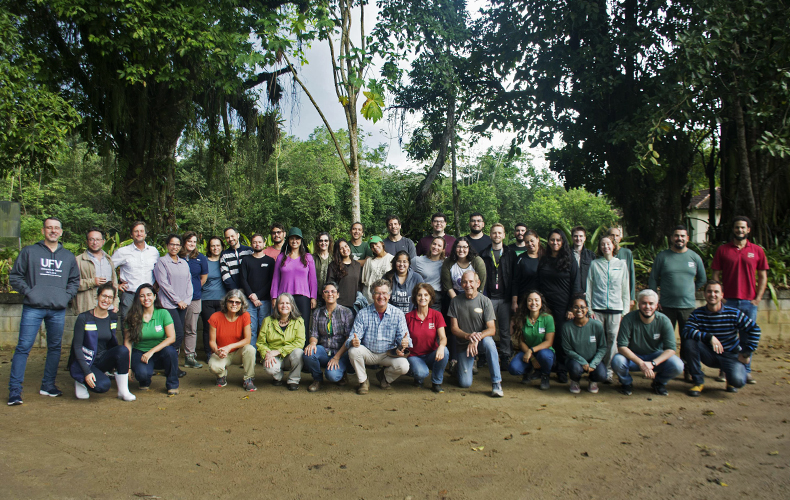
 Teachers and students of the Detvectors course at the Ecological Reserve of Guapiaçu. Photo: Disclosure
An immersion in the Atlantic Forest to deepen knowledge and learn new techniques for investigations into vector-borne diseases, with theoretical classes and practical activities taught by professors from Brazil and the United States.
This was the experience of students from seven graduate programs in the country, during the 3rd International Course on Ecological Determinants of the Dynamics of Diseases Transmitted by Vectors (Detvectors), between August 8th and 12th.
Sponsored by the Postgraduate Program in Tropical Medicine at Instituto Oswaldo Cruz (IOC/Fiocruz) in partnership with the University of Florida, in the United States, the course was held at the Ecological Reserve of Guapiaçu (Regua), in Cachoeiras de Macacu, in the Metropolitan Region of Rio de Janeiro.
During five days, the course discussed topics such as: evolution and ecology of mosquitoes, landscape ecology and ecological determinants of vector diseases, in addition to the panorama of arboviruses in Brazil and the relationship between vector diseases and climate change.
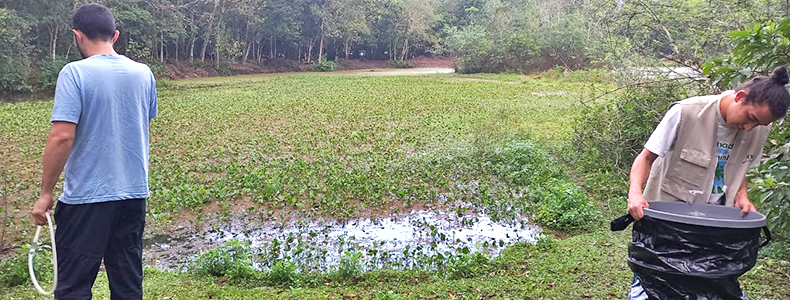 In practical activities, students got to know different techniques for capturing vectors. Photo: Disclosure
The course coordinator and permanent professor of the Graduate Program in Tropical Medicine, Nildimar Honório, points out that the activity sought to strengthen scientific collaboration and training in a topic of great impact for public health.
“Ecological factors such as landscape, climate and human mobility influence the transmission of vector diseases. The effects of changes in the environment caused directly or indirectly by man can already be observed from the emergence and reemergence of infectious diseases, such as Zika, chikungunya, dengue, yellow fever, malaria, leishmaniasis and others", said the biologist, who is a researcher of the Laboratory of Mosquitoes Transmitting Hematozoa of the IOC and coordinator of the Sentinel Operational Nucleus of Mosquito Vectors of the Oswaldo Cruz Foundation (Nosmove/Fiocruz).
Methodologies for mapping and modeling vector distribution, insect collection, geoprocessing and data analysis were also the subject of theoretical and practical activities.
The learnings were applied by the students in research projects. Designed and developed during the course, the investigations addressed the diversity of vector species in areas with varying levels of 'environmental disturbance'; the effectiveness of different insect capture methods; and evaluation of the presence of vectors in isolated habitats in a landscape composed of forest fragments and pasture areas.
Doctoral student in Tropical Medicine, Helver Gonçalves Dias, considers that, in addition to learning new methodologies and concepts, the course expanded professional training through interaction with researchers from different institutions.
“The exchange of knowledge and the opportunity to learn, work and cooperate with colleagues and professors from IOC, from other institutions in Brazil and the University of Florida, in a climate of partnership and friendship, was remarkable. I also believe that combining fieldwork with the workbench is a unique opportunity that enriches professional training,” said Helver.
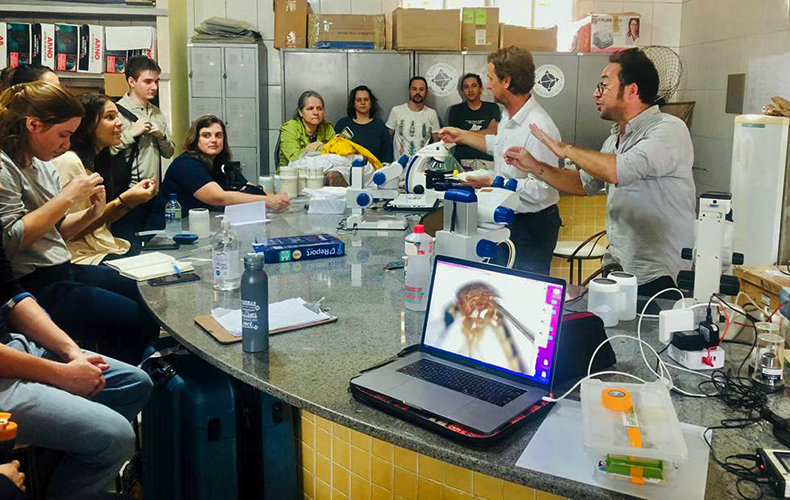 After collections, the course covered insect identification work. Photo: Disclosure
With the aim of strengthening internationalization in postgraduate courses, all activities were carried out in English, including the presentation of research results carried out by students.
“Even if there are difficulties, students realize that language is not a barrier to communication. This is important in a scientific career”, commented Nildimar, adding that a former student of the course is returning from her sandwich doctorate at the University of Florida, while another is going to the institution next month.
The Detvectors course has been offered since 2011, as a discipline of the Graduate Program in Tropical Medicine. In 2018, the activity became international, in partnership with the University of Florida.
After two years of suspension due to the Covid-19 pandemic, the resumption of the course attracted students from different regions of the country.
Students from the Tropical Medicine, Parasite Biology and Cellular and Molecular Biology Programs of the IOC, as well as graduate students from the Aggeu Magalhães Institute (Fiocruz-Pernambuco), University of Brasília (UnB), Federal University of Rio de Janeiro (UFRJ) and University of the State of Rio de Janeiro (Uerj).
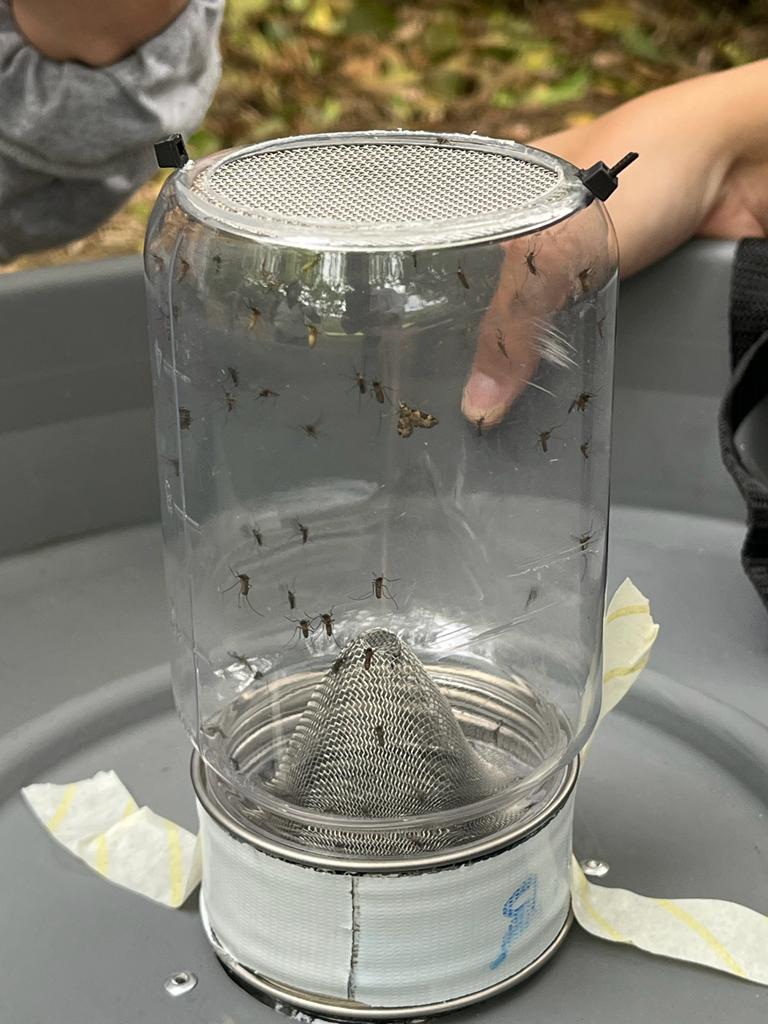 Diversity of insects captured during one of the course activities. Photo: Disclosure
The course was attended by professors from IOC, University of Florida, Institute of Global Health of Barcelona (ISGlobal), Uerj, Federal University of the State of Rio de Janeiro (Unirio), Federal University of Viçosa (UFV) and Federal University of Espírito Santo (Ufes).
“Our objective is to share knowledge between institutions, graduate programs, professors and students in favor of collaborative science”, emphasized Nildimar, remembering that the course has a collegiate coordination. Participating in the group: researchers Daniel Câmara and Izabel Reis, from IOC; Tanise Stenn and Jorge Rey of the University of Florida; Bruno Carvalho, from ISGlobal, and Tania Ayllón, from Afonso X El Sabio University, in Spain.
This year the course had a novelty. Upon completion of field activities, students also had the opportunity to participate in practical training in molecular techniques for detecting the blood food source of insects collected during the course. The activity was taught by University of Florida professor, Tanise Stenn, on August 15th and 16th, at the Viral Immunology Laboratory of the IOC.
opening class
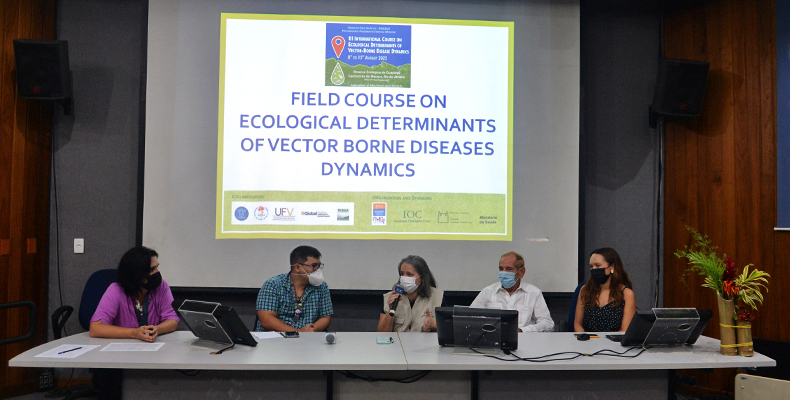 Members of the opening panel highlighted the importance of the internationalization of postgraduate courses. Photo: Gutemberg Brito
Before the departure of the participants to the Ecological Reserve of Guapiaçu (Regua), the course had an opening table to welcome the students. The kick-off session was held on the campus of F.iocruz, in Manguinhos.
On the occasion, the Deputy Director of Education, Information and Communication of the IOC, Ademir Martins; the coordinator of the Tropical Medicine Program, Vanessa de Paula; the coordinator of the Detvetores course, Nildimar Honório; the coordinator of Institutional Cooperation of the IOC, Anna Cristina Carvalho; and the director of the Florida Medical Entomology Laboratory (FMEL/University of Florida), Jorge Rey.
By videoconference, emeritus professor at the University of Florida, Phil Lounibos, gave the lecture 'The importance of field research for understanding and mitigating diseases transmitted by mosquitoes in Brazil'.
The course was carried out with the support of the Carlos Chagas Filho Foundation for Research Support in the State of Rio de Janeiro (Faperj), the Coordination for the Improvement of Higher Education Personnel (Capes), the IOC and the University of Florida.
Teachers and students of the Detvectors course at the Ecological Reserve of Guapiaçu. Photo: Disclosure
An immersion in the Atlantic Forest to deepen knowledge and learn new techniques for investigations into vector-borne diseases, with theoretical classes and practical activities taught by professors from Brazil and the United States.
This was the experience of students from seven graduate programs in the country, during the 3rd International Course on Ecological Determinants of the Dynamics of Diseases Transmitted by Vectors (Detvectors), between August 8th and 12th.
Sponsored by the Postgraduate Program in Tropical Medicine at Instituto Oswaldo Cruz (IOC/Fiocruz) in partnership with the University of Florida, in the United States, the course was held at the Ecological Reserve of Guapiaçu (Regua), in Cachoeiras de Macacu, in the Metropolitan Region of Rio de Janeiro.
During five days, the course discussed topics such as: evolution and ecology of mosquitoes, landscape ecology and ecological determinants of vector diseases, in addition to the panorama of arboviruses in Brazil and the relationship between vector diseases and climate change.
In practical activities, students got to know different techniques for capturing vectors. Photo: Disclosure
The course coordinator and permanent professor of the Graduate Program in Tropical Medicine, Nildimar Honório, points out that the activity sought to strengthen scientific collaboration and training in a topic of great impact for public health.
“Ecological factors such as landscape, climate and human mobility influence the transmission of vector diseases. The effects of changes in the environment caused directly or indirectly by man can already be observed from the emergence and reemergence of infectious diseases, such as Zika, chikungunya, dengue, yellow fever, malaria, leishmaniasis and others", said the biologist, who is a researcher of the Laboratory of Mosquitoes Transmitting Hematozoa of the IOC and coordinator of the Sentinel Operational Nucleus of Mosquito Vectors of the Oswaldo Cruz Foundation (Nosmove/Fiocruz).
Methodologies for mapping and modeling vector distribution, insect collection, geoprocessing and data analysis were also the subject of theoretical and practical activities.
The learnings were applied by the students in research projects. Designed and developed during the course, the investigations addressed the diversity of vector species in areas with varying levels of 'environmental disturbance'; the effectiveness of different insect capture methods; and evaluation of the presence of vectors in isolated habitats in a landscape composed of forest fragments and pasture areas.
Doctoral student in Tropical Medicine, Helver Gonçalves Dias, considers that, in addition to learning new methodologies and concepts, the course expanded professional training through interaction with researchers from different institutions.
“The exchange of knowledge and the opportunity to learn, work and cooperate with colleagues and professors from IOC, from other institutions in Brazil and the University of Florida, in a climate of partnership and friendship, was remarkable. I also believe that combining fieldwork with the workbench is a unique opportunity that enriches professional training,” said Helver.
After collections, the course covered insect identification work. Photo: Disclosure
With the aim of strengthening internationalization in postgraduate courses, all activities were carried out in English, including the presentation of research results carried out by students.
“Even if there are difficulties, students realize that language is not a barrier to communication. This is important in a scientific career”, commented Nildimar, adding that a former student of the course is returning from her sandwich doctorate at the University of Florida, while another is going to the institution next month.
The Detvectors course has been offered since 2011, as a discipline of the Graduate Program in Tropical Medicine. In 2018, the activity became international, in partnership with the University of Florida.
After two years of suspension due to the Covid-19 pandemic, the resumption of the course attracted students from different regions of the country.
Students from the Tropical Medicine, Parasite Biology and Cellular and Molecular Biology Programs of the IOC, as well as graduate students from the Aggeu Magalhães Institute (Fiocruz-Pernambuco), University of Brasília (UnB), Federal University of Rio de Janeiro (UFRJ) and University of the State of Rio de Janeiro (Uerj).
Diversity of insects captured during one of the course activities. Photo: Disclosure
The course was attended by professors from IOC, University of Florida, Institute of Global Health of Barcelona (ISGlobal), Uerj, Federal University of the State of Rio de Janeiro (Unirio), Federal University of Viçosa (UFV) and Federal University of Espírito Santo (Ufes).
“Our objective is to share knowledge between institutions, graduate programs, professors and students in favor of collaborative science”, emphasized Nildimar, remembering that the course has a collegiate coordination. Participating in the group: researchers Daniel Câmara and Izabel Reis, from IOC; Tanise Stenn and Jorge Rey of the University of Florida; Bruno Carvalho, from ISGlobal, and Tania Ayllón, from Afonso X El Sabio University, in Spain.
This year the course had a novelty. Upon completion of field activities, students also had the opportunity to participate in practical training in molecular techniques for detecting the blood food source of insects collected during the course. The activity was taught by University of Florida professor, Tanise Stenn, on August 15th and 16th, at the Viral Immunology Laboratory of the IOC.
opening class
Members of the opening panel highlighted the importance of the internationalization of postgraduate courses. Photo: Gutemberg Brito
Before the departure of the participants to the Ecological Reserve of Guapiaçu (Regua), the course had an opening table to welcome the students. The kick-off session was held on the campus of F.iocruz, in Manguinhos.
On the occasion, the Deputy Director of Education, Information and Communication of the IOC, Ademir Martins; the coordinator of the Tropical Medicine Program, Vanessa de Paula; the coordinator of the Detvetores course, Nildimar Honório; the coordinator of Institutional Cooperation of the IOC, Anna Cristina Carvalho; and the director of the Florida Medical Entomology Laboratory (FMEL/University of Florida), Jorge Rey.
By videoconference, emeritus professor at the University of Florida, Phil Lounibos, gave the lecture 'The importance of field research for understanding and mitigating diseases transmitted by mosquitoes in Brazil'.
The course was carried out with the support of the Carlos Chagas Filho Foundation for Research Support in the State of Rio de Janeiro (Faperj), the Coordination for the Improvement of Higher Education Personnel (Capes), the IOC and the University of Florida.
The non-profit reproduction of the text is allowed as long as the source is cited (Comunicação / Instituto Oswaldo Cruz)
 |
 |
