
The need for an integrated view of human, animal and ecosystem health, known as the single health approach, was highlighted in the 'Workshop on biodiversity and health: main zoonoses in wild and synanthropic birds'.
Conducted by the Oswaldo Cruz Institute (IOC/Fiocruz), on October 08th and 09th, the course addressed infections that affect birds and can pose risks to people and biodiversity, as well as economic losses.
The activity was promoted by the Graduate Program in Biodiversity and Health in partnership with the Laboratories of Hantaviruses and Rickettsiosis and of Respiratory Virus and Measles of IOC, in addition to the Institutional Platform Biodiversity and Health of the Presidency of the Oswaldo Cruz Foundation (Fiocruz). The workshop brought together about 80 participants, including students and professionals in the areas of health and the environment.
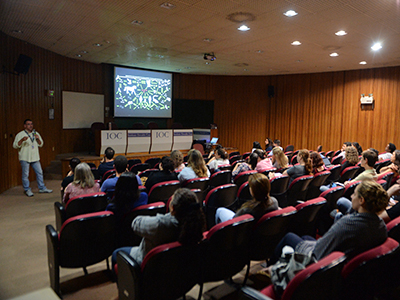
"Birds have always played an important role in human cultures, far beyond being a simple source of food. They continue to inspire research in areas such as evolution, behavior, physiology and ecology, making them one of the most well-known animal groups. Brazil is one of the countries with the greatest diversity of birds in the world, however, many species are threatened.In this context, the workshop addressed the main diseases that affect birds, with the participation of specialists to discuss both aspects related to human health and the animal health", commented Maria Ogrzewalska, researcher at the Laboratory of Hantaviruses and Rickettsiosis of IOC and one of the organizers of the activity.
"To advance in the surveillance of human diseases, it is also necessary to advance in animal surveillance. For example, birds are sentinels for West Nile fever, in the same way that monkeys are sentinels for yellow fever", added Marina Galvão Bueno, researcher of the Institutional Platform Biodiversity and Health of the Presidency of the Fiocruz, also organizer of the course.
Viral, bacterial and fungal infections
An overview of the biodiversity and evolution of Brazilian birds was presented at the workshop by Luiz Pedreira Gonzaga, a professor at the Federal University of Rio de Janeiro (UFRJ). Infections caused by influenza viruses, flu agents, were discussed in two lectures: Paola Cristina Resende, researcher at the Laboratory of Respiratory Viruses and Measles of IOC, spoke about the epidemiological and laboratory surveillance of human cases, while aspects related to the avian disease were presented by Dilmara Reischak, the technician responsible for the Avian Health Laboratory of the National Agricultural Laboratory (Lanagro) of the Ministry of Agriculture, Livestock and Supply (Mapa).
Psittacosis, a form of bacterial pneumonia that can be transmitted by birds often kept as pets (including parrots, cockatoos, cockatiels and parakeets) and cryptococcosis, a fungal infection that can be spread by bird droppings (especially pigeons) were topics of the lecture by Tânia de Freitas Raso, professor at the Department of Pathology at the Faculty of Veterinary Medicine and Animal Science at the University of São Paulo (USP).
The veterinarian also addressed the risk to the conservation of Brazilian birds represented by Bornavirus and Circovirus. The two zoonotic viruses have already been identified in exotic birds, imported into Brazil as pets, and are considered a threat to biodiversity, since they could potentially spread to the country's native fauna.
The event's program also included the participation of Virgínia Léo de Almeida Pereira, a professor at the Fluminense Federal University (UFF). She discussed infections caused by Mycoplasma and Salmonella bacteria, which can affect both free-range and production birds, causing economic harm and risks to human health.
Alex Pauvolid Corrêa, a visiting researcher at the Flavivirus Laboratory of IOC, talked about West Nile virus. Common in the northern hemisphere, the pathogen has already been identified in Brazil and is transmitted to people by mosquitoes that become infected by sucking the blood of birds, including migratory birds, which act as hosts for the microorganism.
The need for an integrated view of human, animal and ecosystem health, known as the single health approach, was highlighted in the 'Workshop on biodiversity and health: main zoonoses in wild and synanthropic birds'.
Conducted by the Oswaldo Cruz Institute (IOC/Fiocruz), on October 08th and 09th, the course addressed infections that affect birds and can pose risks to people and biodiversity, as well as economic losses.
The activity was promoted by the Graduate Program in Biodiversity and Health in partnership with the Laboratories of Hantaviruses and Rickettsiosis and of Respiratory Virus and Measles of IOC, in addition to the Institutional Platform Biodiversity and Health of the Presidency of the Oswaldo Cruz Foundation (Fiocruz). The workshop brought together about 80 participants, including students and professionals in the areas of health and the environment.
"Birds have always played an important role in human cultures, far beyond being a simple source of food. They continue to inspire research in areas such as evolution, behavior, physiology and ecology, making them one of the most well-known animal groups. Brazil is one of the countries with the greatest diversity of birds in the world, however, many species are threatened.In this context, the workshop addressed the main diseases that affect birds, with the participation of specialists to discuss both aspects related to human health and the animal health", commented Maria Ogrzewalska, researcher at the Laboratory of Hantaviruses and Rickettsiosis of IOC and one of the organizers of the activity.
"To advance in the surveillance of human diseases, it is also necessary to advance in animal surveillance. For example, birds are sentinels for West Nile fever, in the same way that monkeys are sentinels for yellow fever", added Marina Galvão Bueno, researcher of the Institutional Platform Biodiversity and Health of the Presidency of the Fiocruz, also organizer of the course.
Viral, bacterial and fungal infections
An overview of the biodiversity and evolution of Brazilian birds was presented at the workshop by Luiz Pedreira Gonzaga, a professor at the Federal University of Rio de Janeiro (UFRJ). Infections caused by influenza viruses, flu agents, were discussed in two lectures: Paola Cristina Resende, researcher at the Laboratory of Respiratory Viruses and Measles of IOC, spoke about the epidemiological and laboratory surveillance of human cases, while aspects related to the avian disease were presented by Dilmara Reischak, the technician responsible for the Avian Health Laboratory of the National Agricultural Laboratory (Lanagro) of the Ministry of Agriculture, Livestock and Supply (Mapa).
Psittacosis, a form of bacterial pneumonia that can be transmitted by birds often kept as pets (including parrots, cockatoos, cockatiels and parakeets) and cryptococcosis, a fungal infection that can be spread by bird droppings (especially pigeons) were topics of the lecture by Tânia de Freitas Raso, professor at the Department of Pathology at the Faculty of Veterinary Medicine and Animal Science at the University of São Paulo (USP).
The veterinarian also addressed the risk to the conservation of Brazilian birds represented by Bornavirus and Circovirus. The two zoonotic viruses have already been identified in exotic birds, imported into Brazil as pets, and are considered a threat to biodiversity, since they could potentially spread to the country's native fauna.
The event's program also included the participation of Virgínia Léo de Almeida Pereira, a professor at the Fluminense Federal University (UFF). She discussed infections caused by Mycoplasma and Salmonella bacteria, which can affect both free-range and production birds, causing economic harm and risks to human health.
Alex Pauvolid Corrêa, a visiting researcher at the Flavivirus Laboratory of IOC, talked about West Nile virus. Common in the northern hemisphere, the pathogen has already been identified in Brazil and is transmitted to people by mosquitoes that become infected by sucking the blood of birds, including migratory birds, which act as hosts for the microorganism.
The non-profit reproduction of the text is allowed as long as the source is cited (Comunicação / Instituto Oswaldo Cruz)
 |
 |
