
This Tuesday morning (12/06), the Oswaldo Cruz Institute (IOC/Fiocruz) announced a watershed for Brazilian science and a victory in the fight against neglected diseases: the approval, in phase 1 of clinical trials, of the first vaccine against schistosomiasis, an endemic parasite present in more than 70 countries.
The Sm14 was developed on Brazilian soil after three decades of research in the IOC, led by researcher Miriam Tendler. Of all the human immunizers in use in the world, none had been developed in the country until this moment.
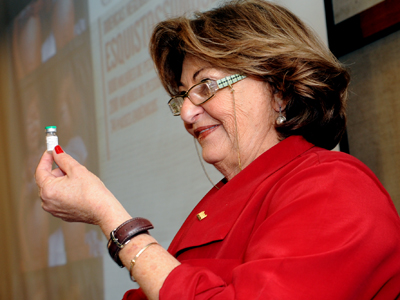
At a press conference held on the campus of F.iocruz in Manguinhos (RJ), Miriam said that the vaccine is no longer a bet to become a concrete possibility. More than 800 million people in the world live under the threat of the disease, the second most serious endemic parasite after malaria.
In addition to Miriam, the director of the IOC, Tania Araújo-Jorge, the president of Fiocruz, Paulo Gadelha, and the superintendent of biological products at Ourofino Agronegócios, Carlos Henrique Henrique.
Tania reinforced that, although there is treatment, schistosomiasis is an endemic and recurrent disease, that is, people are diagnosed, treated, but end up contracting it several times throughout their lives. In this sense, the scenario is worrying: according to the World Health Organization (WHO), there are 200 million people infected in poor and developing countries - 2,5 million of whom are Brazilians and residents, for the most part, in the Northeast and in Minas Gerais.
“The achievement is one of the most impactful contributions of the IOC in the fight to eradicate the effects of poverty in Brazil and in the world – and an achievement that follows the tradition of this House”, said Tania.
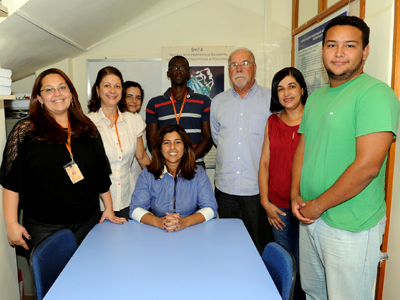 Experimental Schistosomiasis Laboratory Team
The fact that populations in endemic areas are forced to live with the disease for their entire lives has been Miriam's biggest stimulus in these three decades of development of the vaccine.
“It is very hard to imagine children going to school in the learning phase with nausea and reduced cognitive functions, and young people who need to contribute their workforce to the country weakened by anemia and other symptoms of the disease”, he highlighted.
Thus, Miriam said that the vaccine, whose formulation is already finalized, is intended for school-aged people living in endemic areas.
When questioned about the vaccine's ability to eradicate schistosomiasis, Miriam explained that it is a difficult task – after all, smallpox was, until today, the only disease that man managed to eliminate.
“On the other hand, the tool that allowed and allows doing this is the vaccine, because it acts by interrupting transmission”, he said. Miriam also took advantage of the context of the Rio +20 convention to talk about the advantages of immunization from another point of view.
According to her, it is a green method of prevention. "It does not leave residues and is biologically legal, that is, instead of acting in the elimination of vectors and species, it only protects the organism of those who need to be protected", she concluded.
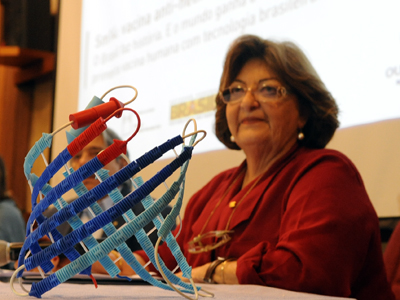 The three-dimensional model of the Sm14 protein, which serves as the basis for the vaccine against schistosomiasis
The president of Fiocruz, Paulo Gadelha, highlighted the importance of partners in the Sm14 project, such as the Financier of Studies and Projects of the Ministry of Science, Technology and Innovation (FINEP), CNPq, Ourofino Agronegócios and the Ludwig Institute for Cancer Research, from the United States United.
“This feat reflects the national stage we are in, with real conditions to carry out public-private partnerships, obtain funding for research, carry out innovation and be recognized abroad as partners”, he said.
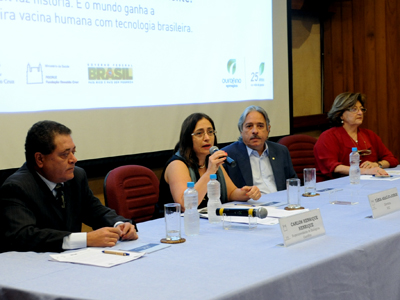 Collective, held on the eve of Rio +20, also addressed the advantages of the vaccine from an environmental perspective
veterinary use
Due to its multivalent potential, Sm14 was also effective for fascioliasis, a verminosis that affects sheep, goats and cattle.
Ourofino Agronegócios, partner of the project, represented at the press conference by the superintendent of biological products Carlos Henrique Henrique, reiterated its commitment to produce immunizers and reinforced the importance of their veterinary application. According to him, both fascioliasis and the drugs used to combat it alter the quality of meat and milk.
If, on the one hand, the parasite renders the animal's liver useless and alters milk production, the medicine, after a few weeks, is absorbed by the body and contaminates the meat and milk. Therefore, once infected and treated, the animal needs to be slaughtered so as not to compromise production. Combating snails, intermediate hosts of the causative parasite, is not an option either.
“It is harmful for producers and the environment, as the use of pesticides can lead to intoxication of animals and pollution of pastures. The fascioliasis vaccine could indeed transform this scenario,” he said.
This Tuesday morning (12/06), the Oswaldo Cruz Institute (IOC/Fiocruz) announced a watershed for Brazilian science and a victory in the fight against neglected diseases: the approval, in phase 1 of clinical trials, of the first vaccine against schistosomiasis, an endemic parasite present in more than 70 countries.
The Sm14 was developed on Brazilian soil after three decades of research in the IOC, led by researcher Miriam Tendler. Of all the human immunizers in use in the world, none had been developed in the country until this moment.
At a press conference held on the campus of F.iocruz in Manguinhos (RJ), Miriam said that the vaccine is no longer a bet to become a concrete possibility. More than 800 million people in the world live under the threat of the disease, the second most serious endemic parasite after malaria.
In addition to Miriam, the director of the IOC, Tania Araújo-Jorge, the president of Fiocruz, Paulo Gadelha, and the superintendent of biological products at Ourofino Agronegócios, Carlos Henrique Henrique.
Tania reinforced that, although there is treatment, schistosomiasis is an endemic and recurrent disease, that is, people are diagnosed, treated, but end up contracting it several times throughout their lives. In this sense, the scenario is worrying: according to the World Health Organization (WHO), there are 200 million people infected in poor and developing countries - 2,5 million of whom are Brazilians and residents, for the most part, in the Northeast and in Minas Gerais.
“The achievement is one of the most impactful contributions of the IOC in the fight to eradicate the effects of poverty in Brazil and in the world – and an achievement that follows the tradition of this House”, said Tania.
Experimental Schistosomiasis Laboratory Team
The fact that populations in endemic areas are forced to live with the disease for their entire lives has been Miriam's biggest stimulus in these three decades of development of the vaccine.
“It is very hard to imagine children going to school in the learning phase with nausea and reduced cognitive functions, and young people who need to contribute their workforce to the country weakened by anemia and other symptoms of the disease”, he highlighted.
Thus, Miriam said that the vaccine, whose formulation is already finalized, is intended for school-aged people living in endemic areas.
When questioned about the vaccine's ability to eradicate schistosomiasis, Miriam explained that it is a difficult task – after all, smallpox was, until today, the only disease that man managed to eliminate.
“On the other hand, the tool that allowed and allows doing this is the vaccine, because it acts by interrupting transmission”, he said. Miriam also took advantage of the context of the Rio +20 convention to talk about the advantages of immunization from another point of view.
According to her, it is a green method of prevention. "It does not leave residues and is biologically legal, that is, instead of acting in the elimination of vectors and species, it only protects the organism of those who need to be protected", she concluded.
The three-dimensional model of the Sm14 protein, which serves as the basis for the vaccine against schistosomiasis
The president of Fiocruz, Paulo Gadelha, highlighted the importance of partners in the Sm14 project, such as the Financier of Studies and Projects of the Ministry of Science, Technology and Innovation (FINEP), CNPq, Ourofino Agronegócios and the Ludwig Institute for Cancer Research, from the United States United.
“This feat reflects the national stage we are in, with real conditions to carry out public-private partnerships, obtain funding for research, carry out innovation and be recognized abroad as partners”, he said.
Collective, held on the eve of Rio +20, also addressed the advantages of the vaccine from an environmental perspective
veterinary use
Due to its multivalent potential, Sm14 was also effective for fascioliasis, a verminosis that affects sheep, goats and cattle.
Ourofino Agronegócios, partner of the project, represented at the press conference by the superintendent of biological products Carlos Henrique Henrique, reiterated its commitment to produce immunizers and reinforced the importance of their veterinary application. According to him, both fascioliasis and the drugs used to combat it alter the quality of meat and milk.
If, on the one hand, the parasite renders the animal's liver useless and alters milk production, the medicine, after a few weeks, is absorbed by the body and contaminates the meat and milk. Therefore, once infected and treated, the animal needs to be slaughtered so as not to compromise production. Combating snails, intermediate hosts of the causative parasite, is not an option either.
“It is harmful for producers and the environment, as the use of pesticides can lead to intoxication of animals and pollution of pastures. The fascioliasis vaccine could indeed transform this scenario,” he said.
The non-profit reproduction of the text is allowed as long as the source is cited (Comunicação / Instituto Oswaldo Cruz)
 |
 |
