
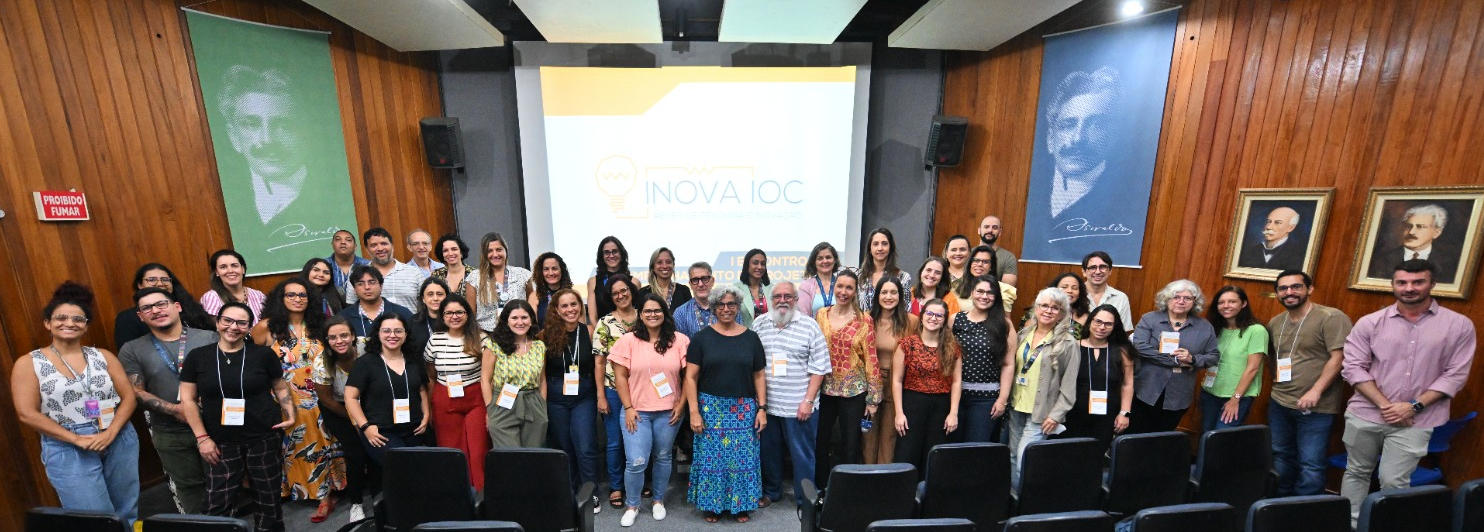
 Participants met one year after presenting the selected projects. Photo: Gutemberg Brito
The Oswaldo Cruz Institute (IOC/Fiocruz) held, on December 12th, the 'I Project Monitoring Meeting' of the INOVA Program IOC: research and innovation networks’.
INOVA seeks to strengthen cooperative studies, expanding Basic, Applied, Clinical, Educational and/or Public Health Research activities; and Technological Development and Innovation at the Institute.
Organized by the Vice-Directorate of Research, Technological Development and Innovation (VDPDTI/IOC), the event brought together coordinators and fellows from research networks to present ongoing and/or completed activities.
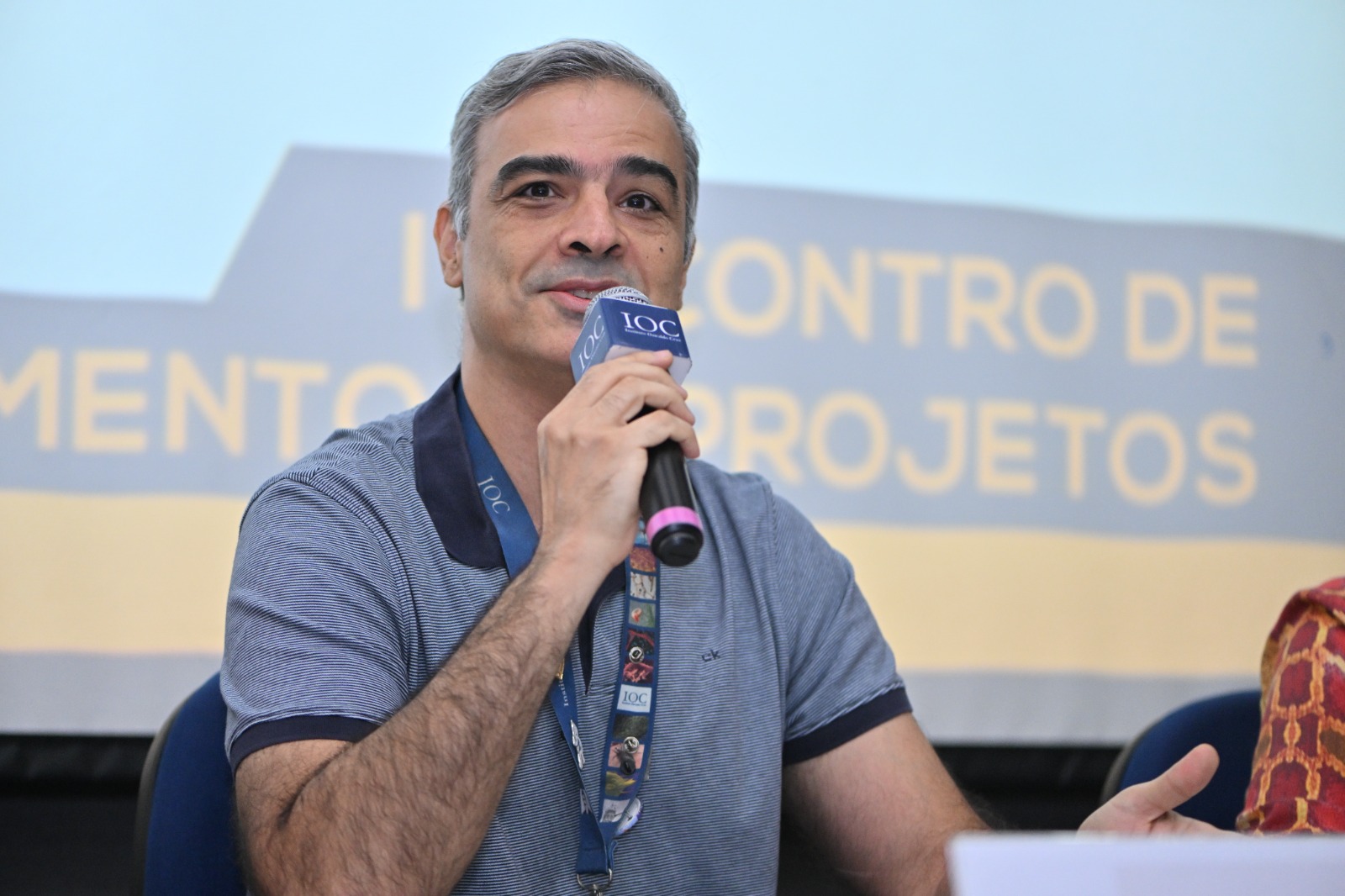 Elmo highlighted the importance of cooperation between laboratories in research networks. Photo: Gutemberg Brito
“Networks encourage cooperation between Laboratories and, in return, reduce the competitive profile that compromises scientific production. Working cooperatively, as we are doing here, allows us to advance the services we offer to society. It is a pleasure to see you again a year after special edition of the Thematic Seminars, in which we presented to the Institute’s community the twelve selected projects”, declared the deputy director of Research, Technological Development and Innovation at the IOC, Elmo Eduardo de Almeida Amaral, during the opening table.
INNOVA IOC captured 12 projects, all linked to one of the Institute's 10 Research Networks. The submission period took place between July and August 2022.
The opening of the call included resources from a parliamentary amendment intended by then deputy Paulo Ramos (PDT-RJ) and was in partnership with the Vice-Presidency of Production and Innovation in Health (VPPIS/Fiocruz).
The project evaluation process was supported by the Public Management Innovation Laboratory (Pólen), linked to the Sergio Arouca National School of Public Health (Ensp/Fiocruz).
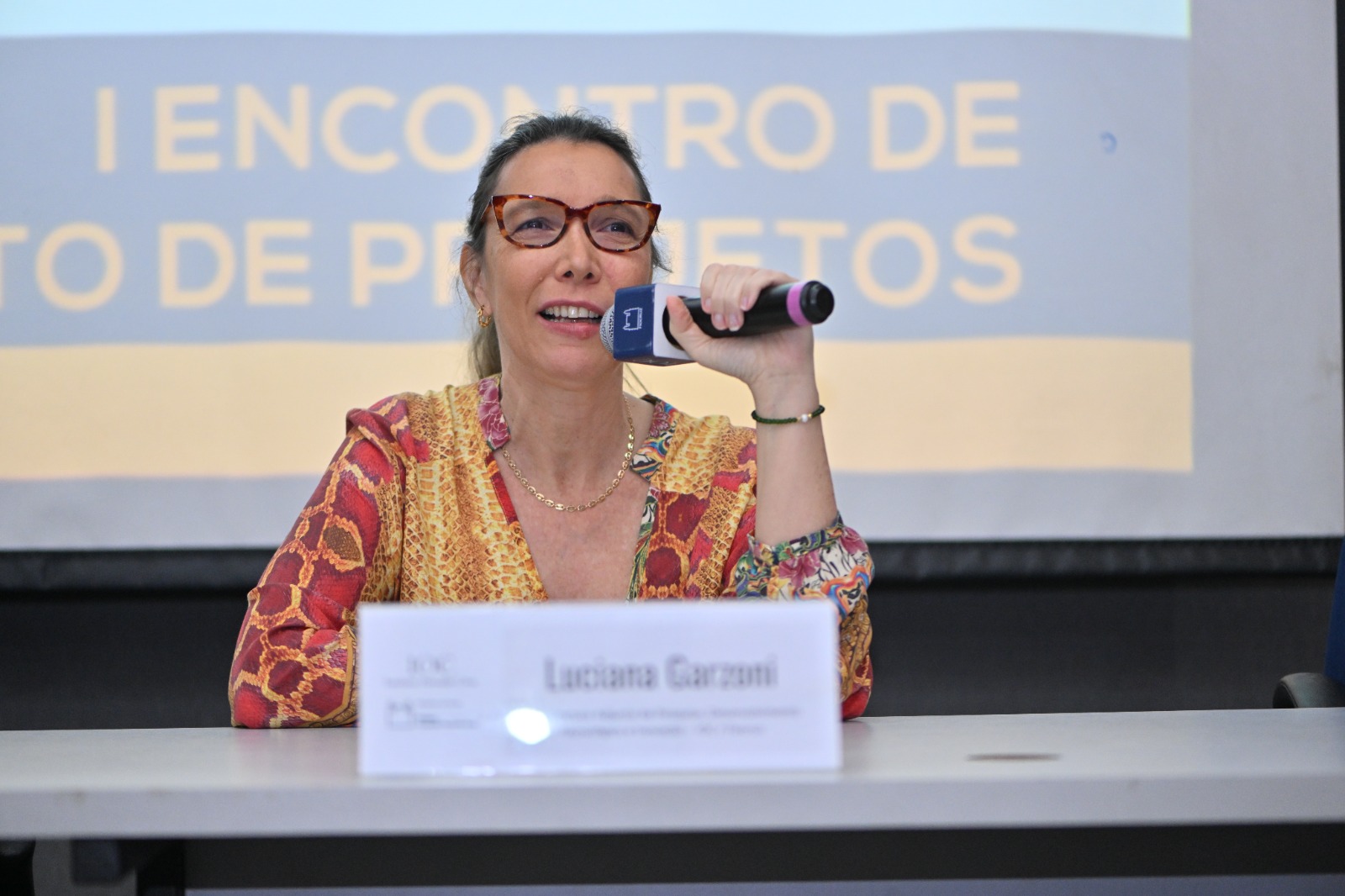 Luciana recalled continued training for doctors through INOVA IOC. Photo: Gutenberg Brito
The department's deputy director, Luciana Garzoni, highlighted that networks stimulate the process of technological development and innovation.
“The networks provide continued training and retention of our doctors, who are important players in the construction of new ideas”, he pointed out.
Who also participated in the meeting was the coordinator of INOVA Fiocruz, Marcia Teixeira.
“It’s a pleasure to see these projects get off the ground and come to life. O IOC It is a Unit that does not settle down, is not afraid to look at itself and reinvent itself”, he praised.
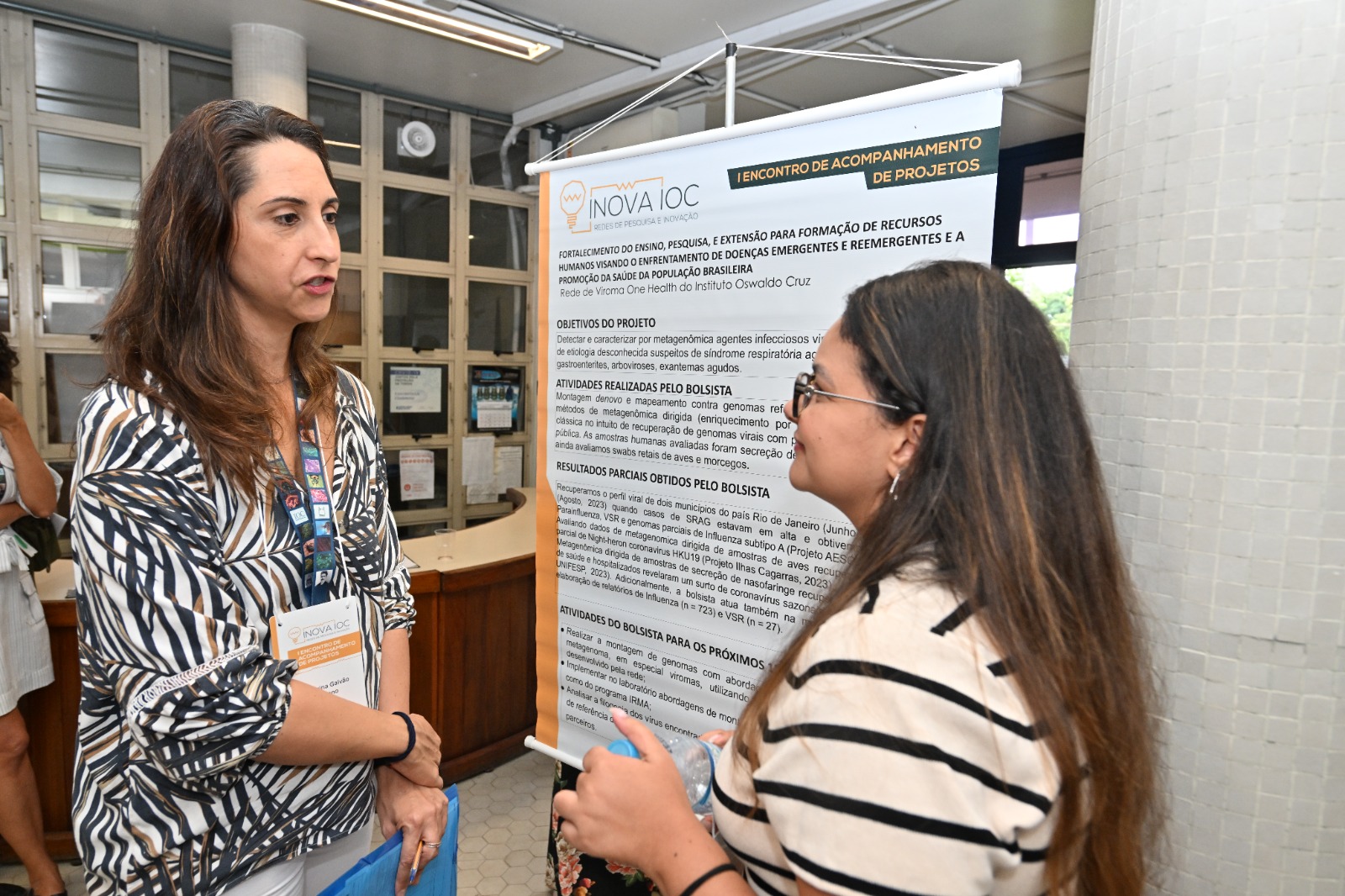 Postdoctoral work was evaluated by research network coordinators in the poster session. Photo: Gutemberg Brito
The event also featured a poster presentation session created by postdoctoral fellows. The presentations covered project objectives, activities carried out, results and actions planned for the next 12 months.
Discover the Research Networks below:
‘Immunology, vaccines, therapeutic innovations and pre-clinical and clinical research’
The ‘INOVA-Network’ projectIOC in neuroimmunomodulation' aims to develop research and innovation, and training of human resources, based on a holistic view of molecular and cellular mechanisms related to the physiology of neuroimmunoendocrine interactions and pathological deviations that may occur in diseases resulting from infectious agents, metabolic changes and neural impairment.
‘Human and environmental microbiology’
The project ‘Research and technological development network on bacterial resistance to antimicrobials in the context of single health’ has as its main focus contributing to the reduction of bacterial resistance to antimicrobials. Surveillance and identification of resistant bacteria, phenotypic characterization of resistance, and virulence and bacteria-host interactions are some of the project's work fronts.
‘Covid-19 and other viral infections’
Formed by eight laboratories of the IOC, with the collaboration of researchers from other institutes, such as UFF and UFRJ, the project 'Covid-19 and Dengue: vaccines, co-infection, sequential infections and scientific dissemination' investigates the immune responses generated with different vaccine combinations against Covid-19, assesses co-infections or sequential infections of dengue and SARS-CoV-2.
The group 'Investigation of infectious diseases in experimental models: multidisciplinary approach to lung disease resulting from SARS-CoV-2 infection in rodents' delves deeper into understanding the pathophysiology of lung disease caused by the new coronavirus.
‘Health education, health promotion and combating poverty’
The project 'Networks, connections and territories: collaborative spaces to promote health and education for citizenship' is committed to structuring a network of collaborative spaces, based on action centers in education, science, art and culture to promote health , with a view to the shared construction of knowledge, through cooperative, intersectoral and interdisciplinary actions. Seven laboratories in the IOC integrate the network.
‘Cellular and Molecular Biology, biotechnology, biomodels and bioassays’
The ‘Cancer Network: IOC in the era of precision medicine in oncology’ aims to establish a precision medicine network in IOC which aims to characterize biomarkers for diagnosis and therapeutic follow-up in oncology with application in the Unified Health System (SUS).
The project 'Neuroinfection network: inflammation, neurodegenerative mechanisms, behavioral and cognitive/mnemonic changes and therapeutic strategies' seeks to identify underlying mechanisms involved in neuroinfections and develop new therapeutic products.
‘Health emergencies, epidemiology, surveillance and diagnosis’
“Health care network for congenital anomalies of the central nervous system” is a project run by five laboratories of the Institute, whose objective is to establish a health care network for congenital anomalies, aiming to determine the prevalence and epidemiological and clinical characteristics associated with framework as well as genetic and infectious risk factors with the expansion of SUS in surveillance, diagnosis and planning for primary and secondary prevention actions.
The project ‘Molecular surveillance of insect vectors in Brazil’ seeks to integrate eight entomology laboratories in the IOC, with the purpose of creating a genomic biobank of insect vectors and parasites, as well as intensifying studies related to vectors of arboviruses, such as dengue, Zika, and chikungunya, as well as transmitters of Chagas disease and leishmaniasis.
The ‘Monitoring Network on Ecology and Zoonoses in the One Health Approach’ has been helping to prevent zoonoses and monitor populations at risk, including proactive surveillance of animal reservoirs. The project includes the integration of seven laboratories from the IOC.
'Neglected Diseases' Network
‘Mutations relevant to the pathogenesis of mycobacteria’ is the project that studies the possibility of the existence of a mutation pattern involved in the pathogenic conversion of environmental strains and mycobacterial vaccines.
Network 'Human and environmental microbiology'
The ‘One Health Viroma Network’ project IOC’ seeks to detect and characterize by sequencing viral infectious agents in human outbreaks of unknown etiology suspected of severe acute respiratory syndrome, hepatitis, gastroenteritis, arboviruses and acute rashes.
Participants met one year after presenting the selected projects. Photo: Gutemberg Brito
The Oswaldo Cruz Institute (IOC/Fiocruz) held, on December 12th, the 'I Project Monitoring Meeting' of the INOVA Program IOC: research and innovation networks’.
INOVA seeks to strengthen cooperative studies, expanding Basic, Applied, Clinical, Educational and/or Public Health Research activities; and Technological Development and Innovation at the Institute.
Organized by the Vice-Directorate of Research, Technological Development and Innovation (VDPDTI/IOC), the event brought together coordinators and fellows from research networks to present ongoing and/or completed activities.
Elmo highlighted the importance of cooperation between laboratories in research networks. Photo: Gutemberg Brito
“Networks encourage cooperation between Laboratories and, in return, reduce the competitive profile that compromises scientific production. Working cooperatively, as we are doing here, allows us to advance the services we offer to society. It is a pleasure to see you again a year after special edition of the Thematic Seminars, in which we presented to the Institute’s community the twelve selected projects”, declared the deputy director of Research, Technological Development and Innovation at the IOC, Elmo Eduardo de Almeida Amaral, during the opening table.
INNOVA IOC captured 12 projects, all linked to one of the Institute's 10 Research Networks. The submission period took place between July and August 2022.
The opening of the call included resources from a parliamentary amendment intended by then deputy Paulo Ramos (PDT-RJ) and was in partnership with the Vice-Presidency of Production and Innovation in Health (VPPIS/Fiocruz).
The project evaluation process was supported by the Public Management Innovation Laboratory (Pólen), linked to the Sergio Arouca National School of Public Health (Ensp/Fiocruz).
Luciana recalled continued training for doctors through INOVA IOC. Photo: Gutenberg Brito
The department's deputy director, Luciana Garzoni, highlighted that networks stimulate the process of technological development and innovation.
“The networks provide continued training and retention of our doctors, who are important players in the construction of new ideas”, he pointed out.
Who also participated in the meeting was the coordinator of INOVA Fiocruz, Marcia Teixeira.
“It’s a pleasure to see these projects get off the ground and come to life. O IOC It is a Unit that does not settle down, is not afraid to look at itself and reinvent itself”, he praised.
Postdoctoral work was evaluated by research network coordinators in the poster session. Photo: Gutemberg Brito
The event also featured a poster presentation session created by postdoctoral fellows. The presentations covered project objectives, activities carried out, results and actions planned for the next 12 months.
Discover the Research Networks below:
‘Immunology, vaccines, therapeutic innovations and pre-clinical and clinical research’
The ‘INOVA-Network’ projectIOC in neuroimmunomodulation' aims to develop research and innovation, and training of human resources, based on a holistic view of molecular and cellular mechanisms related to the physiology of neuroimmunoendocrine interactions and pathological deviations that may occur in diseases resulting from infectious agents, metabolic changes and neural impairment.
‘Human and environmental microbiology’
The project ‘Research and technological development network on bacterial resistance to antimicrobials in the context of single health’ has as its main focus contributing to the reduction of bacterial resistance to antimicrobials. Surveillance and identification of resistant bacteria, phenotypic characterization of resistance, and virulence and bacteria-host interactions are some of the project's work fronts.
‘Covid-19 and other viral infections’
Formed by eight laboratories of the IOC, with the collaboration of researchers from other institutes, such as UFF and UFRJ, the project 'Covid-19 and Dengue: vaccines, co-infection, sequential infections and scientific dissemination' investigates the immune responses generated with different vaccine combinations against Covid-19, assesses co-infections or sequential infections of dengue and SARS-CoV-2.
The group 'Investigation of infectious diseases in experimental models: multidisciplinary approach to lung disease resulting from SARS-CoV-2 infection in rodents' delves deeper into understanding the pathophysiology of lung disease caused by the new coronavirus.
‘Health education, health promotion and combating poverty’
The project 'Networks, connections and territories: collaborative spaces to promote health and education for citizenship' is committed to structuring a network of collaborative spaces, based on action centers in education, science, art and culture to promote health , with a view to the shared construction of knowledge, through cooperative, intersectoral and interdisciplinary actions. Seven laboratories in the IOC integrate the network.
‘Cellular and Molecular Biology, biotechnology, biomodels and bioassays’
The ‘Cancer Network: IOC in the era of precision medicine in oncology’ aims to establish a precision medicine network in IOC which aims to characterize biomarkers for diagnosis and therapeutic follow-up in oncology with application in the Unified Health System (SUS).
The project 'Neuroinfection network: inflammation, neurodegenerative mechanisms, behavioral and cognitive/mnemonic changes and therapeutic strategies' seeks to identify underlying mechanisms involved in neuroinfections and develop new therapeutic products.
‘Health emergencies, epidemiology, surveillance and diagnosis’
“Health care network for congenital anomalies of the central nervous system” is a project run by five laboratories of the Institute, whose objective is to establish a health care network for congenital anomalies, aiming to determine the prevalence and epidemiological and clinical characteristics associated with framework as well as genetic and infectious risk factors with the expansion of SUS in surveillance, diagnosis and planning for primary and secondary prevention actions.
The project ‘Molecular surveillance of insect vectors in Brazil’ seeks to integrate eight entomology laboratories in the IOC, with the purpose of creating a genomic biobank of insect vectors and parasites, as well as intensifying studies related to vectors of arboviruses, such as dengue, Zika, and chikungunya, as well as transmitters of Chagas disease and leishmaniasis.
The ‘Monitoring Network on Ecology and Zoonoses in the One Health Approach’ has been helping to prevent zoonoses and monitor populations at risk, including proactive surveillance of animal reservoirs. The project includes the integration of seven laboratories from the IOC.
'Neglected Diseases' Network
‘Mutations relevant to the pathogenesis of mycobacteria’ is the project that studies the possibility of the existence of a mutation pattern involved in the pathogenic conversion of environmental strains and mycobacterial vaccines.
Network 'Human and environmental microbiology'
The ‘One Health Viroma Network’ project IOC’ seeks to detect and characterize by sequencing viral infectious agents in human outbreaks of unknown etiology suspected of severe acute respiratory syndrome, hepatitis, gastroenteritis, arboviruses and acute rashes.
The non-profit reproduction of the text is allowed as long as the source is cited (Comunicação / Instituto Oswaldo Cruz)
 |
 |
