
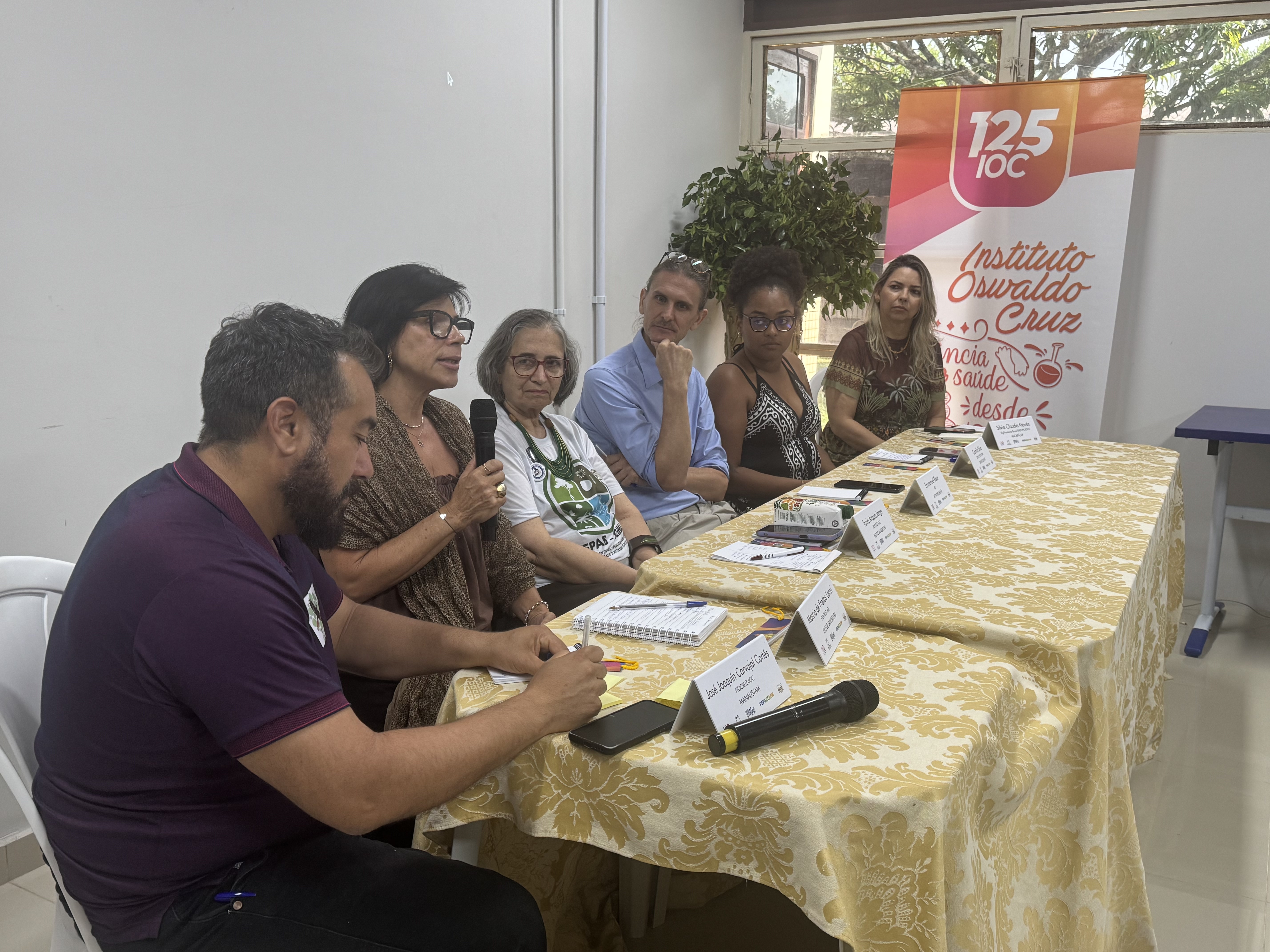
 Tania Araujo-Jorge at the panel of the Franco-Brazilian event "One world, one health: when territories and knowledge unite in the face of epidemics"
The Oswaldo Cruz Institute (IOC/Fioc(ruz) participated in the second day of the 30th United Nations Climate Change Conference (COP30) with a program dedicated to promoting dialogue between science, public policy, and local communities. In partnership with the French Research Institute for Development (IRD) and the Iaruçu project, the IOC co-organized the Franco-Brazilian event “One World, One Health: When Territories and Knowledge Unite in the Face of Epidemics.” The event brought together researchers, community leaders, and institutional representatives from Brazil and France in a call to action for integrated and sustainable solutions to the challenges of global health.
“Health is built within the territory, in community relationships, in the defense of the forest, and in ways of life. The proposal is to think about One Health from this perspective, where care originates from the territory and is organized collectively,” stated the director of [organization name]. IOC, Tania Araujo-Jorge, in her speech at the opening panel.
Climate and environmental changes are impacting global health by favoring the spread of infectious diseases such as dengue fever, chikungunya, leishmaniasis, and rabies. In Brazil, the effects are more intense in vulnerable territories—such as riverside communities, forest peoples, border areas, deforested regions, and urban peripheries—where social and environmental inequalities combine.
The event “One World, One Health” was a space for listening and collective construction, integrating scientific knowledge with traditional and community wisdom. The program included film screenings, debates, and interactive activities that highlighted experiences in participatory surveillance, citizen mobilization, and cross-border cooperation.
The initiative also strengthened scientific cooperation between Brazil and France, expanding the exchange of experiences and the development of joint strategies for surveillance and response to health emergencies.
In addition to the joint organization of the Franco-Brazilian event, the IOC Also on the morning of the same day, she participated in the activity “Workshop on Living Public Policy – One Health with Well-being in the Territories”, organized by FiocTania Araujo-Jorge, from Brasília and the Federal University of Pará (UFPA), invited to lead the discussions, emphasized the importance of incorporating the One Health concept into the formulation of public policies, valuing local lifestyles and shared care.
 The director of IOC in the workshop “Living Public Policy Workshop – One Health with Well-being in the Territories”
The workshop was a space for exchange and collective construction, connecting traditional knowledge, care practices, and social movements. The discussions addressed Agroecological Sociobioeconomics and Good Living as pathways to strengthen social participation and sustainability in the management of public policies.
“I am very happy to see that, in this COP30 environment—which discusses climate change—we have managed to translate this theme as a health issue. Putting health on the COP agenda is something very recent. I am also pleased to see the participation of a representative from the State of Pará in this discussion. It is fundamental that different sectors and territories are together in this construction,” highlighted the director of [organization name]. IOC.
O IOC He was also present at the panel “Illegal Mining and its Impacts on Health in the Amazon,” held this morning at the Evandro Chagas Institute (IEC) booth in the Green Zone of COP30. The special advisor to the director of IOC Regarding climate change, Marcos Horta participated in the activity, which discussed the socio-environmental effects of illegal mining and its consequences for the health of Amazonian populations.
 Marco Horta, participating in the panel “Illegal Mining and its Impacts on Health in the Amazon,” at the IEC booth.
Also on the 12th, the Federal University of Pará (UFPA) began, in partnership with the project Mosaic[Name], its presentation at COP30, focused on health and climate change. Held on the 12th and 13th, the activity is part of an international cooperation aimed at strengthening communities in the Amazon and Africa in the face of the impacts of global warming. The initiative seeks to address climate challenges in border areas and promote joint solutions between tropical territories, expanding scientific integration between countries of the Global South.
The Mosaic project brings together 15 scientific institutions from seven countries and aims to create an information ecosystem to support local communities in preventing and mitigating the effects of climate change on human, animal, and environmental health.
The proposal is based on three guiding principles — One Health, Horizontal Learning, and Open Science — promoting the exchange of knowledge between researchers and local populations.
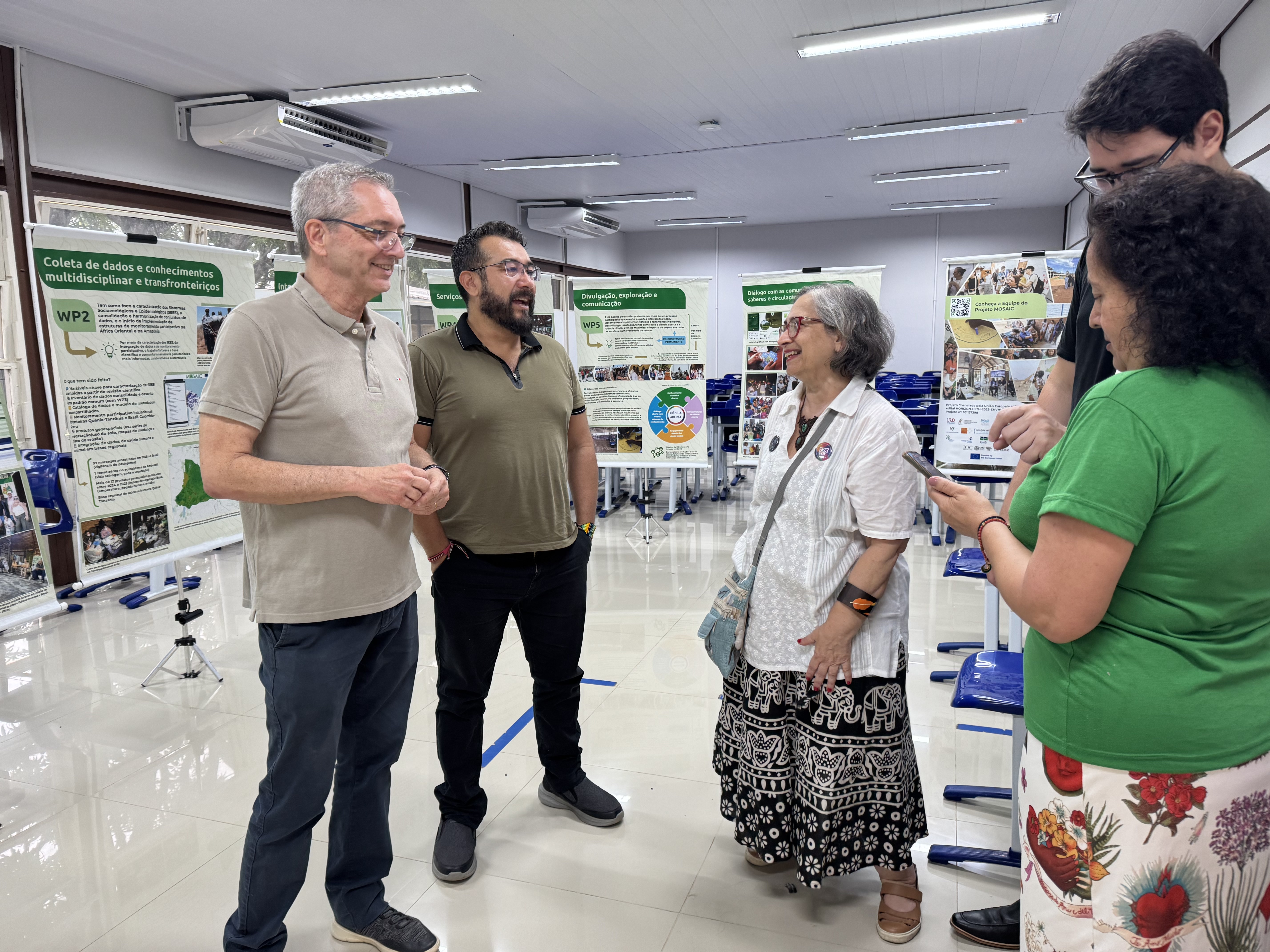 Mosaic exhibition at COP30 focusing on health and climate change.
This is the first initiative linked to the International Platform for Cooperation in Science, Technology and Innovation in Health (PICTIS), which represents a milestone in international scientific cooperation around sustainability, innovation and the promotion of health in vulnerable territories.
Through these collaborations, the Oswaldo Cruz Institute reaffirms its commitment to the integration of science, traditional knowledge, and international cooperation – essential pillars for addressing the climate and health challenges affecting the Amazon and the planet.
Tania Araujo-Jorge at the panel of the Franco-Brazilian event "One world, one health: when territories and knowledge unite in the face of epidemics"
The Oswaldo Cruz Institute (IOC/Fioc(ruz) participated in the second day of the 30th United Nations Climate Change Conference (COP30) with a program dedicated to promoting dialogue between science, public policy, and local communities. In partnership with the French Research Institute for Development (IRD) and the Iaruçu project, the IOC co-organized the Franco-Brazilian event “One World, One Health: When Territories and Knowledge Unite in the Face of Epidemics.” The event brought together researchers, community leaders, and institutional representatives from Brazil and France in a call to action for integrated and sustainable solutions to the challenges of global health.
“Health is built within the territory, in community relationships, in the defense of the forest, and in ways of life. The proposal is to think about One Health from this perspective, where care originates from the territory and is organized collectively,” stated the director of [organization name]. IOC, Tania Araujo-Jorge, in her speech at the opening panel.
Climate and environmental changes are impacting global health by favoring the spread of infectious diseases such as dengue fever, chikungunya, leishmaniasis, and rabies. In Brazil, the effects are more intense in vulnerable territories—such as riverside communities, forest peoples, border areas, deforested regions, and urban peripheries—where social and environmental inequalities combine.
The event “One World, One Health” was a space for listening and collective construction, integrating scientific knowledge with traditional and community wisdom. The program included film screenings, debates, and interactive activities that highlighted experiences in participatory surveillance, citizen mobilization, and cross-border cooperation.
The initiative also strengthened scientific cooperation between Brazil and France, expanding the exchange of experiences and the development of joint strategies for surveillance and response to health emergencies.
In addition to the joint organization of the Franco-Brazilian event, the IOC Also on the morning of the same day, she participated in the activity “Workshop on Living Public Policy – One Health with Well-being in the Territories”, organized by FiocTania Araujo-Jorge, from Brasília and the Federal University of Pará (UFPA), invited to lead the discussions, emphasized the importance of incorporating the One Health concept into the formulation of public policies, valuing local lifestyles and shared care.
The director of IOC in the workshop “Living Public Policy Workshop – One Health with Well-being in the Territories”
The workshop was a space for exchange and collective construction, connecting traditional knowledge, care practices, and social movements. The discussions addressed Agroecological Sociobioeconomics and Good Living as pathways to strengthen social participation and sustainability in the management of public policies.
“I am very happy to see that, in this COP30 environment—which discusses climate change—we have managed to translate this theme as a health issue. Putting health on the COP agenda is something very recent. I am also pleased to see the participation of a representative from the State of Pará in this discussion. It is fundamental that different sectors and territories are together in this construction,” highlighted the director of [organization name]. IOC.
O IOC He was also present at the panel “Illegal Mining and its Impacts on Health in the Amazon,” held this morning at the Evandro Chagas Institute (IEC) booth in the Green Zone of COP30. The special advisor to the director of IOC Regarding climate change, Marcos Horta participated in the activity, which discussed the socio-environmental effects of illegal mining and its consequences for the health of Amazonian populations.
Marco Horta, participating in the panel “Illegal Mining and its Impacts on Health in the Amazon,” at the IEC booth.
Also on the 12th, the Federal University of Pará (UFPA) began, in partnership with the project Mosaic[Name], its presentation at COP30, focused on health and climate change. Held on the 12th and 13th, the activity is part of an international cooperation aimed at strengthening communities in the Amazon and Africa in the face of the impacts of global warming. The initiative seeks to address climate challenges in border areas and promote joint solutions between tropical territories, expanding scientific integration between countries of the Global South.
The Mosaic project brings together 15 scientific institutions from seven countries and aims to create an information ecosystem to support local communities in preventing and mitigating the effects of climate change on human, animal, and environmental health.
The proposal is based on three guiding principles — One Health, Horizontal Learning, and Open Science — promoting the exchange of knowledge between researchers and local populations.
Mosaic exhibition at COP30 focusing on health and climate change.
This is the first initiative linked to the International Platform for Cooperation in Science, Technology and Innovation in Health (PICTIS), which represents a milestone in international scientific cooperation around sustainability, innovation and the promotion of health in vulnerable territories.
Through these collaborations, the Oswaldo Cruz Institute reaffirms its commitment to the integration of science, traditional knowledge, and international cooperation – essential pillars for addressing the climate and health challenges affecting the Amazon and the planet.
The non-profit reproduction of the text is allowed as long as the source is cited (Comunicação / Instituto Oswaldo Cruz)
 |
 |
