

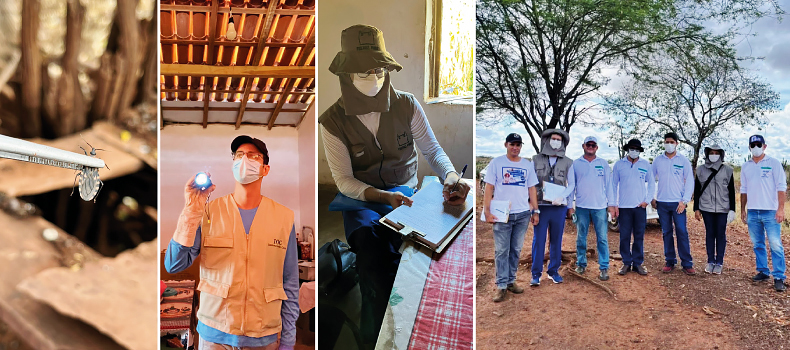
It was 2013 when the Graduate Program Strict sensu in Tropical Medicine at the Oswaldo Cruz Institute (IOC/Fiocruz) and the regional office of the Fiocruz in Piauí gave the welcome to the first master class of the promising partnership that would provide the training of researchers, professors and professionals in the area of Tropical Medicine in the state.
Ten years have passed and more than 40 masters from Piauí and neighboring states have developed studies of high impact and relevance for local health.
“The Program has managed, with great success, to fulfill its mission of training graduate students who, based on the knowledge worked on in the course, can further ennoble research and health services in the region”, emphasized Vanessa de Paula, coordinator of the Program of Postgraduate Studies in Tropical Medicine.
The partnership has enabled the development of innovative studies that assess impacts caused by neglected tropical diseases in the region.
With the sensitized look of students, whose profile is mostly professional in the health area, projects were developed in different diseases, such as whooping cough, Chagas disease, schistosomiasis, hepatitis, influenza, leishmaniasis, malaria and intestinal parasites.
“Many of the students who took the master's degree in Piauí were already in the job market, working in laboratories, reference services, universities and other health institutions. After graduation, they were able to expand and improve the knowledge they had already acquired”, explained Vanessa.
“They used their professional experiences to suggest research projects, as well as taking advantage of the course to promote changes in their work environments, with a review of conduct, technical notes and data for epidemiological bulletins”, he added.
The first results began to appear shortly after the establishment of the partnership. In 2015, they were the first masters trained, with dissertations that showed the epidemiological pattern of diseases, showing the persistence of these endemic diseases. Currently, the fifth class of master's degree is in progress.
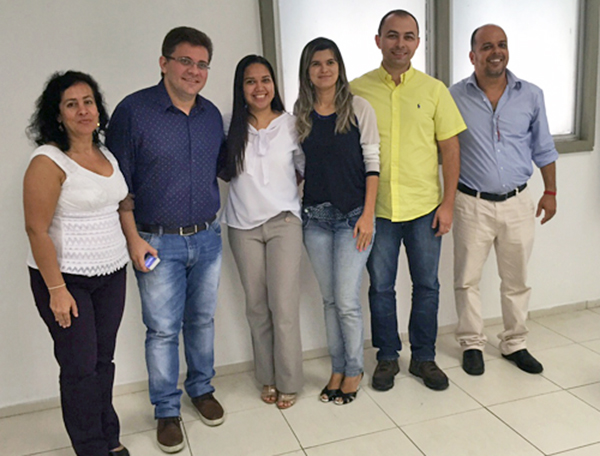 Part of the students in the first group of the course alongside the researchers from the IOC Martha Mutis (left) and Filipe Aníbal (right). Photo: Jessica Santos
For the F coordinatoriocruz Piauí, Jacenir Mallet, the implementation of the course in the state stands out for opening doors for the elaboration of projects and cooperation with local institutions.
“The work carried out here fostered the construction of a network of collaborators who are very interested in strengthening the training of masters and doctors in the Brazilian Northeast”, he shared.
Among the institutions that support the partnership are the Federal (UFPI) and State (UESPI) Universities of Piauí, the Federal Institute of Piauí (IFPI), the Natan Portella Institute of Tropical Diseases, the State Department of Health of Piauí, Laboratories Public Health Centers (LACENs), the Research Support Foundation of the State of Piauí (Fapepi) and the National Health Foundation (Funasa).
“By joining the academic expertise of the teachers of the IOC with the expertise of local collaborators and the experience of students on social determinants in the region, we managed to act effectively on the health problems of each state”, declared Mallet.
The master's course of the Postgraduate Program in Tropical Medicine at IOC implemented in Fiocruz Piauí is due to demands made by local institutions during the creation of the Foundation’s office in the state, as stated by Filipe Aníbal, former coordinator of PGMT and former teaching coordinator of Fiocruz Piauí.
“In order to propose guidelines and actions for the office, a working group was formed with the participation of professionals from different F units.iocruz and important Piauí institutions. The main activity requested was the establishment of a postgraduate course that would meet the needs of the region”, recalled Filipe.
The claim is a reflection of the unequal supply of postgraduate courses in Brazil. According to the Coordination for the Improvement of Higher Education Personnel (CAPES), there is a greater concentration of master's and doctoral courses in the Southeast and South regions.
“With the opening of public notices in Piauí, we began to meet a demand for master's degree vacancies in a territory where the offer of these courses is still very repressed”, defined Filipe.
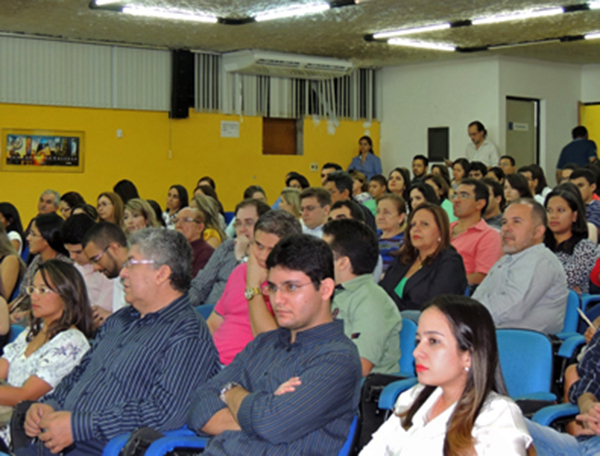 The inaugural lecture of the master's course at Postgraduate Diploma in Tropical Medicine in Piauí was held at the Technology Center of the Federal University of Piauí (UFPI), and was attended by several representatives of the Fiocroz. Photo: Mariana Borges
Ten years after the establishment of the partnership, the Postdoctoral IOC focuses on expanding geographically the training of masters and doctors as a way to contribute to the decentralization of postgraduate courses.
“Piauí occupies a strategic position in the Northeast and makes it possible to receive students from neighboring states, such as Ceará and Maranhão. Together with local professionals, we will continue to strengthen the research environment, training even more people”, assured Vanessa de Paula.
“For the time being, we are helping to enhance the postgraduate scene in the region. However, our expectation is that these graduates can train other people locally, valuing education from the Northeast to the Northeast”, added the coordinator.
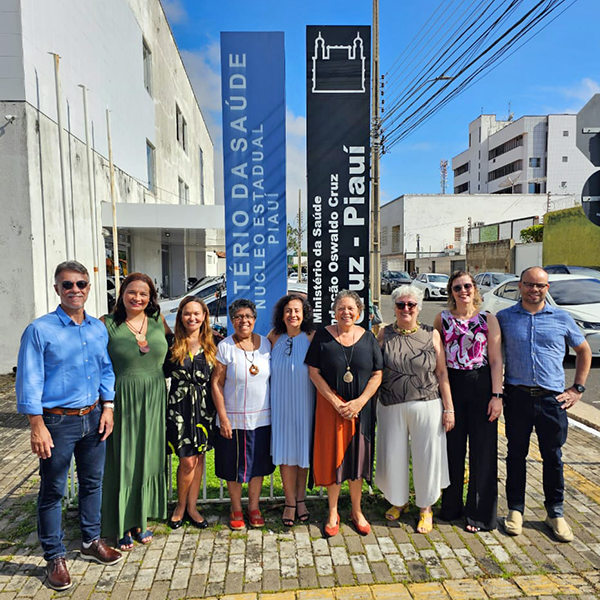
To mark the tenth anniversary of the partnership, a commemorative event was held at Fiocruz Piauí. The celebration brought together professors, students, graduates and partners for conversations about academic training and the impact on regional public health.
In addition to coordinating theiocruz Piauí and PGMT, Tania Araujo Jorge, director of the IOC; Paulo D'Andrea, Deputy Director of Education, Information and Communication at IOC; Cristina Guilam, General Coordinator of Graduate Studies at Fiocroz; Fabrício Pires de Moura do Amaral, director of the Central Public Health Laboratory Dr. Costa Alvarenga (LACEN-PI); João Xavier da Cruz Neto, president of Fapepi; and Viriato Campelo, vice-rector of UFPI.
Check out, in full, the celebration for the 10 years of Postgraduate Studies in Tropical Medicine in Piauí:
It was 2013 when the Graduate Program Strict sensu in Tropical Medicine at the Oswaldo Cruz Institute (IOC/Fiocruz) and the regional office of the Fiocruz in Piauí gave the welcome to the first master class of the promising partnership that would provide the training of researchers, professors and professionals in the area of Tropical Medicine in the state.
Ten years have passed and more than 40 masters from Piauí and neighboring states have developed studies of high impact and relevance for local health.
“The Program has managed, with great success, to fulfill its mission of training graduate students who, based on the knowledge worked on in the course, can further ennoble research and health services in the region”, emphasized Vanessa de Paula, coordinator of the Program of Postgraduate Studies in Tropical Medicine.
The partnership has enabled the development of innovative studies that assess impacts caused by neglected tropical diseases in the region.
With the sensitized look of students, whose profile is mostly professional in the health area, projects were developed in different diseases, such as whooping cough, Chagas disease, schistosomiasis, hepatitis, influenza, leishmaniasis, malaria and intestinal parasites.
“Many of the students who took the master's degree in Piauí were already in the job market, working in laboratories, reference services, universities and other health institutions. After graduation, they were able to expand and improve the knowledge they had already acquired”, explained Vanessa.
“They used their professional experiences to suggest research projects, as well as taking advantage of the course to promote changes in their work environments, with a review of conduct, technical notes and data for epidemiological bulletins”, he added.
The first results began to appear shortly after the establishment of the partnership. In 2015, they were the first masters trained, with dissertations that showed the epidemiological pattern of diseases, showing the persistence of these endemic diseases. Currently, the fifth class of master's degree is in progress.
Part of the students in the first group of the course alongside the researchers from the IOC Martha Mutis (left) and Filipe Aníbal (right). Photo: Jessica Santos
For the F coordinatoriocruz Piauí, Jacenir Mallet, the implementation of the course in the state stands out for opening doors for the elaboration of projects and cooperation with local institutions.
“The work carried out here fostered the construction of a network of collaborators who are very interested in strengthening the training of masters and doctors in the Brazilian Northeast”, he shared.
Among the institutions that support the partnership are the Federal (UFPI) and State (UESPI) Universities of Piauí, the Federal Institute of Piauí (IFPI), the Natan Portella Institute of Tropical Diseases, the State Department of Health of Piauí, Laboratories Public Health Centers (LACENs), the Research Support Foundation of the State of Piauí (Fapepi) and the National Health Foundation (Funasa).
“By joining the academic expertise of the teachers of the IOC with the expertise of local collaborators and the experience of students on social determinants in the region, we managed to act effectively on the health problems of each state”, declared Mallet.
The master's course of the Postgraduate Program in Tropical Medicine at IOC implemented in Fiocruz Piauí is due to demands made by local institutions during the creation of the Foundation’s office in the state, as stated by Filipe Aníbal, former coordinator of PGMT and former teaching coordinator of Fiocruz Piauí.
“In order to propose guidelines and actions for the office, a working group was formed with the participation of professionals from different F units.iocruz and important Piauí institutions. The main activity requested was the establishment of a postgraduate course that would meet the needs of the region”, recalled Filipe.
The claim is a reflection of the unequal supply of postgraduate courses in Brazil. According to the Coordination for the Improvement of Higher Education Personnel (CAPES), there is a greater concentration of master's and doctoral courses in the Southeast and South regions.
“With the opening of public notices in Piauí, we began to meet a demand for master's degree vacancies in a territory where the offer of these courses is still very repressed”, defined Filipe.
The inaugural lecture of the master's course at Postgraduate Diploma in Tropical Medicine in Piauí was held at the Technology Center of the Federal University of Piauí (UFPI), and was attended by several representatives of the Fiocroz. Photo: Mariana Borges
Ten years after the establishment of the partnership, the Postdoctoral IOC focuses on expanding geographically the training of masters and doctors as a way to contribute to the decentralization of postgraduate courses.
“Piauí occupies a strategic position in the Northeast and makes it possible to receive students from neighboring states, such as Ceará and Maranhão. Together with local professionals, we will continue to strengthen the research environment, training even more people”, assured Vanessa de Paula.
“For the time being, we are helping to enhance the postgraduate scene in the region. However, our expectation is that these graduates can train other people locally, valuing education from the Northeast to the Northeast”, added the coordinator.
To mark the tenth anniversary of the partnership, a commemorative event was held at Fiocruz Piauí. The celebration brought together professors, students, graduates and partners for conversations about academic training and the impact on regional public health.
In addition to coordinating theiocruz Piauí and PGMT, Tania Araujo Jorge, director of the IOC; Paulo D'Andrea, Deputy Director of Education, Information and Communication at IOC; Cristina Guilam, General Coordinator of Graduate Studies at Fiocroz; Fabrício Pires de Moura do Amaral, director of the Central Public Health Laboratory Dr. Costa Alvarenga (LACEN-PI); João Xavier da Cruz Neto, president of Fapepi; and Viriato Campelo, vice-rector of UFPI.
Check out, in full, the celebration for the 10 years of Postgraduate Studies in Tropical Medicine in Piauí:
The non-profit reproduction of the text is allowed as long as the source is cited (Comunicação / Instituto Oswaldo Cruz)
 |
 |



