

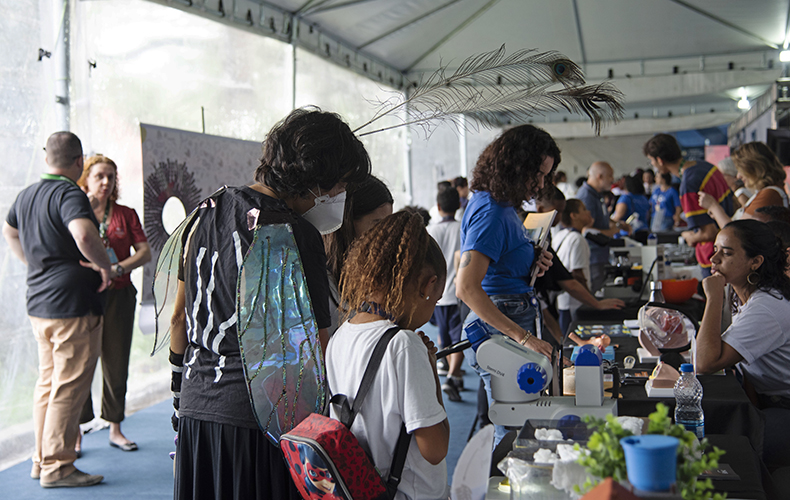
 Researcher dresses up as 'Aedes aegypti' to attract children's attention to dengue, Zika and Chikungunya prevention care. Photo: Ricardo Schmidt
The National Science and Technology Week (SNCT) returned to its face-to-face format after two years of remote implementation as a result of the coronavirus pandemic.
And to make this long-awaited return even more enchanting, researchers and students from the Oswaldo Cruz Institute (IOC/Fiocruz) dedicated themselves to transforming their scientific research into interactive activities that provided entertainment and new knowledge for hundreds of visitors who passed through the Manguinhos-Maré da F campusiocruz between the 18th and 21st of October.
This year, the theme chosen by the Ministry of Science, Technology, Innovation and Communications (MCTI) – which promotes the initiative – was “Bicentenary of Independence: 200 years of science, technology and innovation in Brazil”. The proposal that made it possible to reflect on the construction of knowledge for national sovereignty was allied to the 150th anniversary of the birth of Oswaldo Cruz, patron of the Fiocruz and do IOC, and great science icon.
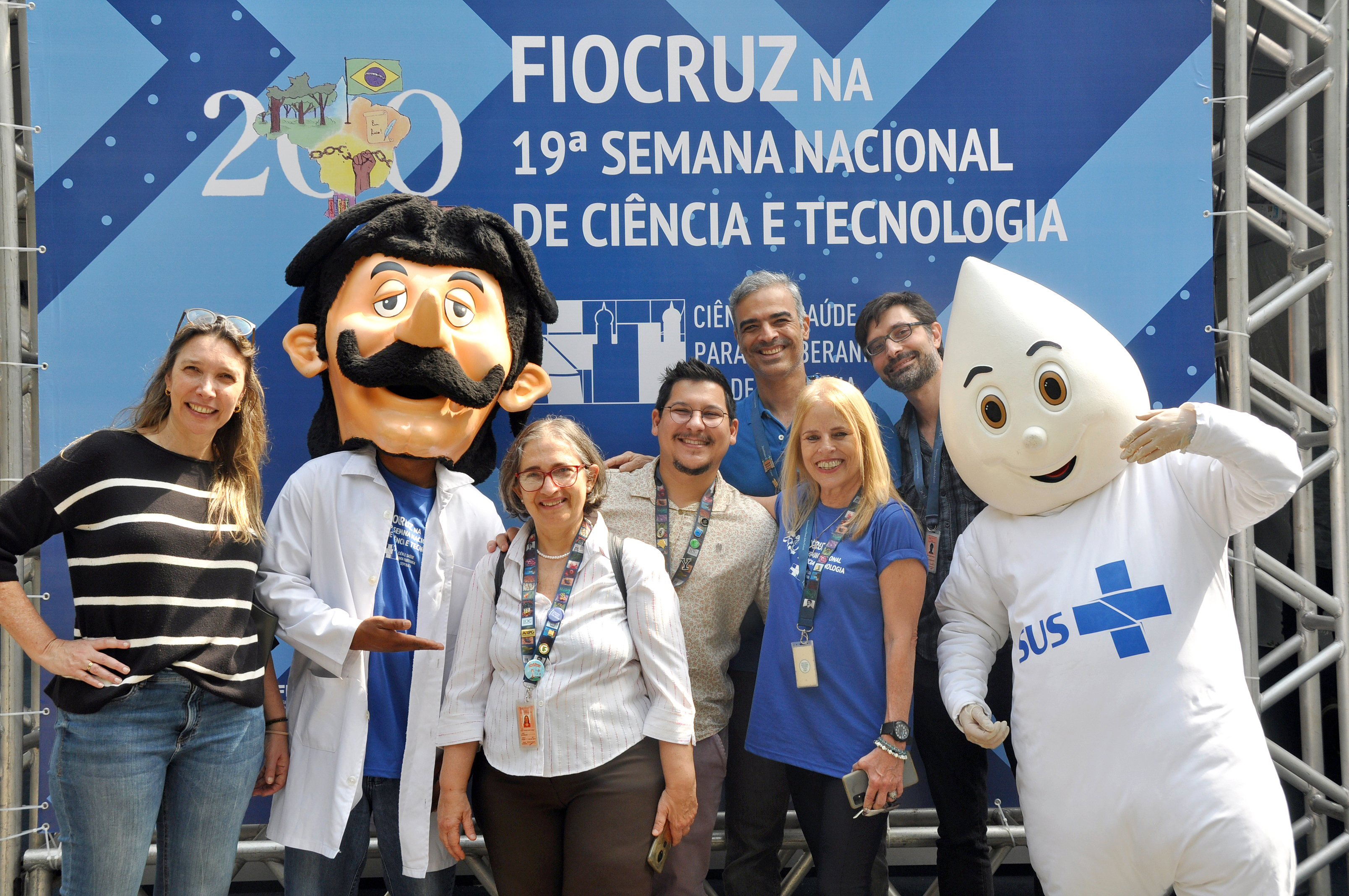 Board of IOC visited the event and interacted with the activities
In the tent and spaces proposed by Fiocruz, activities such as games, workshops, conversation circles and exhibitions were part of the diverse program developed by IOC. Attentive and curious eyes were enchanted by glassware and microscopes from the laboratories, as well as historical specimens from the Institute's museums and biological collections.
“The groups of IOC They were very creative in the elaboration of the activities. The diversity and playfulness of the actions brought a unique way of experiencing science and learning from it, arousing the public’s curiosity and presenting the work we do here in a didactic way”, highlighted Ademir Martins Junior, Deputy Deputy Director for Teaching, Information and Communication at the Institute.
The combination of science and play was one of the attractions for the couple Carina and Renato Bellato, who took their children Daniel, Miguel and Helena to have fun and learn at SNCT in Fiocroz.
“We want them to have contact with different ways of acquiring knowledge. With the Covid-19 pandemic, they stayed indoors for a long time and didn't have opportunities to be close to what they learned through the computer screen. Here they were able to interact with various segments of science and were surrounded by stimuli”, revealed Carina.
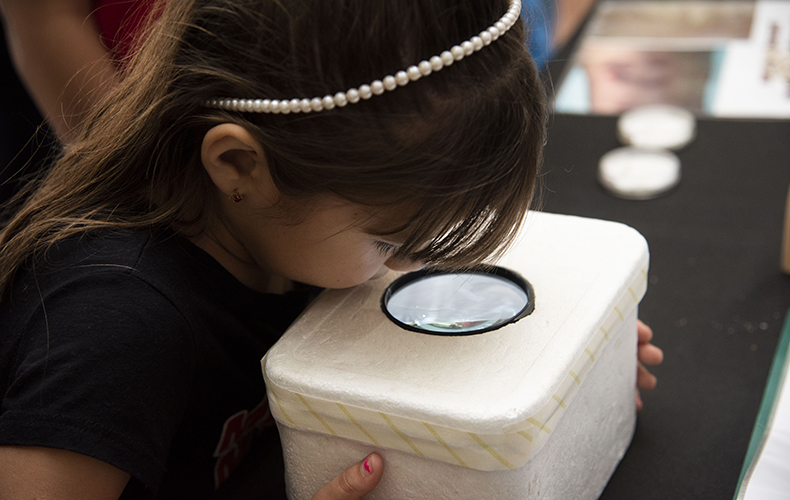 Little Helena, 5 years old, watched live specimens of cimicides, known as 'bed bugs', through the lens attached to the styrofoam box. Photo: Ricardo Schmidt
“There is a wide range of activities and all of them are very didactic so that people of all ages can learn about the subjects. And they really are attracting all audiences. While Helena painted a drawing of an insect, Daniel and Miguel paid attention to the explanation about the care we need to take with them”, completed Renato.
For 10-year-old twins Daniel and Miguel, learning about science in practice was a fun experience. The little ones made a point of going through all the available activities.
“It's all interesting. I found this part about insects very different”, said Daniel. “I learned that some insects can cause allergies and others transmit diseases. It is to be aware”, said Miguel.
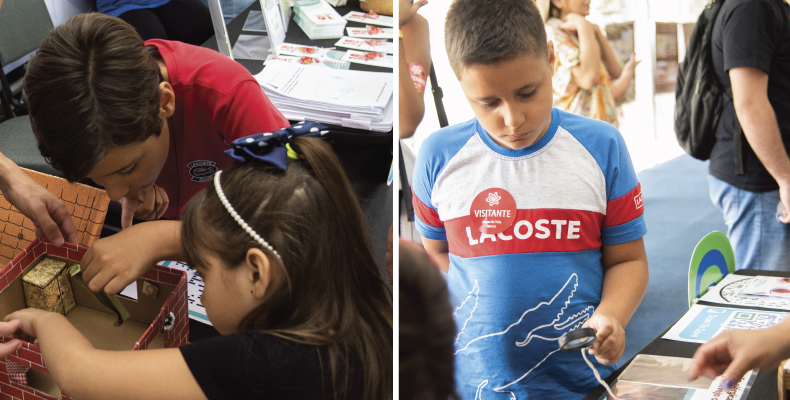 Daniel (left) and Miguel (right) find out more about triatomine bugs, known as 'kissing bugs', and cimicids, called 'bed bugs'. Photo: Ricardo Schmidt
In addition to those who were taken by their parents, dozens of other children and adolescents, students from public and private schools, passed through SNCT 2022 at Fiocruz accompanied by their teachers.
While the students expanded on what they had learned in the classroom, the educators had the opportunity to learn more about the project. "IOC + Schools”. The initiative disseminates the scientific knowledge produced at the unit to the population through scientific dissemination actions – among them, some present in the schedule of the National Week of Science and Technology.
“It was a great opportunity for us to bring the professors of our program closer together'IOC + Schools'. We had a space specially dedicated to presenting the initiative to educators, publicizing our catalog of actions and encouraging the request for these activities in their schools”, commented the deputy director of Education at the Institute.
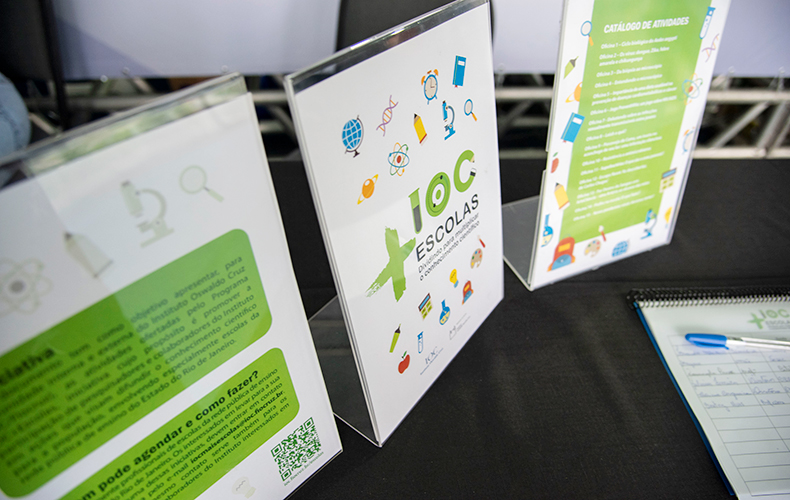 Space available for educators to register for the activity. Photo: Ricardo Schmidt
• Beware of mosquitoes
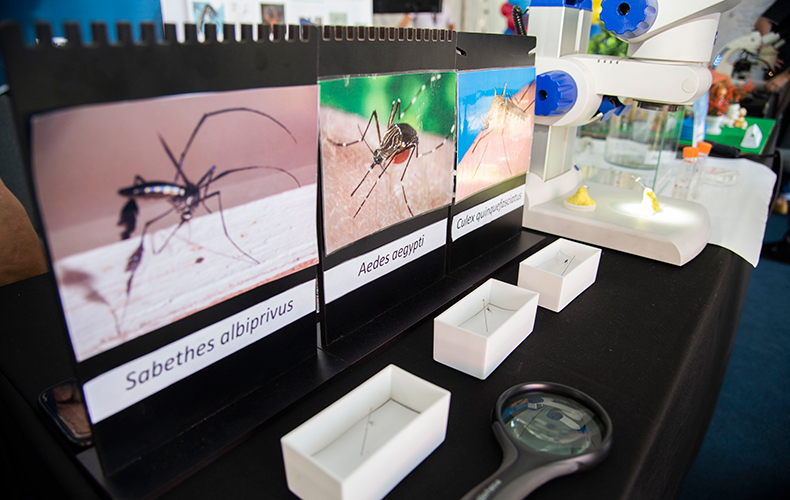 Público compared differences between urban and wild mosquitoes in the activity “Independence with science: remove mosquitoes from your coexistence”. Photo: Ricardo Schmidt
Mosquitoes, so present in our daily lives, were present in another edition of SNCT. The activities focused on presenting the different species and raising awareness about the precautions that need to be taken at home so that the number of insect vectors of diseases, such as Aedes aegypti (responsible for transmitting dengue, Zika and Chikungunya), do not increase.
In the activity “Independence with science: remove the mosquitoes from your coexistence”, promoted by the Laboratory of Mosquito Transmitters of Hematozoa, the public analyzed specimens of urban and wild mosquitoes with the aid of a magnifying glass and microscope. The samples came from the Culicidae Collection of the unit, which houses more than 4 specimens.
Knowing a little more about the physical aspects and habits of these insects, the public was invited to test their knowledge about care to prevent the proliferation of the Aedes aegypti, known to have opportunistic habits and adapt well to humans.
A model of a house with stagnant water spots with mosquito larvae drew attention to the need for the population to be always aware of places that could serve as breeding grounds.
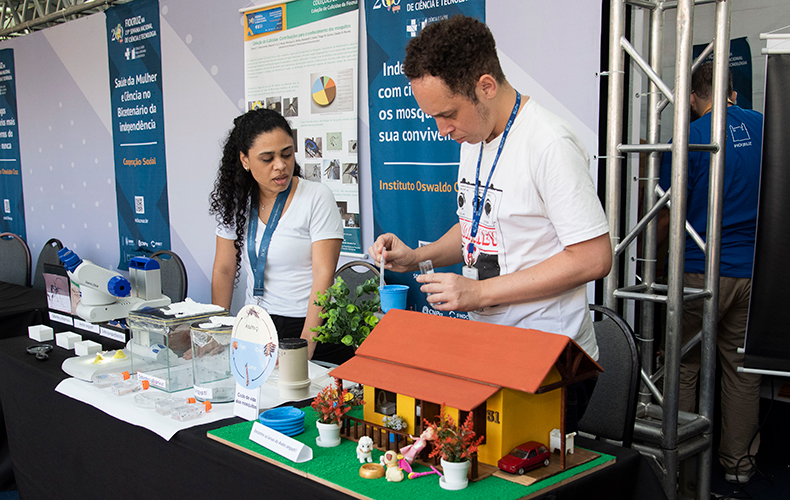
Expanding knowledge about the species, the action “Knowing the Aedes aegypti” took specimens of eggs, larvae, pupae and adult mosquitoes so that the public could take a closer look at each stage of Aedes life. Developed by the Laboratory of Molecular Biology of Insects, the activity explained the importance of combating Aedes aegypti before it reaches adulthood.
Dynamics were also performed that showed the sensitivity of the larvae to light, which hide when exposed to light, which can make it difficult to find them in the cleaning routine. It was also shown the correct way to discard eggs, larvae and pupa, if they are found in the houses.
Directing the focus to arboviruses transmitted by Aedes, the activity “Viruses: dengue, Zika, yellow fever and chikungunya”, by the Laboratory of Morphology and Viral Morphogenesis, bet on a series of recreational activities. Board games, microscopes and computers with question and answer games were available to the public.
A workshop on the structure of viruses provided modeling clay, beads and toothpicks for participants to reproduce characteristics of these microorganisms.
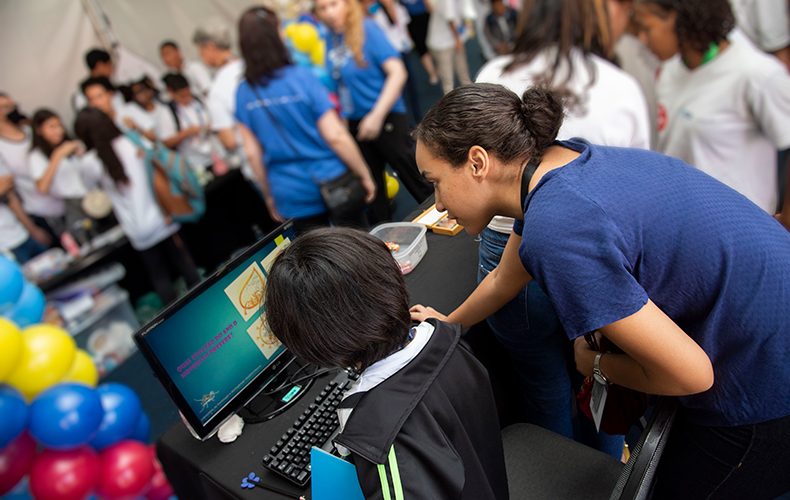 Games in quiz format deepened knowledge acquired at SNCT. Photo: Ricardo Schmidt
• Unraveling the insects
The Laboratory of Biochemistry and Physiology of Insects participated with the activity “Curiosities about the creation of insects”, which better explained the biology of these beings and presented several microorganisms capable of being transmitted.
Mainly captivating the eyes of children, the action included microscopes for a detailed observation of the parasites and presented specimens of insects such as triatomines (kissing bugs) and sandflies (straw mosquitoes).
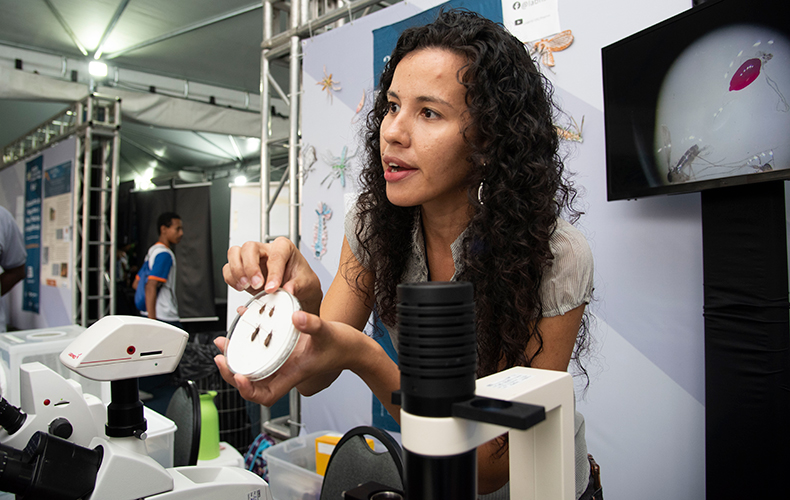 'Insect breeding curiosities' took some insects for observation. Photo: Ricardo Schmidt
Sandflies were also the subject of the activity “Vectors of Leishmaniasis”, an action promoted by the Interdisciplinary Laboratory of Entomological Surveillance in Diptera and Hemiptera. The group participated with interactive games and insects on slides with the purpose of educating about the integrated control of diseases caused by protozoa of the genus Leishmania.
Biscuit models in the shape of the parasite and the insect were available to be touched, with the aim of making the activity more accessible and even for people with visual impairments.
The Laboratory also participated with two other activities: “I look closely at the barber on the road to independence” and “Bed bugs from independence to the present day”. In the first, a model highlighted how triatomines advanced through some regions of Brazil, accompanying territory explorations since before the country's independence and reinforced the necessary care for this group of insects of great medical importance.
The second focused on cimicides: an insect family known as “bed bugs” and of no great medical importance, with bites that cause local allergies. Using models, the group reinforced the importance of being aware of possible infestations on sofas and beds.
Presenting the great biodiversity of the Insecta class, part of the Entomological Collection's historical collection was present with the activity “The science and technology of insects”. Different specimens of these animals were presented, which called attention both for their beauty and for their medical importance.
• Care for parasitic diseases
With the title inspired by the song “Roda Viva”, by Chico Buarque, the activity “Time rotated in an instant in the turns of my heart” was inspired by the theme of SNCT 2022 and the 150th anniversary of Oswaldo Cruz’s birth to portray more than four decades of the Laboratory of Parasitic Diseases.
The group bet on the public's curiosity for the elements studied at the Laboratory and took devices that represent research into malaria, Chagas disease, schistosomiasis and leishmaniasis. Among them, fossilized materials, enlarged models that represent insects and equipment such as microscopes and magnifying glasses that are over 60 years old.
Supported by changes in technology and social networks, a space was developed so that the public could record videos answering questions about the topics covered.
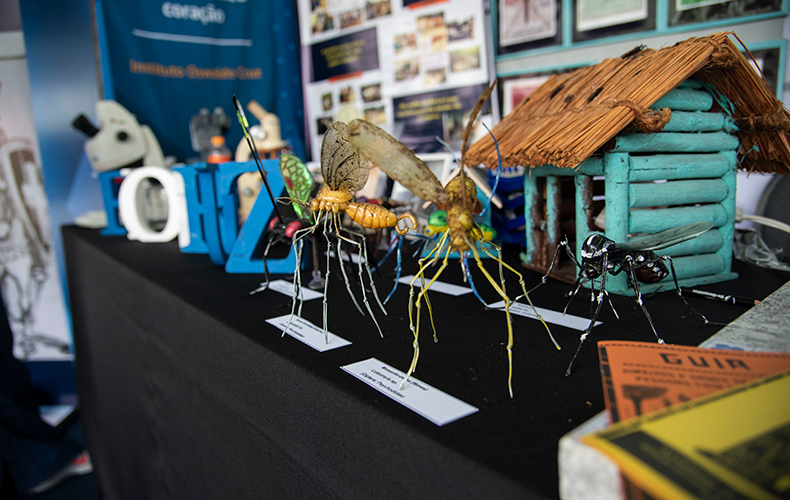 Insect models attracted children's attention. Photo: Ricardo Schmidt
Schistosomiasis was also highlighted in “Molluscs: what is its importance?”, conducted by the Laboratory of Malacology. Visitors were able to learn more about the disease and its vector, a freshwater snail, and also get to know other molluscs, such as the African snail, an urban pest. The most fearless visitors had the opportunity to hold one of these cats with the help of gloves.
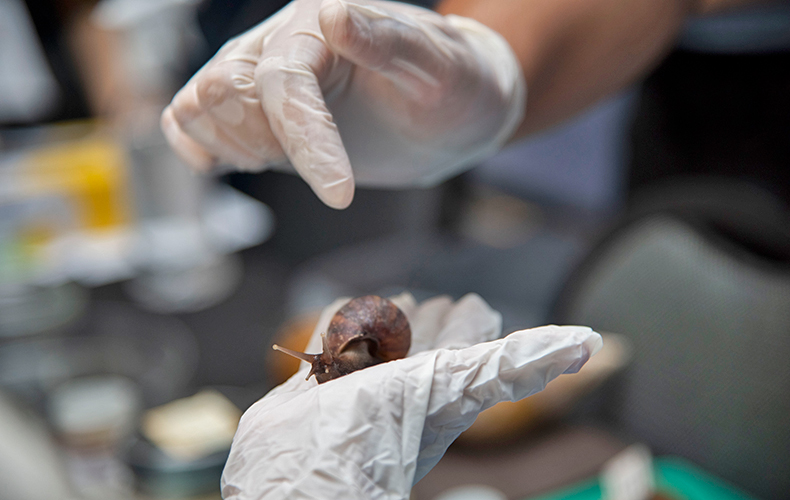 Visitor catches African snail in the activity “Molluscs: what is your importance?”: Ricardo Schmidt
More parasites were presented in the activity “Knowing the worms”. The Laboratory of Biology and Parasitology of Wild Mammals Reservoirs exhibited carved rodents and marsupials, as well as some worms that can parasitize these mammals and also humans. After observing the specimens, the public was able to reproduce the worms in modeling clay and draw what most attracted attention in the exhibition.
• Diversity of the fungus kingdom
A table full of colorful objects with peculiar shapes attracted the eyes of the children throughout the week: it was the activity “Centennial Fungi, more modern than ever”, which placed stylized clay on plates to represent the great diversity of the Fungi Kingdom.
Led by the Coleção de Fungos, which turned 100 in 2022, the action helped demystify these organisms, normally linked to spoiled products, and show how they are also useful in everyday life – such as the yeasts that participate in biological fermentation, present in bread.
Fungi samples were also available to be observed in more detail through the microscope.
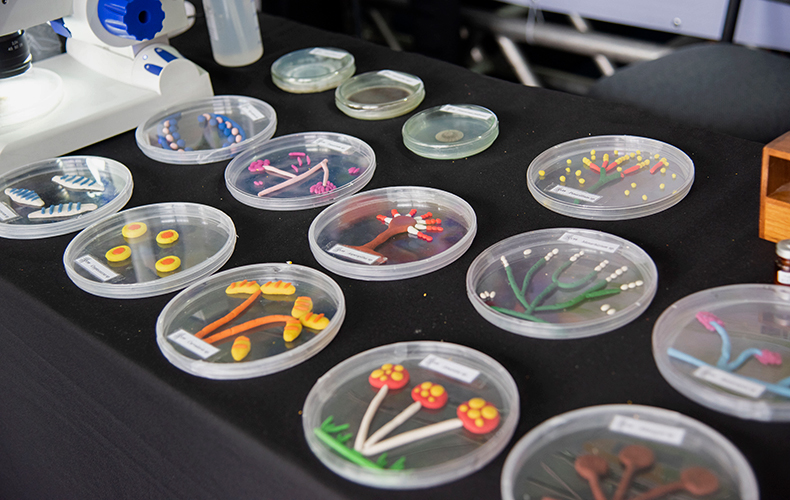 Shapes and colors attracted children and teenagers. Photo: Ricardo Schmidt
• awareness and prevention
The game “PreventHIVo: sobre HIV/AIDS”, developed by the AIDS and Molecular Immunology Laboratory, helped answer questions from the public and update perceptions about HIV.
For children under 12 years old, the interactions were focused on the viral particle, with a Styrofoam model that represented the structure of the virus.
The teenagers and adults participated in an interactive game with cards that tested their knowledge about how to contract the virus.
The activity opened the dialogue about AIDS and helped the public to understand the disease and how to prevent it.
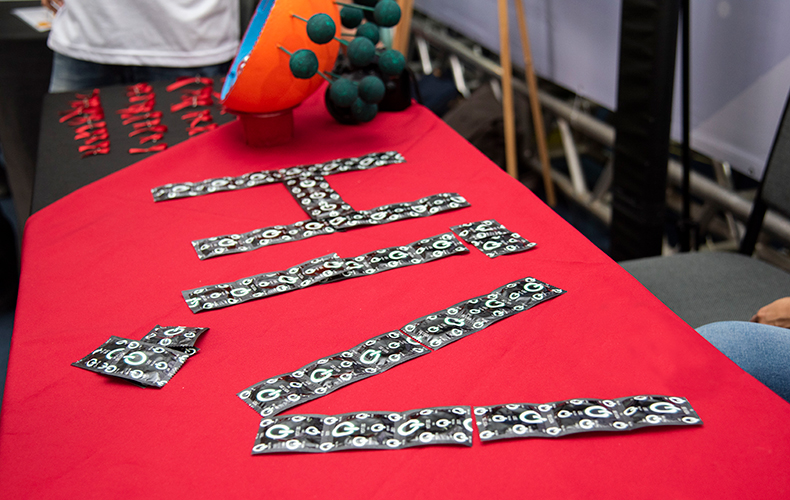 Action included game with cards, virus mockup and condom awareness. Photos: Ricardo Schmidt
The activity “Bacteria and antibiotics: a race against time”, carried out by the Laboratory of Cellular Microbiology, had a variety of games that explained the use of antibiotics and how they act against microorganisms.
In a “target shooting” format, one of the games proposed the challenge of hitting a disease-causing bacteria with an antibiotic, but the participant had to be careful not to hit other microorganisms that are part of the microbiota and are essential for human beings.
Another action that attracted the attention of the little ones was a board game, in which the participants were the pieces themselves. To advance on the course, they needed to answer questions about antibiotics.
Reinforcing the necessary care with food and hygiene of domestic animals, the Laboratory of Toxoplasmosis and other Protozooses participated with “Toxoplasmosis: knowing to prevent”. The action explained what the protozoan is Toxoplasma gondii and highlighted how the infection occurs, remembering that felines are also victims and that they should not be treated as villains in the transmission cycle.
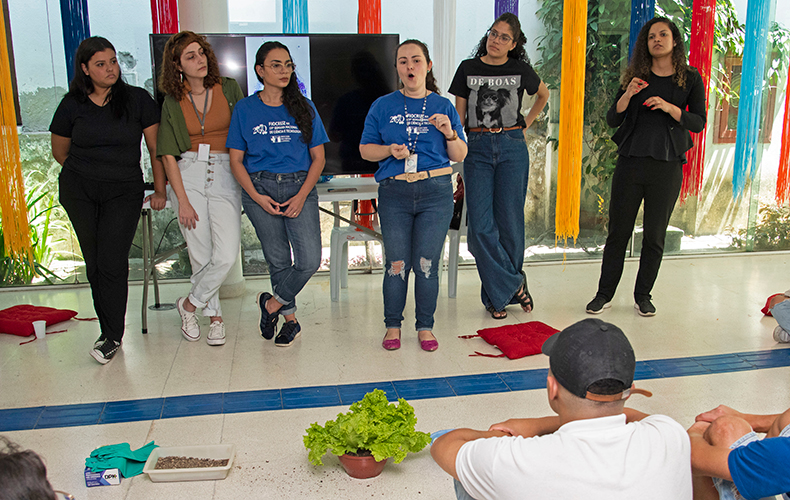 Activity showed how to avoid being infected by the Toxoplasmosis parasite. Photo: Ricardo Schmidt
Still on the theme of pets, the Laboratory of Immunoparasitology promoted the activity “Do you know the diseases that are shared between pets and people?”, which highlighted the necessary care to be taken when deciding to take care of an animal.
Knowledge was passed on through board and memory games, in addition to an activity on the importance of washing hands, in which visitors were blindfolded and tested to check whether they performed the action correctly.
The importance of vaccination was addressed in a conversation circle by members of the Interaction Biology Laboratory in the activity “Science, vaccines and independence”.
The public watched videos about diseases whose immunization rates are low and therefore have shown a constant increase in cases of infection, such as poliomyelitis.
Researchers and students talked about historical periods, such as the vaccine revolt, and the impact of spreading fake news on Brazilian public health.
• Art and recycling
The workshop “Brotando Passarinhos”, developed in the Post-graduation of Teaching in BiocSciences and Health, debated environmental issues and taught about recycling food from the production of artistic pieces made with the pit of the mango.
While painting birds on the fruit seed, visitors learned that in addition to the pulp serving as food, the mango peel can be used as fertilizer in plantations.
• Life in the midst of pollution
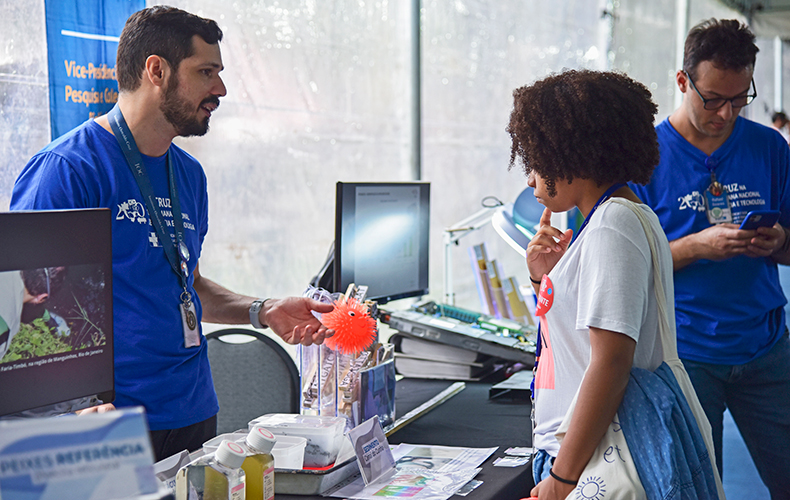 The activity addressed species adaptation and raised awareness about the importance of preserving the environment. Photo: Ricardo Schmidt
The debate on nature conservation was raised by the activity “Ninja Fish: how to survive in chronically polluted environments?”, from the Laboratory of Functional Genomics and Bioinformatics.
In an aquarium, fish collected in the polluted Canal do Cunha that have visible malformations in the vertebral column were exposed.
The activity also featured videos that showed the moment the fish were collected for studies and photos that showed in more detail the malformations of these animals as a result of environmental degradation.
The space served to debate the existence of life in polluted environments and how pollution affects local biodiversity.
• Recognizing the organs of the human body
The centenary Museum of Pathology of the IOC bet on playfulness to deepen knowledge about the organs of the human body and the diseases that affect them. Developed especially for SNCT, a board game brought the map of the Manguinhos-Maré da Fiocruz for participants to walk through while answering questions about anatomy.
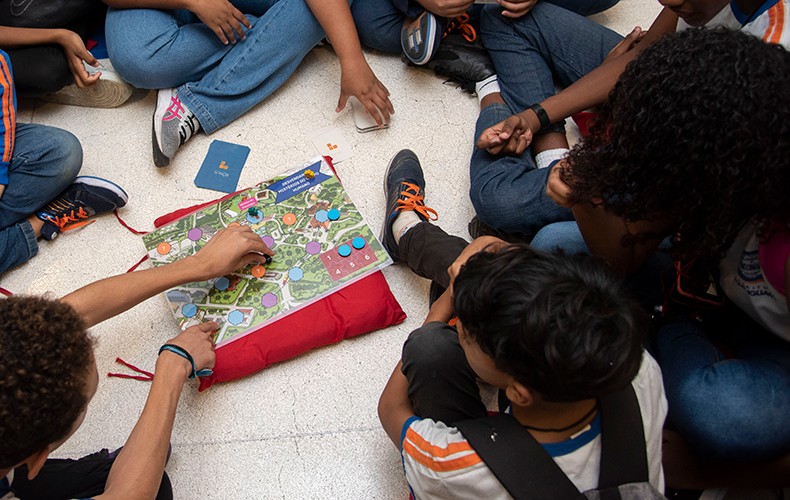 From games, children and teenagers learned more about human body organs. Photo: Ricardo Schmidt
Another activity was the “Anatomical memory game”, which challenged pairs to find cards with similar organs, which, in turn, were available to be colored in the activity “Coloring cells and tissues”.
Completing the actions, a torso was available so that visitors could see the position in the human body of the organs used in the games. A historical piece from the museum was also taken for observation.
Researcher dresses up as 'Aedes aegypti' to attract children's attention to dengue, Zika and Chikungunya prevention care. Photo: Ricardo Schmidt
The National Science and Technology Week (SNCT) returned to its face-to-face format after two years of remote implementation as a result of the coronavirus pandemic.
And to make this long-awaited return even more enchanting, researchers and students from the Oswaldo Cruz Institute (IOC/Fiocruz) dedicated themselves to transforming their scientific research into interactive activities that provided entertainment and new knowledge for hundreds of visitors who passed through the Manguinhos-Maré da F campusiocruz between the 18th and 21st of October.
This year, the theme chosen by the Ministry of Science, Technology, Innovation and Communications (MCTI) – which promotes the initiative – was “Bicentenary of Independence: 200 years of science, technology and innovation in Brazil”. The proposal that made it possible to reflect on the construction of knowledge for national sovereignty was allied to the 150th anniversary of the birth of Oswaldo Cruz, patron of the Fiocruz and do IOC, and great science icon.
Board of IOC visited the event and interacted with the activitiesIn the tent and spaces proposed by Fiocruz, activities such as games, workshops, conversation circles and exhibitions were part of the diverse program developed by IOC. Attentive and curious eyes were enchanted by glassware and microscopes from the laboratories, as well as historical specimens from the Institute's museums and biological collections.
“The groups of IOC They were very creative in the elaboration of the activities. The diversity and playfulness of the actions brought a unique way of experiencing science and learning from it, arousing the public’s curiosity and presenting the work we do here in a didactic way”, highlighted Ademir Martins Junior, Deputy Deputy Director for Teaching, Information and Communication at the Institute.
The combination of science and play was one of the attractions for the couple Carina and Renato Bellato, who took their children Daniel, Miguel and Helena to have fun and learn at SNCT in Fiocroz.
“We want them to have contact with different ways of acquiring knowledge. With the Covid-19 pandemic, they stayed indoors for a long time and didn't have opportunities to be close to what they learned through the computer screen. Here they were able to interact with various segments of science and were surrounded by stimuli”, revealed Carina.
Little Helena, 5 years old, watched live specimens of cimicides, known as 'bed bugs', through the lens attached to the styrofoam box. Photo: Ricardo Schmidt
“There is a wide range of activities and all of them are very didactic so that people of all ages can learn about the subjects. And they really are attracting all audiences. While Helena painted a drawing of an insect, Daniel and Miguel paid attention to the explanation about the care we need to take with them”, completed Renato.
For 10-year-old twins Daniel and Miguel, learning about science in practice was a fun experience. The little ones made a point of going through all the available activities.
“It's all interesting. I found this part about insects very different”, said Daniel. “I learned that some insects can cause allergies and others transmit diseases. It is to be aware”, said Miguel.
Daniel (left) and Miguel (right) find out more about triatomine bugs, known as 'kissing bugs', and cimicids, called 'bed bugs'. Photo: Ricardo Schmidt
In addition to those who were taken by their parents, dozens of other children and adolescents, students from public and private schools, passed through SNCT 2022 at Fiocruz accompanied by their teachers.
While the students expanded on what they had learned in the classroom, the educators had the opportunity to learn more about the project. "IOC + Schools”. The initiative disseminates the scientific knowledge produced at the unit to the population through scientific dissemination actions – among them, some present in the schedule of the National Week of Science and Technology.
“It was a great opportunity for us to bring the professors of our program closer together'IOC + Schools'. We had a space specially dedicated to presenting the initiative to educators, publicizing our catalog of actions and encouraging the request for these activities in their schools”, commented the deputy director of Education at the Institute.
Space available for educators to register for the activity. Photo: Ricardo Schmidt
• Beware of mosquitoes
Público compared differences between urban and wild mosquitoes in the activity “Independence with science: remove mosquitoes from your coexistence”. Photo: Ricardo Schmidt
Mosquitoes, so present in our daily lives, were present in another edition of SNCT. The activities focused on presenting the different species and raising awareness about the precautions that need to be taken at home so that the number of insect vectors of diseases, such as Aedes aegypti (responsible for transmitting dengue, Zika and Chikungunya), do not increase.
In the activity “Independence with science: remove the mosquitoes from your coexistence”, promoted by the Laboratory of Mosquito Transmitters of Hematozoa, the public analyzed specimens of urban and wild mosquitoes with the aid of a magnifying glass and microscope. The samples came from the Culicidae Collection of the unit, which houses more than 4 specimens.
Knowing a little more about the physical aspects and habits of these insects, the public was invited to test their knowledge about care to prevent the proliferation of the Aedes aegypti, known to have opportunistic habits and adapt well to humans.
A model of a house with stagnant water spots with mosquito larvae drew attention to the need for the population to be always aware of places that could serve as breeding grounds.
Expanding knowledge about the species, the action “Knowing the Aedes aegypti” took specimens of eggs, larvae, pupae and adult mosquitoes so that the public could take a closer look at each stage of Aedes life. Developed by the Laboratory of Molecular Biology of Insects, the activity explained the importance of combating Aedes aegypti before it reaches adulthood.
Dynamics were also performed that showed the sensitivity of the larvae to light, which hide when exposed to light, which can make it difficult to find them in the cleaning routine. It was also shown the correct way to discard eggs, larvae and pupa, if they are found in the houses.
Directing the focus to arboviruses transmitted by Aedes, the activity “Viruses: dengue, Zika, yellow fever and chikungunya”, by the Laboratory of Morphology and Viral Morphogenesis, bet on a series of recreational activities. Board games, microscopes and computers with question and answer games were available to the public.
A workshop on the structure of viruses provided modeling clay, beads and toothpicks for participants to reproduce characteristics of these microorganisms.
Games in quiz format deepened knowledge acquired at SNCT. Photo: Ricardo Schmidt
• Unraveling the insects
The Laboratory of Biochemistry and Physiology of Insects participated with the activity “Curiosities about the creation of insects”, which better explained the biology of these beings and presented several microorganisms capable of being transmitted.
Mainly captivating the eyes of children, the action included microscopes for a detailed observation of the parasites and presented specimens of insects such as triatomines (kissing bugs) and sandflies (straw mosquitoes).
'Insect breeding curiosities' took some insects for observation. Photo: Ricardo Schmidt
Sandflies were also the subject of the activity “Vectors of Leishmaniasis”, an action promoted by the Interdisciplinary Laboratory of Entomological Surveillance in Diptera and Hemiptera. The group participated with interactive games and insects on slides with the purpose of educating about the integrated control of diseases caused by protozoa of the genus Leishmania.
Biscuit models in the shape of the parasite and the insect were available to be touched, with the aim of making the activity more accessible and even for people with visual impairments.
The Laboratory also participated with two other activities: “I look closely at the barber on the road to independence” and “Bed bugs from independence to the present day”. In the first, a model highlighted how triatomines advanced through some regions of Brazil, accompanying territory explorations since before the country's independence and reinforced the necessary care for this group of insects of great medical importance.
The second focused on cimicides: an insect family known as “bed bugs” and of no great medical importance, with bites that cause local allergies. Using models, the group reinforced the importance of being aware of possible infestations on sofas and beds.
Presenting the great biodiversity of the Insecta class, part of the Entomological Collection's historical collection was present with the activity “The science and technology of insects”. Different specimens of these animals were presented, which called attention both for their beauty and for their medical importance.
• Care for parasitic diseases
With the title inspired by the song “Roda Viva”, by Chico Buarque, the activity “Time rotated in an instant in the turns of my heart” was inspired by the theme of SNCT 2022 and the 150th anniversary of Oswaldo Cruz’s birth to portray more than four decades of the Laboratory of Parasitic Diseases.
The group bet on the public's curiosity for the elements studied at the Laboratory and took devices that represent research into malaria, Chagas disease, schistosomiasis and leishmaniasis. Among them, fossilized materials, enlarged models that represent insects and equipment such as microscopes and magnifying glasses that are over 60 years old.
Supported by changes in technology and social networks, a space was developed so that the public could record videos answering questions about the topics covered.
Insect models attracted children's attention. Photo: Ricardo Schmidt
Schistosomiasis was also highlighted in “Molluscs: what is its importance?”, conducted by the Laboratory of Malacology. Visitors were able to learn more about the disease and its vector, a freshwater snail, and also get to know other molluscs, such as the African snail, an urban pest. The most fearless visitors had the opportunity to hold one of these cats with the help of gloves.
Visitor catches African snail in the activity “Molluscs: what is your importance?”: Ricardo Schmidt
More parasites were presented in the activity “Knowing the worms”. The Laboratory of Biology and Parasitology of Wild Mammals Reservoirs exhibited carved rodents and marsupials, as well as some worms that can parasitize these mammals and also humans. After observing the specimens, the public was able to reproduce the worms in modeling clay and draw what most attracted attention in the exhibition.
• Diversity of the fungus kingdom
A table full of colorful objects with peculiar shapes attracted the eyes of the children throughout the week: it was the activity “Centennial Fungi, more modern than ever”, which placed stylized clay on plates to represent the great diversity of the Fungi Kingdom.
Led by the Coleção de Fungos, which turned 100 in 2022, the action helped demystify these organisms, normally linked to spoiled products, and show how they are also useful in everyday life – such as the yeasts that participate in biological fermentation, present in bread.
Fungi samples were also available to be observed in more detail through the microscope.
Shapes and colors attracted children and teenagers. Photo: Ricardo Schmidt
• awareness and prevention
The game “PreventHIVo: sobre HIV/AIDS”, developed by the AIDS and Molecular Immunology Laboratory, helped answer questions from the public and update perceptions about HIV.
For children under 12 years old, the interactions were focused on the viral particle, with a Styrofoam model that represented the structure of the virus.
The teenagers and adults participated in an interactive game with cards that tested their knowledge about how to contract the virus.
The activity opened the dialogue about AIDS and helped the public to understand the disease and how to prevent it.
Action included game with cards, virus mockup and condom awareness. Photos: Ricardo Schmidt
The activity “Bacteria and antibiotics: a race against time”, carried out by the Laboratory of Cellular Microbiology, had a variety of games that explained the use of antibiotics and how they act against microorganisms.
In a “target shooting” format, one of the games proposed the challenge of hitting a disease-causing bacteria with an antibiotic, but the participant had to be careful not to hit other microorganisms that are part of the microbiota and are essential for human beings.
Another action that attracted the attention of the little ones was a board game, in which the participants were the pieces themselves. To advance on the course, they needed to answer questions about antibiotics.
Reinforcing the necessary care with food and hygiene of domestic animals, the Laboratory of Toxoplasmosis and other Protozooses participated with “Toxoplasmosis: knowing to prevent”. The action explained what the protozoan is Toxoplasma gondii and highlighted how the infection occurs, remembering that felines are also victims and that they should not be treated as villains in the transmission cycle.
Activity showed how to avoid being infected by the Toxoplasmosis parasite. Photo: Ricardo Schmidt
Still on the theme of pets, the Laboratory of Immunoparasitology promoted the activity “Do you know the diseases that are shared between pets and people?”, which highlighted the necessary care to be taken when deciding to take care of an animal.
Knowledge was passed on through board and memory games, in addition to an activity on the importance of washing hands, in which visitors were blindfolded and tested to check whether they performed the action correctly.
The importance of vaccination was addressed in a conversation circle by members of the Interaction Biology Laboratory in the activity “Science, vaccines and independence”.
The public watched videos about diseases whose immunization rates are low and therefore have shown a constant increase in cases of infection, such as poliomyelitis.
Researchers and students talked about historical periods, such as the vaccine revolt, and the impact of spreading fake news on Brazilian public health.
• Art and recycling
The workshop “Brotando Passarinhos”, developed in the Post-graduation of Teaching in BiocSciences and Health, debated environmental issues and taught about recycling food from the production of artistic pieces made with the pit of the mango.
While painting birds on the fruit seed, visitors learned that in addition to the pulp serving as food, the mango peel can be used as fertilizer in plantations.
• Life in the midst of pollution
The activity addressed species adaptation and raised awareness about the importance of preserving the environment. Photo: Ricardo Schmidt
The debate on nature conservation was raised by the activity “Ninja Fish: how to survive in chronically polluted environments?”, from the Laboratory of Functional Genomics and Bioinformatics.
In an aquarium, fish collected in the polluted Canal do Cunha that have visible malformations in the vertebral column were exposed.
The activity also featured videos that showed the moment the fish were collected for studies and photos that showed in more detail the malformations of these animals as a result of environmental degradation.
The space served to debate the existence of life in polluted environments and how pollution affects local biodiversity.
• Recognizing the organs of the human body
The centenary Museum of Pathology of the IOC bet on playfulness to deepen knowledge about the organs of the human body and the diseases that affect them. Developed especially for SNCT, a board game brought the map of the Manguinhos-Maré da Fiocruz for participants to walk through while answering questions about anatomy.
From games, children and teenagers learned more about human body organs. Photo: Ricardo Schmidt
Another activity was the “Anatomical memory game”, which challenged pairs to find cards with similar organs, which, in turn, were available to be colored in the activity “Coloring cells and tissues”.
Completing the actions, a torso was available so that visitors could see the position in the human body of the organs used in the games. A historical piece from the museum was also taken for observation.
The non-profit reproduction of the text is allowed as long as the source is cited (Comunicação / Instituto Oswaldo Cruz)
 |
 |
