
 The 'CT&I SUS Award' was presented to Evandro da Rocha Dias and Angela Junqueira (in the patterned dress) for a study conducted in the Postgraduate Program in Tropical Medicine at the IOC. Photo: Disclosure
The doctoral thesis from the Oswaldo Cruz Institute (IOC/Fiocruz), which presents two new tests for diagnosing Chagas disease, won second place* in the '17th Incentive Award in Science, Technology and Innovation for the SUS'.
The award results were announced on December 2nd, during the 14th Brazilian Congress of Collective Health (Abrascão), in Brasília.
The award is promoted by the Ministry of Health and the National Council for Scientific and Technological Development (CNPq).
The project 'Development of ELISA prototypes and rapid test for chronic Chagas disease', from Postgraduate Program in Tropical Medicine do IOC, came in second place* in the doctoral thesis category.
The research was conducted by biomedical scientist Evandro da Rocha Dias, under the guidance of researchers Angela Junqueira, from the Laboratory of Parasitic Diseases at [Institution Name]. IOC, and David William Provance Junior, from the Center for Technological Development in Health (CDTS/Fiocruz).
This thesis presents two types of tests for diagnosing the chronic form of Chagas disease, including a rapid test that provides results in 15 minutes and can be applied in remote areas, and an ELISA-type test for analysis in laboratory infrastructure.
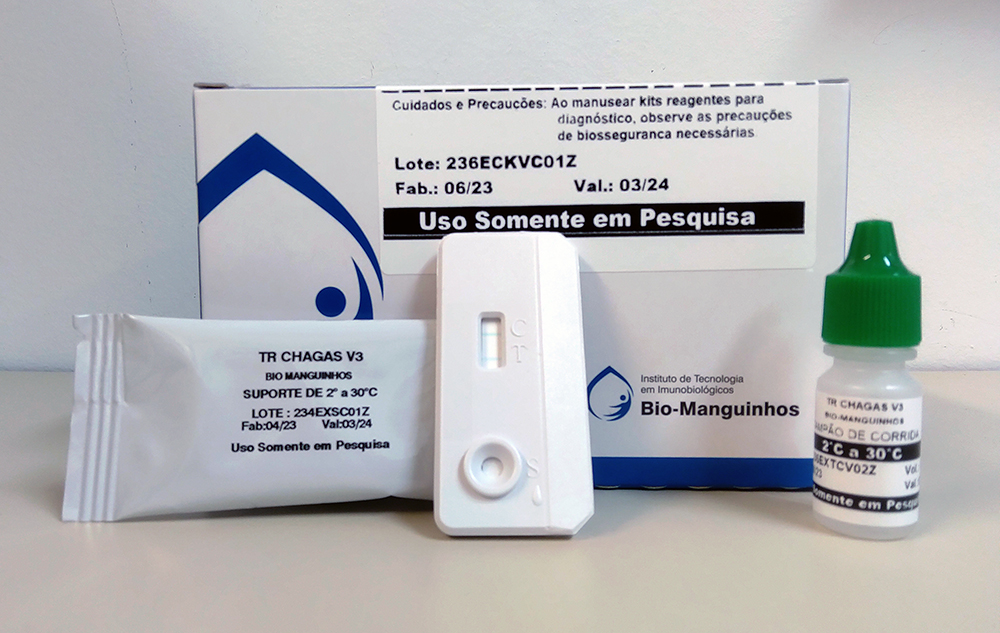 A rapid test for chronic Chagas disease can be applied in remote areas, providing results in about 15 minutes. Photo: Press Release
Chagas disease is caused by the parasite trypanosoma cruziThe chronic form of the disease, which develops after years of silent infection, affects between 2 million and 4,9 million people in Brazil, according to estimates from the Ministry of Health. Most of those infected are unaware that they are carriers of the disease. T. cruzi.
The new tests were developed using an innovative technology, for which a patent has been filed by F.iocRuz. It took more than ten years of research to develop these products, with collaboration from scientists at three F units.iocruz: IOC, CDTS and the Institute of Technology in Immunobiologicals (Bio-Manguinhos).
For the authors of the study, the award crowns their scientific efforts focused on public health.
“We are very pleased with the recognition in this award, which highlights research that advances public health in Brazil. The tests were developed to expand access to the diagnosis of chronic Chagas disease and have the potential to reduce costs for the SUS [Unified Health System],” celebrated Evandro, who continues to work on the project as a postdoctoral researcher at Bio-Manguinhos.
One distinguishing feature of the tests was the excellent performance observed in trials in the Amazon region, where commercial tests frequently produce inconclusive results.
"This project sought to solve a technological challenge for the diagnosis of chronic Chagas disease in the Amazon, considering the patients who live in this region, in order to offer adequate care to these people," declared Angela.
"From the beginning, we accepted the challenge of developing the tests with a view to industrial production for supply to the SUS (Brazilian Public Health System). I am very proud of this project, which brought together..." IOC"CDTS and Bio-Manguinhos are working towards this goal," David stated.
The project received a doctoral scholarship from the Coordination for the Improvement of Higher Education Personnel (Capes) and funding from the Inova F Program.iocruz and the National Council for Scientific and Technological Development (CNPq) through the National Institute of Science and Technology for Innovation in Diseases of Neglected Populations (INCT-IDPN).
The research also had support from the Municipal Health Department of Barcelos (Semsa-Barcelos) and the Special Indigenous Health District of Alto Rio Negro (DSEI-ARN).
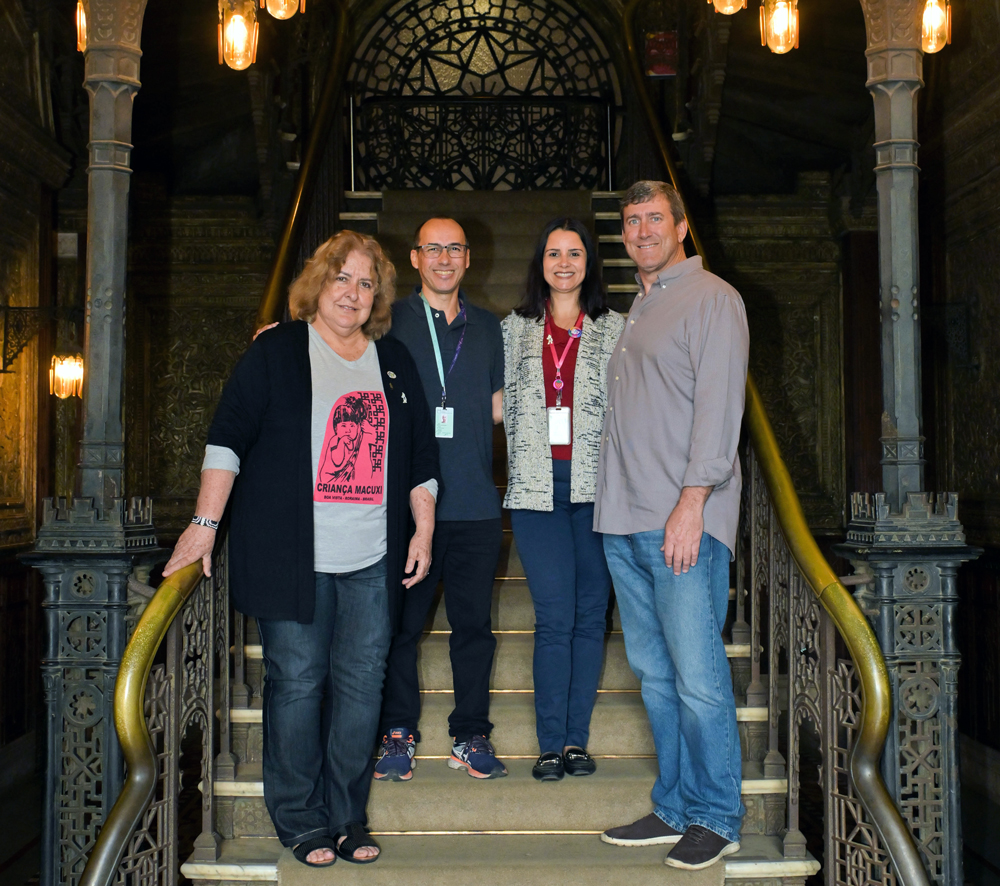 From left: Angela Junqueira, Evandro da Rocha Dias, Andressa da Matta Durans, and David William Provance Junior. Researchers emphasize the importance of cooperation between units of the FiocRudson Amorim is a symbol of technological development. Photo: Rudson Amorim
Laboratory tests showed a sensitivity of 94% for the ELISA test and 95% for the rapid test, indicating a high potential for identifying chronic Chagas disease, including in the Northern Region. Specificity was approximately 99% for the ELISA test and 96% for the rapid test, representing a low percentage of false-positive results.
Samples considered to be the reference standard by the World Health Organization (WHO) were used. In addition, the tests were evaluated in the diagnosis of samples from five states: Amazonas, Ceará, Maranhão, Paraíba, and Sergipe.
Rapid tests were also applied in the municipality of Barcelos, in Amazonas, in riverside communities, on boats anchored along the banks of the Rio Negro, and at the city's general hospital.
“We challenged the tests with samples from various states to have a real evaluation of their performance, considering that there are subtle regional variations among the parasites of Chagas disease, which can impact the performance of diagnostic tests,” highlighted the coordinator of the Department of Development of Diagnostic Reagents at Bio-Manguinhos, Edimilson Domingos da Silva.
Given the good performance of the prototypes, Bio-Manguinhos should request product registration from the National Health Surveillance Agency (Anvisa) in the first half of 2026.
The difficulties in diagnosing chronic Chagas disease, especially in the Amazon region, have motivated technological development.
The infection is part of a group of neglected diseases, which mainly affect poor and vulnerable populations and receive almost no attention or funding from the pharmaceutical industry and public health services.
More than a hundred years after the discovery of the disease, there is still no method considered the gold standard for diagnosing the chronic form of Chagas disease, which can cause serious problems in the heart and digestive system.
In the absence of a more reliable test, two tests are necessary. If both are positive or negative, the infection is confirmed or ruled out. However, if the results are divergent, the diagnosis is inconclusive, requiring a third test.
The problem is more frequent in the Amazon region. In the analyses carried out by Evandro, the commercial tests were inconclusive in 20% of the cases in Barcelos, in line with what was observed in other research.
Researchers emphasize the impact of this problem. Angela, who has been researching Chagas disease in the Amazon since the 1990s, notes that many residents of the Upper Rio Negro region have to travel for days by boat to reach a health facility.
“In the logistics of the Amazon, when there is an inconclusive result, it is difficult for the patient to return for a new test. Having an effective test, especially a rapid test that can be applied in remote areas, is fundamental for this population,” emphasized the researcher. “The improvement in diagnosis also represents savings for the SUS (Brazilian Public Health System), reducing spending on inconclusive tests,” added Evandro.
F scientistsiocThe two joined forces to tackle the problem in 2014. Angela presented the issue to David, who works with an innovative approach to developing diagnostic tests: the creation of recombinant proteins.
These molecules are produced using genetically engineered cells, which allows combining segments of different proteins in search of the most favorable structure to detect antibodies against the virus. T. cruzi.
In 2018, the first version of the protein for diagnosing Chagas disease was presented in the thesis of Andressa da Matta Durans, carried out in the Postgraduate Program in Tropical Medicine at [Institution Name]. IOC, with guidance from Angela and David.
Based on a methodology with a patent application filed by FiocRuz, the work produced a sophisticated protein: a molecule that features ten fragments of different proteins from T. cruzi.
Evandro continued the project. In his thesis, adjustments were made to the protein, prototypes of the tests were produced, and assays were performed to evaluate the results of the tests.
"Technological innovation was important in producing a protein that specifically detects antibodies against Chagas disease, without cross-reactions despite the similarity of the..." T. cruzi "with parasites that cause leishmaniasis and other diseases," David pointed out.
The partnership with Bio-Manguinhos was established in 2022 for the industrial manufacturing of tests. Beyond its relevance in the context of Chagas disease, the project contributed to introducing recombinant protein technology to the unit.
“There was a great synergy in this project. We gained complete mastery of this technology, which facilitates the development and production of tests for diagnosing various diseases,” Edimilson emphasized.
Chagas disease is transmitted by triatomine insects, commonly known as kissing bugs. Infected vectors release the virus. T. cruzi in its feces. Because the kissing bug defecates after biting people, the parasite can be introduced into the wound caused by the bite, contaminating individuals. The infection can also be transmitted through food contaminated with kissing bug feces, such as açaí, bacaba, and sugarcane juice.
Immediately after infection, in the so-called acute phase of the illness, patients may present symptoms such as fever, headache, weakness, and swelling in the face and legs. At this stage, diagnosis is made by detecting the parasite in the blood. IOC also has been working to improve this process.
However, acute cases are often asymptomatic or go unnoticed. Without treatment, individuals remain infected with the virus. T. cruzi, developing the chronic form of Chagas disease. After decades of silent infection, about 30% of patients have heart problems and approximately 10% develop digestive lesions.
Diagnosis of chronic infection is fundamental for access to treatment, which varies according to the clinical picture and may include medications against the disease. T. cruzi and measures to control heart and digestive problems.
*The report has been altered to include the project's classification. IOC Second place in the doctoral thesis category. During the award ceremony for the Incentive Prize in Science, Technology and Innovation for the SUS (Brazilian Public Health System), on December 2nd, the research was announced by the award organizers as the winner of first place. This Tuesday, December 9th, CNPq (National Council for Scientific and Technological Development) announced the work's ranking in second place.
The 'CT&I SUS Award' was presented to Evandro da Rocha Dias and Angela Junqueira (in the patterned dress) for a study conducted in the Postgraduate Program in Tropical Medicine at the IOC. Photo: Disclosure
The doctoral thesis from the Oswaldo Cruz Institute (IOC/Fiocruz), which presents two new tests for diagnosing Chagas disease, won second place* in the '17th Incentive Award in Science, Technology and Innovation for the SUS'.
The award results were announced on December 2nd, during the 14th Brazilian Congress of Collective Health (Abrascão), in Brasília.
The award is promoted by the Ministry of Health and the National Council for Scientific and Technological Development (CNPq).
The project 'Development of ELISA prototypes and rapid test for chronic Chagas disease', from Postgraduate Program in Tropical Medicine do IOC, came in second place* in the doctoral thesis category.
The research was conducted by biomedical scientist Evandro da Rocha Dias, under the guidance of researchers Angela Junqueira, from the Laboratory of Parasitic Diseases at [Institution Name]. IOC, and David William Provance Junior, from the Center for Technological Development in Health (CDTS/Fiocruz).
This thesis presents two types of tests for diagnosing the chronic form of Chagas disease, including a rapid test that provides results in 15 minutes and can be applied in remote areas, and an ELISA-type test for analysis in laboratory infrastructure.
A rapid test for chronic Chagas disease can be applied in remote areas, providing results in about 15 minutes. Photo: Press Release
Chagas disease is caused by the parasite trypanosoma cruziThe chronic form of the disease, which develops after years of silent infection, affects between 2 million and 4,9 million people in Brazil, according to estimates from the Ministry of Health. Most of those infected are unaware that they are carriers of the disease. T. cruzi.
The new tests were developed using an innovative technology, for which a patent has been filed by F.iocRuz. It took more than ten years of research to develop these products, with collaboration from scientists at three F units.iocruz: IOC, CDTS and the Institute of Technology in Immunobiologicals (Bio-Manguinhos).
For the authors of the study, the award crowns their scientific efforts focused on public health.
“We are very pleased with the recognition in this award, which highlights research that advances public health in Brazil. The tests were developed to expand access to the diagnosis of chronic Chagas disease and have the potential to reduce costs for the SUS [Unified Health System],” celebrated Evandro, who continues to work on the project as a postdoctoral researcher at Bio-Manguinhos.
One distinguishing feature of the tests was the excellent performance observed in trials in the Amazon region, where commercial tests frequently produce inconclusive results.
"This project sought to solve a technological challenge for the diagnosis of chronic Chagas disease in the Amazon, considering the patients who live in this region, in order to offer adequate care to these people," declared Angela.
"From the beginning, we accepted the challenge of developing the tests with a view to industrial production for supply to the SUS (Brazilian Public Health System). I am very proud of this project, which brought together..." IOC"CDTS and Bio-Manguinhos are working towards this goal," David stated.
The project received a doctoral scholarship from the Coordination for the Improvement of Higher Education Personnel (Capes) and funding from the Inova F Program.iocruz and the National Council for Scientific and Technological Development (CNPq) through the National Institute of Science and Technology for Innovation in Diseases of Neglected Populations (INCT-IDPN).
The research also had support from the Municipal Health Department of Barcelos (Semsa-Barcelos) and the Special Indigenous Health District of Alto Rio Negro (DSEI-ARN).
From left: Angela Junqueira, Evandro da Rocha Dias, Andressa da Matta Durans, and David William Provance Junior. Researchers emphasize the importance of cooperation between units of the FiocRudson Amorim is a symbol of technological development. Photo: Rudson Amorim
Laboratory tests showed a sensitivity of 94% for the ELISA test and 95% for the rapid test, indicating a high potential for identifying chronic Chagas disease, including in the Northern Region. Specificity was approximately 99% for the ELISA test and 96% for the rapid test, representing a low percentage of false-positive results.
Samples considered to be the reference standard by the World Health Organization (WHO) were used. In addition, the tests were evaluated in the diagnosis of samples from five states: Amazonas, Ceará, Maranhão, Paraíba, and Sergipe.
Rapid tests were also applied in the municipality of Barcelos, in Amazonas, in riverside communities, on boats anchored along the banks of the Rio Negro, and at the city's general hospital.
“We challenged the tests with samples from various states to have a real evaluation of their performance, considering that there are subtle regional variations among the parasites of Chagas disease, which can impact the performance of diagnostic tests,” highlighted the coordinator of the Department of Development of Diagnostic Reagents at Bio-Manguinhos, Edimilson Domingos da Silva.
Given the good performance of the prototypes, Bio-Manguinhos should request product registration from the National Health Surveillance Agency (Anvisa) in the first half of 2026.
The difficulties in diagnosing chronic Chagas disease, especially in the Amazon region, have motivated technological development.
The infection is part of a group of neglected diseases, which mainly affect poor and vulnerable populations and receive almost no attention or funding from the pharmaceutical industry and public health services.
More than a hundred years after the discovery of the disease, there is still no method considered the gold standard for diagnosing the chronic form of Chagas disease, which can cause serious problems in the heart and digestive system.
In the absence of a more reliable test, two tests are necessary. If both are positive or negative, the infection is confirmed or ruled out. However, if the results are divergent, the diagnosis is inconclusive, requiring a third test.
The problem is more frequent in the Amazon region. In the analyses carried out by Evandro, the commercial tests were inconclusive in 20% of the cases in Barcelos, in line with what was observed in other research.
Researchers emphasize the impact of this problem. Angela, who has been researching Chagas disease in the Amazon since the 1990s, notes that many residents of the Upper Rio Negro region have to travel for days by boat to reach a health facility.
“In the logistics of the Amazon, when there is an inconclusive result, it is difficult for the patient to return for a new test. Having an effective test, especially a rapid test that can be applied in remote areas, is fundamental for this population,” emphasized the researcher. “The improvement in diagnosis also represents savings for the SUS (Brazilian Public Health System), reducing spending on inconclusive tests,” added Evandro.
F scientistsiocThe two joined forces to tackle the problem in 2014. Angela presented the issue to David, who works with an innovative approach to developing diagnostic tests: the creation of recombinant proteins.
These molecules are produced using genetically engineered cells, which allows combining segments of different proteins in search of the most favorable structure to detect antibodies against the virus. T. cruzi.
In 2018, the first version of the protein for diagnosing Chagas disease was presented in the thesis of Andressa da Matta Durans, carried out in the Postgraduate Program in Tropical Medicine at [Institution Name]. IOC, with guidance from Angela and David.
Based on a methodology with a patent application filed by FiocRuz, the work produced a sophisticated protein: a molecule that features ten fragments of different proteins from T. cruzi.
Evandro continued the project. In his thesis, adjustments were made to the protein, prototypes of the tests were produced, and assays were performed to evaluate the results of the tests.
"Technological innovation was important in producing a protein that specifically detects antibodies against Chagas disease, without cross-reactions despite the similarity of the..." T. cruzi "with parasites that cause leishmaniasis and other diseases," David pointed out.
The partnership with Bio-Manguinhos was established in 2022 for the industrial manufacturing of tests. Beyond its relevance in the context of Chagas disease, the project contributed to introducing recombinant protein technology to the unit.
“There was a great synergy in this project. We gained complete mastery of this technology, which facilitates the development and production of tests for diagnosing various diseases,” Edimilson emphasized.
Chagas disease is transmitted by triatomine insects, commonly known as kissing bugs. Infected vectors release the virus. T. cruzi in its feces. Because the kissing bug defecates after biting people, the parasite can be introduced into the wound caused by the bite, contaminating individuals. The infection can also be transmitted through food contaminated with kissing bug feces, such as açaí, bacaba, and sugarcane juice.
Immediately after infection, in the so-called acute phase of the illness, patients may present symptoms such as fever, headache, weakness, and swelling in the face and legs. At this stage, diagnosis is made by detecting the parasite in the blood. IOC also has been working to improve this process.
However, acute cases are often asymptomatic or go unnoticed. Without treatment, individuals remain infected with the virus. T. cruzi, developing the chronic form of Chagas disease. After decades of silent infection, about 30% of patients have heart problems and approximately 10% develop digestive lesions.
Diagnosis of chronic infection is fundamental for access to treatment, which varies according to the clinical picture and may include medications against the disease. T. cruzi and measures to control heart and digestive problems.
*The report has been altered to include the project's classification. IOC Second place in the doctoral thesis category. During the award ceremony for the Incentive Prize in Science, Technology and Innovation for the SUS (Brazilian Public Health System), on December 2nd, the research was announced by the award organizers as the winner of first place. This Tuesday, December 9th, CNPq (National Council for Scientific and Technological Development) announced the work's ranking in second place.
The non-profit reproduction of the text is allowed as long as the source is cited (Comunicação / Instituto Oswaldo Cruz)
 |
 |
